
That on-and-off tooth throbbing isn't random — and it's not going away on its own. Here's what's actually happening and what to do about it.
Share:
Summary:
If your tooth has been throbbing on and off — sometimes waking you up at night, sometimes disappearing by morning — you’ve probably wondered whether it’s serious enough to call a dentist. That back-and-forth is exactly what makes this kind of pain so easy to dismiss. It eases up, you move on, and then it comes back. The cycle repeats.
Here’s the thing: intermittent throbbing is not a sign that the problem is minor. In most cases, it means something is actively wrong and still progressing, even during the quiet stretches. Understanding what’s behind that pulsing sensation is the first step toward actually getting ahead of it.
Throbbing tooth pain has a specific physical cause. Inside every tooth is a soft core called the pulp — it contains nerves and blood vessels. When that pulp becomes inflamed or infected, blood pressure builds inside the tooth’s rigid walls. Since there’s nowhere for that pressure to go, you feel it pulsing in rhythm with your heartbeat. That’s the throbbing sensation.
The reason it comes and goes depends on what’s triggering the inflammation. Some causes flare up with heat, cold, or biting pressure, then settle when the stimulus is removed. Others fluctuate based on bacterial activity or how your body’s immune response is holding up at any given moment. Either way, the underlying condition doesn’t resolve on its own — it just goes quiet between episodes.
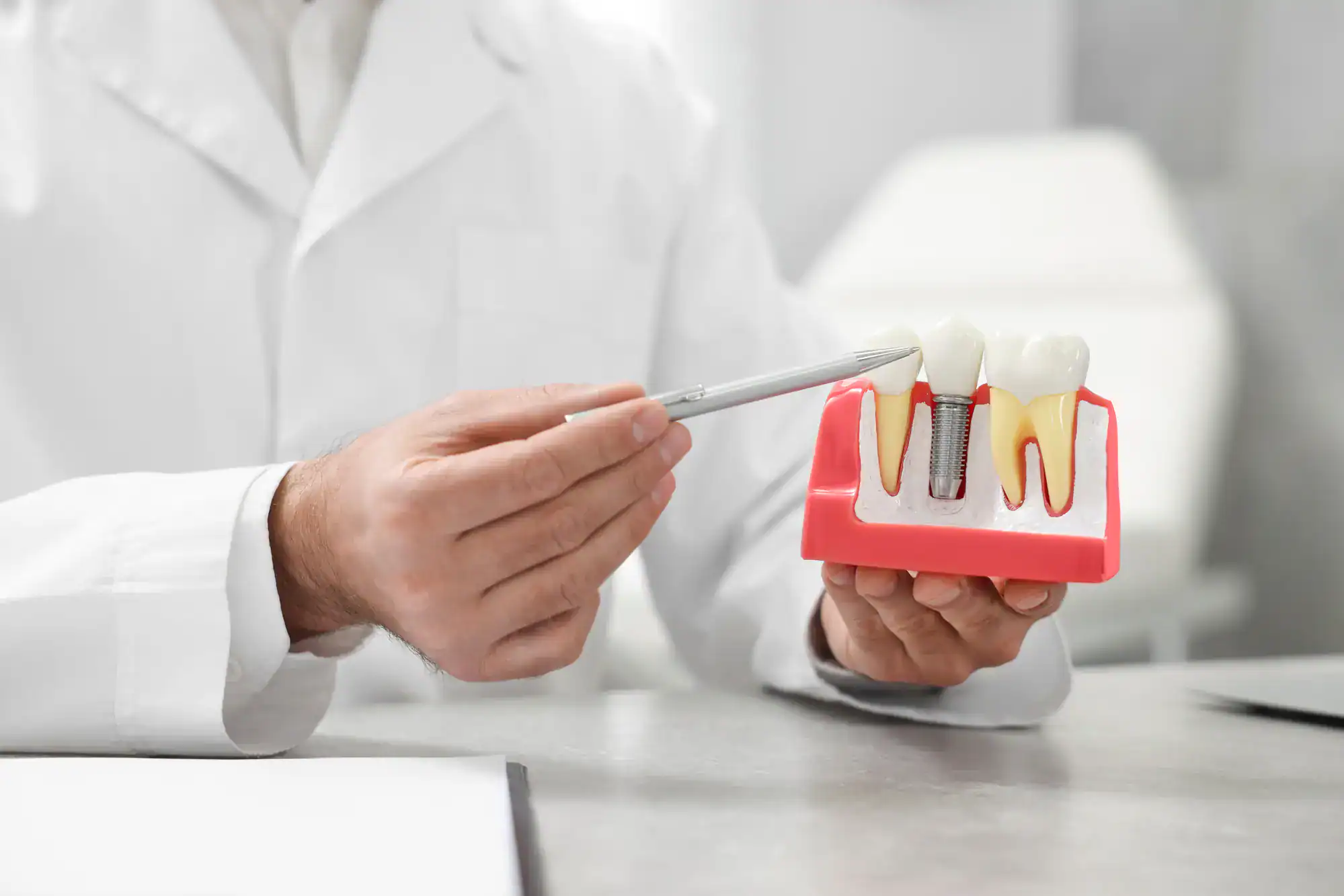
Tooth decay is the most common culprit. In the early stages, a cavity doesn’t cause constant pain — it causes pain that comes and goes, often triggered by sugar, cold drinks, or biting down. As the decay moves closer to the nerve, those episodes become more frequent and more intense. The intermittent nature early on is exactly why so many people let it go too long.
Cracked tooth syndrome is another common cause that’s easy to miss. A hairline crack in a tooth opens slightly when you bite down, irritating the nerve, then closes when you release — which is why the pain often hits right after chewing and then fades. It’s a very specific pattern, and it’s notoriously hard to diagnose without a thorough clinical exam.
Pulpitis — inflammation of the tooth’s pulp — comes in two forms that matter a great deal. Reversible pulpitis causes temporary sensitivity that fades quickly when the trigger is removed. Irreversible pulpitis produces spontaneous, lingering throbbing that doesn’t settle without treatment. The window between those two stages is important: catching it early means a simpler, less expensive procedure.
A dental abscess is the most urgent cause. An abscess is a pocket of bacterial infection at the tooth root or in the surrounding gum. The pain can build intensely, then ease slightly if the abscess drains a little — which patients sometimes mistake for improvement. It isn’t. Left untreated, dental abscesses can spread to the jaw, neck, and beyond. That’s not a scenario to gamble on.
Gum disease can also produce throbbing pain in the tissue surrounding the teeth, and it often fluctuates depending on bacterial levels and how inflamed the gums are at any given time. And occasionally, what feels like tooth pain is actually coming from a sinus infection, TMJ dysfunction, or a wisdom tooth pushing against neighboring teeth — which is why a proper diagnosis matters before any treatment begins.
This one catches people off guard. You feel a pulsing or throbbing sensation in a tooth, but there’s no sharp pain — so you assume nothing is really wrong. That assumption is worth reconsidering.
A throbbing sensation without significant pain can indicate early-stage pulp inflammation, where the nerve is being irritated but hasn’t yet reached the point of producing intense discomfort. It can also be referred sensation from an adjacent tooth that’s in worse shape than the one you’re focused on. In some cases, it’s an early abscess that hasn’t fully developed yet.
The absence of pain doesn’t mean the absence of a problem. What it usually means is that you’re in an earlier stage — which is actually the best time to get it looked at. A quick exam and X-ray can tell you exactly what’s happening before it progresses to the kind of pain that wakes you up at 3 AM. If your tooth is throbbing with no obvious pain, don’t wait for it to get worse before you call us. That’s the window where treatment is simplest.
Patients who come in at this stage almost always have better outcomes — less invasive procedures, lower costs, and faster recovery. The ones who wait until the pain becomes unbearable often need more extensive treatment than they would have a few weeks earlier. The tooth doesn’t care about your schedule. It keeps progressing whether you’re paying attention or not.
Want live answers?
Connect with a Scott Kupetz expert for fast, friendly support.
There’s a difference between “I should make an appointment soon” and “I need to be seen today.” Certain symptoms push you firmly into the second category. If your throbbing tooth pain is accompanied by facial swelling, a fever, difficulty swallowing, or a bad taste in your mouth that won’t go away, that’s a dental emergency — not something to monitor over the weekend.
Swelling and fever alongside tooth pain are signs that an infection may be spreading beyond the tooth itself. That requires immediate treatment, not a wait-and-see approach. In the Hudson Valley region where Wappingers Falls, Dutchess County, and the surrounding counties experience cold winters, temperature fluctuations can intensify these situations faster than you’d expect.
The honest answer is: if you’re asking, you should probably call. Most people who search this question are already past the “mild twinge” stage. They’re dealing with recurring pain that’s disrupting sleep, making it hard to eat, or that has been going on for days without fully resolving.
Pain that pulses with your heartbeat, especially at night or when you lie down, is your body signaling that there’s active inflammation or infection in the nerve tissue. When you lie down, blood pressure to your head increases slightly, which intensifies the pressure inside an already-inflamed tooth. That’s why throbbing tooth pain is often worst at night — and why patients frequently find themselves searching for answers at 2 AM.
OTC pain relievers like ibuprofen can help in the short term, and they’re actually a reasonable choice because they reduce both pain and inflammation. But when ibuprofen stops working as well as it did — when you need more of it, more often, and it’s not lasting as long — that’s a clear sign the underlying condition has progressed. That’s not a cue to try a different medication. That’s a cue to call us.
Going to the emergency room is an option, but it’s rarely the right one for dental pain. ERs can provide antibiotics and pain relief, but they cannot perform dental procedures. They’ll treat your symptoms and send you home with the same problem you walked in with — plus a significant bill. A same-day dentist appointment resolves the actual cause, not just the discomfort.
If you’re in Wappingers Falls, Dutchess County, Ulster County, Schenectady County, Rensselaer County, or Albany County, and you’re dealing with pain that won’t quit, the goal is to find a dentist who can actually see you — not one who can schedule you three weeks out. We keep same-day and weekend appointments available for exactly this reason.
The pattern most patients fall into goes something like this: the pain flares, they manage it with ibuprofen, it settles, they move on. A few weeks later it comes back, a little worse. They manage it again. This cycle continues until the pain becomes constant, severe, or accompanied by swelling — at which point the condition has advanced significantly.
What starts as a cavity that could be fixed with a filling can progress to pulpitis that requires a root canal. What starts as reversible pulpitis can become irreversible. What starts as an early abscess can become a serious infection that spreads to surrounding tissue. Each stage is more involved and more expensive to treat than the one before it. The tooth doesn’t plateau — it keeps deteriorating.
We’ve seen this play out many times over the 35+ years we’ve been practicing in Wappingers Falls. Patients come in having managed intermittent pain for months, sometimes longer, and by the time they arrive, a straightforward situation has become a complex one. We don’t say that to make anyone feel bad — dental anxiety, cost concerns, and busy schedules are all real barriers. We say it because the earlier you come in, the more options you have.
If you’ve been putting it off because you’re worried about what it might cost, we accept CareCredit financing with interest-free options, which means you can get the care you need today without having to figure out the full cost upfront. And if you’ve been putting it off because you’re anxious about dental treatment, we offer three levels of sedation — oral, inhaled, and IV — so that even patients who haven’t been to a dentist in years can get through treatment comfortably. No judgment, no lectures. Just straightforward care.
If there’s one thing worth taking from this page, it’s that intermittent tooth pain is not the same as minor tooth pain. The fact that it comes and goes doesn’t mean it’s harmless — it means you’re in a window where treatment is still relatively straightforward. That window closes the longer you wait.
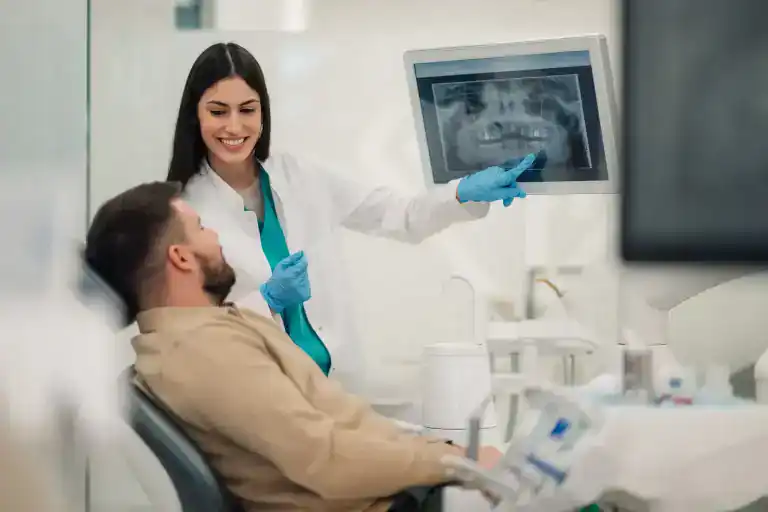
A proper exam — including X-rays and a full clinical evaluation — can pinpoint exactly what’s causing your pain, even if it seems to move around or you can’t tell which tooth it’s coming from. From there, the path forward is clear. Whether it’s a filling, a root canal, or something else entirely, you’ll know what you’re dealing with and what your options are.
If you’re in Wappingers Falls or anywhere in Dutchess, Ulster, Albany, Schenectady, or Rensselaer County, we’ve been treating exactly this kind of situation since 1988. Call us — including on weekends when you need to be seen and can’t wait until Monday.
Your next step
Throbbing that comes and goes often means the nerve inside the tooth is involved, and that is what root canal treatment is for. Call about tooth pain rather than waiting for it to settle on its own, and we will tell you honestly how urgent it sounds.
Article details:
Share:
Continue learning: