
All-on-4 dental implants use four strategically placed titanium posts to support a full arch of replacement teeth—offering a permanent solution without needing an implant for every missing tooth.
Share:
Summary:
If you’re facing extensive tooth loss or living with dentures that slip and slide, you’ve probably heard about All-on-4 dental implants. Maybe you’re wondering how it’s possible to replace an entire arch of teeth with just four implants. Or you’re trying to figure out if this technology actually works the way it sounds—permanent, stable, and nothing like traditional dentures.
The short answer: yes, it works. The longer answer involves understanding the engineering, the process, and what makes this approach different from other tooth replacement options. Let’s break down exactly what All-on-4 dental implants are and how the technology actually functions.
All-on-4 dental implants use four titanium posts surgically placed in your jawbone to support a full arch of prosthetic teeth. That’s 10 to 14 teeth anchored by just four implants—not one implant per missing tooth like traditional methods.
The technology relies on strategic placement. Two implants go vertically into the front of your jaw where bone density tends to stay strongest even after tooth loss. The back two implants are angled at 30 to 45 degrees toward the rear of your mouth. This angled placement does two things: it maximizes contact with available bone, and it avoids anatomical structures like sinus cavities that could complicate surgery.
Because the implants are titanium, your bone fuses to them over time through a process called osseointegration. This creates a foundation as stable as natural tooth roots. The prosthetic arch—your new teeth—attaches to these four anchors, distributing bite force evenly across the implants rather than relying on your gums like dentures do.
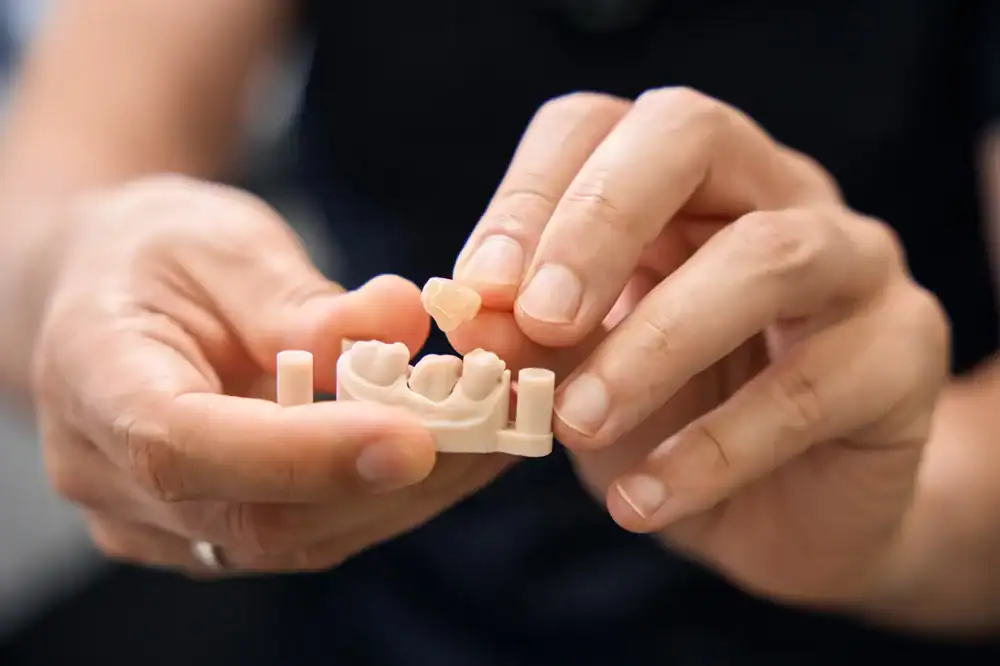
Full arch dental implants aren’t just about the number of posts. The design of the prosthesis itself matters.
With All-on-4, the bridge or denture is fixed—meaning you don’t take it out. It’s screwed into the implants and stays in your mouth permanently. This is different from snap-on dentures that clip onto implants but can still be removed. The fixed design means better stability when you’re eating, speaking, or just going about your day.
The prosthesis typically includes a pink acrylic component that mimics gum tissue, especially if you’ve experienced bone loss. This replaces not just your teeth but also missing bone and gum structure, which is why the restoration might feel slightly bulkier than natural teeth at first. Most people adapt within hours.
Material choices for the final prosthesis usually come down to acrylic or zirconia. Acrylic over a titanium framework is lighter and more affordable, but it can stain over time and may need replacement sooner. Zirconia is denser, more durable, and resists staining—but it’s heavier and costs more. We’ll help you weigh those options based on your bite force, budget, and long-term goals.
The full arch design also means the prosthesis doesn’t cover the roof of your mouth like traditional dentures. You get better taste sensation, clearer speech, and no gagging from bulky material pressing against your palate. That alone changes the entire eating and speaking experience for most patients.
All-on-6 dental implants work on the same principle as All-on-4, but with two additional implants for extra support. Instead of four posts per arch, you get six—usually placed more vertically rather than angled.
The main advantage of All-on-6 is increased stability. More implants mean better distribution of bite force, which can be important if you have a strong bite, grind your teeth, or have a longer jaw arch. The extra implants also provide redundancy—if one implant has an issue down the line, you still have five others supporting the prosthesis.
All-on-6 typically requires better bone density than All-on-4. Because there are more implants to place, you need sufficient bone volume in more areas of your jaw. That can mean bone grafting for some patients, which adds time and cost to the process. All-on-4’s angled design often bypasses the need for grafting by working with the bone you have.
Cost is another factor. All-on-6 generally runs about $6,000 more per arch than All-on-4 because of the additional implants and surgical complexity. Recovery can also take slightly longer since there are more surgical sites to heal.
Which one is right for you depends on your bone structure, bite force, and budget. Some patients are better candidates for All-on-4 specifically because they don’t have enough bone for six implants without grafting. Others benefit from the added stability of All-on-6. A CBCT scan during your consultation shows us exactly what your bone structure looks like and which approach makes the most sense for your situation.
Want live answers?
Connect with a Scott Kupetz expert for fast, friendly support.
The All-on-4 procedure happens in stages, but the timeline is faster than traditional implant methods. You’re not waiting months between each individual implant placement.
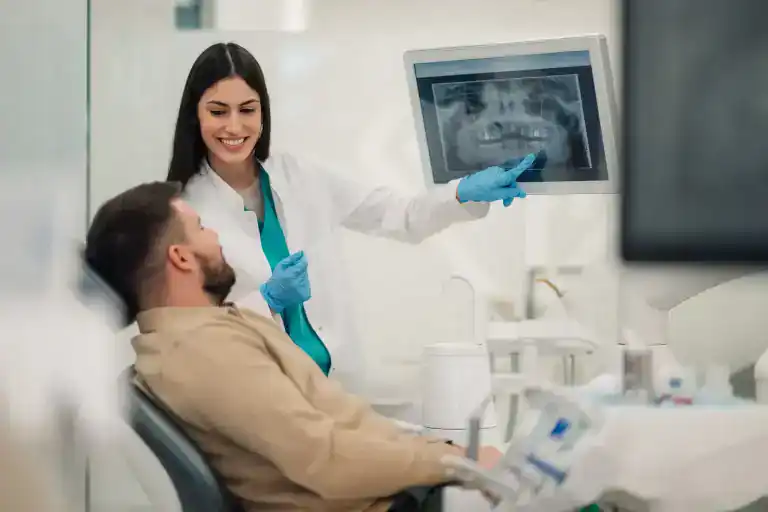
It starts with a consultation. We take a CBCT scan—a 3D image of your jaw—to assess bone density and plan implant placement. You’ll discuss your medical history, any medications you’re taking, and whether sedation dentistry is right for you. This is also when you get a clear cost estimate and talk through financing options like CareCredit.
On surgery day, any remaining teeth are extracted if needed. Then the four implants are placed under local anesthesia, often with sedation to keep you comfortable. The procedure typically takes two to four hours per arch. In many cases, you leave with a temporary prosthesis attached to the implants the same day—so you’re never without teeth.
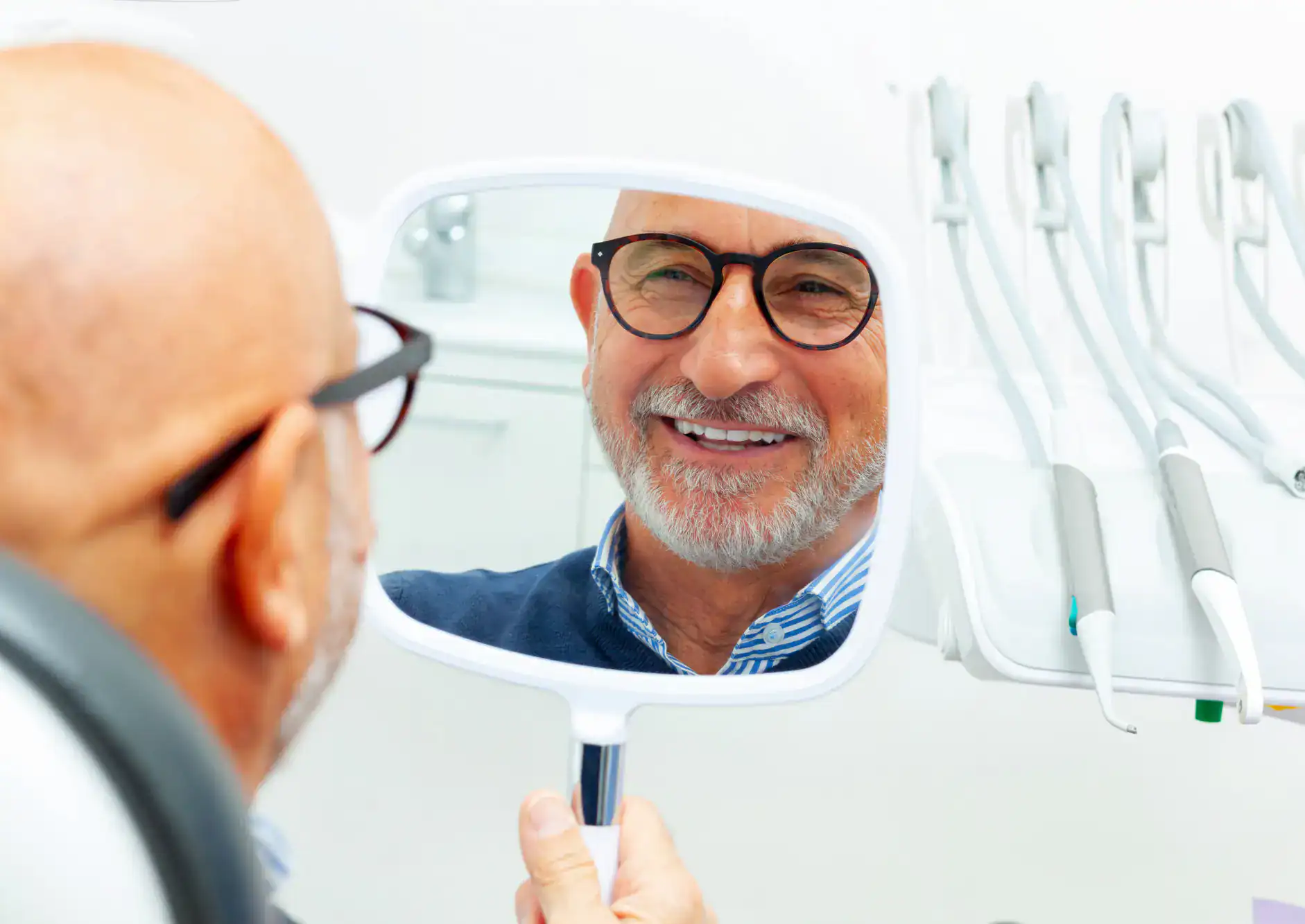
After surgery, your implants need time to fuse with your jawbone. This process is called osseointegration, and it’s what makes dental implants permanent.
During the first few days, expect some swelling and mild discomfort. Most patients manage it with over-the-counter pain relievers, though we may prescribe something stronger depending on your case. You’ll stick to soft foods initially—smoothies, mashed potatoes, soups—to avoid putting pressure on the surgical sites.
Over the next three to six months, your bone cells grow around the titanium implants, essentially locking them in place. You’ll have temporary teeth during this period, so you can eat and speak normally, but you’ll want to avoid extremely hard or chewy foods that could stress the implants before they’re fully integrated.
Follow-up appointments during healing let us monitor progress and make any adjustments to your temporary prosthesis if it’s rubbing or causing sore spots. These check-ins are normal and help ensure everything is healing correctly.
Once osseointegration is complete, you return for your final restoration. We remove the temporary prosthesis and attach the permanent one—either high-quality acrylic or zirconia, depending on what you chose. This final bridge is custom-designed to match your facial features, bite, and smile line. You’ll have a try-in appointment to confirm the fit, color, and shape before it’s permanently secured.
Not everyone is a candidate for All-on-4 dental implants, but more people qualify than you might think.
Good candidates typically have most or all of their teeth missing in one or both arches, or they have failing teeth that need to be extracted. You need enough bone density to support the implants, but because of the angled placement, All-on-4 often works for people who’ve been told they don’t have enough bone for traditional implants. That said, severe bone loss may still require grafting or might make All-on-6 or other options more suitable.
Your overall health matters. Conditions like uncontrolled diabetes, autoimmune disorders, or heavy smoking can interfere with healing and osseointegration. That doesn’t automatically disqualify you, but it means we’ll need to evaluate your specific situation carefully. If you’re willing to quit smoking or work with your doctor to manage chronic conditions, you may still be a candidate.
Dental anxiety shouldn’t keep you from treatment. If fear has stopped you from getting implants in the past, sedation dentistry can make the entire process comfortable. Options range from nitrous oxide (laughing gas) for mild anxiety to oral sedation or IV sedation for deeper relaxation. We specialize in anxiety-free dentistry and offer multiple options to help nervous patients feel at ease throughout the procedure.
Age isn’t usually a barrier either. As long as your jawbone is fully grown and you’re in reasonably good health, All-on-4 can work for adults of any age. Many patients in their 60s, 70s, and beyond successfully receive full arch dental implants and enjoy the restored function for decades.
All-on-4 dental implants offer a permanent, stable solution for extensive tooth loss—one that functions like natural teeth and doesn’t rely on the limitations of traditional dentures. The technology works by strategically placing four titanium implants per arch, using angled placement to maximize bone contact and avoid the need for grafting in many cases.
Understanding how the procedure works, what the healing process involves, and how All-on-4 compares to options like All-on-6 helps you make an informed decision. If you’re dealing with failing teeth, uncomfortable dentures, or significant gaps in your smile, this technology might be exactly what you need to restore function and confidence.
The next step is a consultation to assess your bone structure, discuss your goals, and determine if you’re a candidate. If dental anxiety has held you back, sedation options can make the process comfortable from start to finish. With over 30 years of experience serving patients in Schenectady County, NY and surrounding areas, we provide comprehensive care with advanced implant technology—helping you understand your options and move forward with a solution that lasts.
Continue learning: