
Missing front teeth affect more than your smile. Here's what you need to know about partial dentures — types, costs, and what to realistically expect.
Share:
Summary:
If you’ve been hiding your smile — covering your mouth when you laugh, angling away from cameras, choosing seats where no one can see your teeth — you already know that a missing front tooth is a different kind of problem than a missing back tooth. It’s visible. It’s social. And for a lot of people, it quietly chips away at confidence over time.
The good news is that partial dentures for front teeth have come a long way. The options today are more natural-looking, more comfortable, and more varied than most people expect. We’ve helped patients throughout Wappingers Falls, Dutchess County, Ulster County, Schenectady County, Albany County, and Rensselaer County restore their smiles with solutions that fit their budget and lifestyle. This page walks you through everything worth knowing — types, costs, what they look like, and what the process actually involves.
A partial denture — sometimes called a dental plate — is a removable appliance that replaces one or more missing teeth. It sits on your gums, anchors to your remaining natural teeth, and fills the gap left by tooth loss. When people ask “what is a dental plate,” this is exactly what they’re describing. The terms are interchangeable.
For front teeth specifically, the stakes are higher than they are for molars you can’t see. The partial needs to look natural, sit flush with your gumline, and match the color and shape of the teeth around it. A good one does all of that without drawing attention to itself. A poor one does the opposite — and that’s usually where the fear comes from.
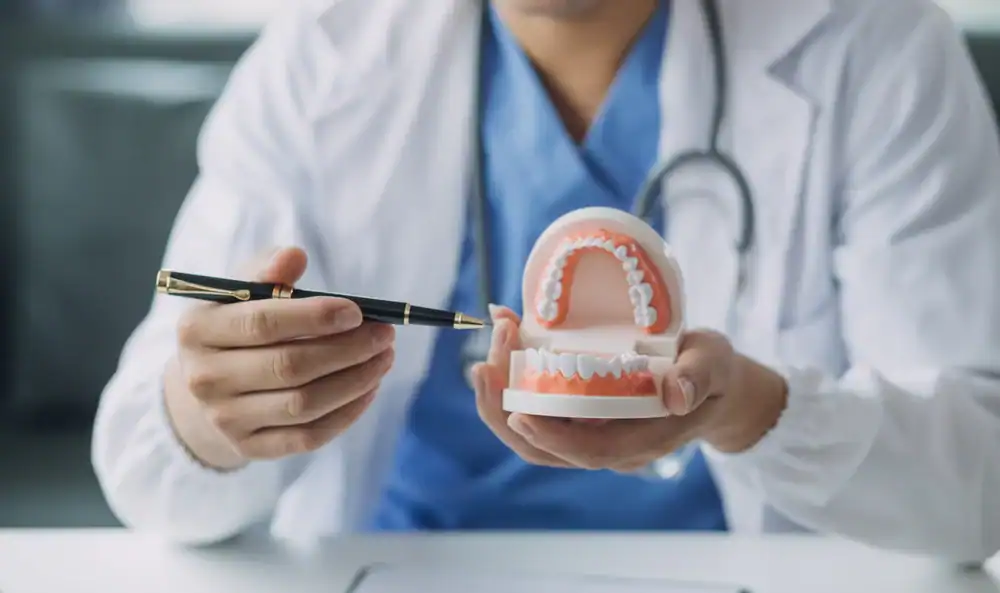
This is the question most people are really asking when they start researching their options. And it’s a fair one, because the answer depends heavily on which type of partial you get.
The most basic option is an acrylic flipper — a lightweight pink base with one or more artificial teeth attached. Flippers are affordable, fast to make, and easy to pop in and out. They’re commonly used as a temporary solution right after an extraction, while the gum heals or while you’re saving for something more permanent. They work, but they’re not the most durable or the most discreet long-term option.
Cast metal partial dentures are the most common longer-term removable partial. We use a thin metal framework — typically cobalt-chromium — with gum-colored acrylic and artificial teeth built onto it. The framework is strong and the fit is precise, but metal clasps attach to your remaining teeth to hold it in place. For back teeth, those clasps are hidden. For front teeth, they can occasionally be visible when you smile wide, which is why a lot of our patients in this situation ask about alternatives.
Flexible partial dentures — often made from a thermoplastic nylon material — are a popular middle ground. There’s no rigid metal framework. Instead, thin, gum-toned extensions grip your natural teeth and blend with your gumline. They’re lightweight, comfortable, and far more aesthetic for front-tooth cases than a traditional cast metal partial. The tradeoff is that they can be harder to repair and can’t always have teeth added to them later if you lose another tooth.
The most aesthetic option for front teeth is a precision partial denture. Instead of visible clasps, it uses internal attachments — hidden connectors built into crowns on the adjacent teeth — to hold the partial in place. From the outside, there’s nothing to see. No metal, no obvious hardware. Just teeth that look like teeth. It’s the most involved and most expensive option, but for patients who are primarily concerned with appearance, it’s worth the conversation.
Yes — and it’s more common than most people realize. A single-tooth partial, often a flipper, is frequently used when someone loses one front tooth to an accident, decay, or an emergency extraction. It fills the gap immediately, lets you smile and speak normally, and buys time while you decide on a longer-term solution.
For patients missing two, three, or four front teeth, the same types of partials apply — the design just spans a wider area. The goal is always the same: a seamless transition that doesn’t announce itself.
What matters most in any of these cases is the fit and the color match. Artificial teeth come in a wide range of shades, shapes, and translucencies. A partial that was made with attention to those details — matched to the specific characteristics of your natural teeth — looks dramatically more natural than one that was produced quickly or without customization. The difference between a partial denture that looks like a partial denture and one that just looks like your smile comes down almost entirely to how much care went into making it.
It’s also worth knowing that a partial denture for front teeth isn’t necessarily a permanent commitment. Many patients use a flipper or flexible partial while they evaluate whether dental implants are the right next step. A well-made partial can serve you for years and keep your options open. It doesn’t close any doors.
Want live answers?
Connect with a Scott Kupetz expert for fast, friendly support.
Cost is usually the first real question, and the honest answer is that it varies by type. Acrylic flippers typically run between $300 and $700. Flexible partials land somewhere between $800 and $1,500 per arch. Cast metal partials range from $900 to $2,000 or more. Precision partials with internal attachments can reach $2,500 and up, especially when you factor in the crowns needed on adjacent teeth.
Those are national ranges. Your actual out-of-pocket cost depends on your specific case, your insurance coverage, and what type of partial is right for your situation. The best way to get a real number is a consultation with our team here in Wappingers Falls.
In most cases, yes — at least partially. Dental insurance typically classifies partial dentures as a major restorative procedure, which means most plans cover around 50% of the cost after your deductible, up to your annual maximum. That can make a meaningful difference on a $1,200 or $1,500 partial.
If you’re covered through a state employee benefits plan, a partial usually falls under that same major-restorative category. What differs plan to plan is the annual maximum, whether there’s a waiting period, and how many teeth the plan will replace before it stops paying, and those details move the out-of-pocket number more than the headline percentage does. Patients come to us from across Dutchess, Rensselaer, Schenectady, Ulster and Albany counties on a wide range of plans, so the honest answer is that yours needs to be read rather than assumed.
If you’re not sure what your plan covers, we can help verify your benefits before you commit to anything. There’s no reason to guess at the cost when a quick check can give you a real answer. And if your coverage has a gap, we can talk through options — because the cost of leaving a missing front tooth untreated tends to add up too, in ways that aren’t always obvious upfront. Bone loss, shifting teeth, and changes to your bite are all things that happen gradually when a gap is left unfilled, and they can make future treatment more complicated and more expensive.
The other thing worth knowing: if your dental benefits reset at the end of the calendar year — which most do on December 31 — and you haven’t used them, getting started before year-end is worth considering. It’s one of those things that’s easy to keep pushing off, but the window closes faster than it seems.
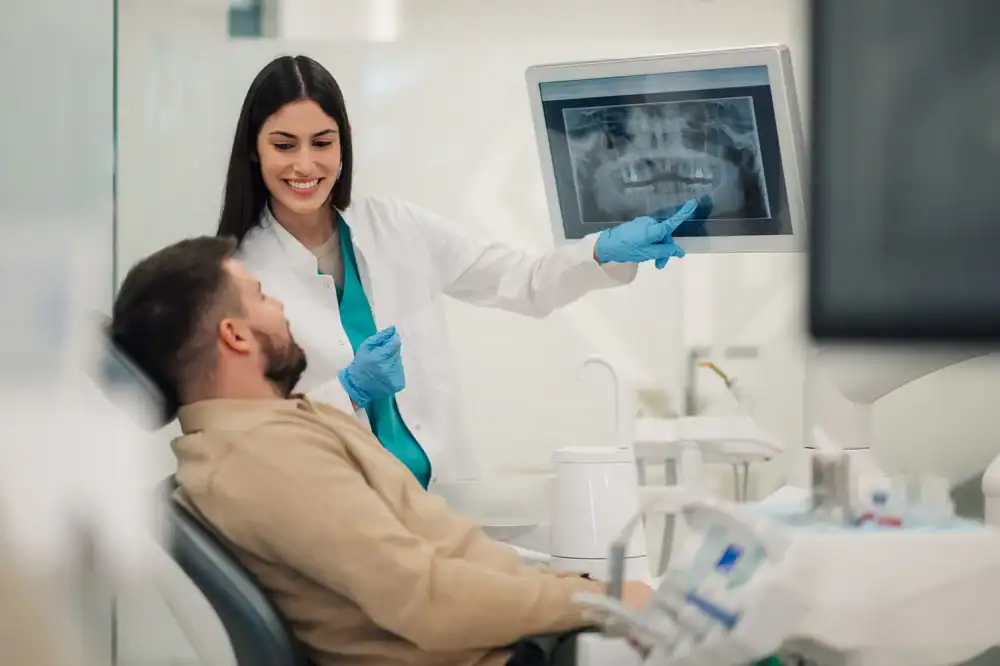
Getting a partial denture typically takes a few appointments spread over a few weeks. The first visit involves a thorough exam and X-rays to assess your remaining teeth, your gums, and your bite. From there, we take precise impressions of your mouth — not a generic mold, but a detailed record of your specific anatomy — which go to our dental laboratory where your partial is custom-fabricated.
When the partial comes back from the lab, you come in for a fitting. This is where we check the fit, the bite, and the appearance, and make any adjustments needed before you take it home. Most patients need at least one follow-up to fine-tune things after wearing the partial for a few days. That’s normal and expected — it’s part of getting it right.
For patients who have been putting this off because of dental anxiety, that process can sound like a lot. We hear that frequently from people throughout the Hudson Valley — patients who’ve been living with a missing tooth for months or years because the idea of sitting in a dental chair felt like too much. We offer sedation dentistry specifically for situations like this. Whether it’s mild anxiety or a genuine phobia, sedation options can make every step of the partial denture process manageable. The impressions, the fittings, the adjustments — none of it has to be something you white-knuckle through.
We’ve been serving Wappingers Falls and the surrounding region since 1988. That’s over 35 years of fitting patients across Dutchess County and beyond, and a significant portion of them walked in the door having avoided the dentist for a long time. There’s no judgment in that. What matters is that you’re here now, and that we can help you figure out the right path forward — whether that’s a simple flipper to fill a gap quickly, a flexible partial for everyday comfort, or a precision partial that no one will ever be able to detect.
Missing a front tooth affects more than your appearance — it affects how you carry yourself, how you interact with people, and how comfortable you feel in your own skin. The right partial denture doesn’t just fill a gap. It gives you your smile back.
The type that’s right for you depends on your budget, your timeline, your remaining teeth, and how important aesthetics are to you. There’s no single answer that fits everyone, which is exactly why a real consultation — not a website quiz or an online estimate — is the right starting point.
If you’re in Wappingers Falls, Dutchess County, Ulster County, Albany County, Schenectady County, Rensselaer County, or anywhere in between and you’re ready to stop putting this off, we’re here to help. Reach out to schedule a consultation and find out exactly what your options are.
Your next step
Book a consultation and ask what your own mouth can take. Our dentures page covers the options, and bringing a photograph of the smile you have in mind is more useful than describing it.
Article details:
Share:
Continue learning: