
From the first consultation to full healing, here's an honest look at what dental implant surgery involves — and what makes All-on-6 worth knowing about.
Share:

Summary:
If you’ve been living with a missing tooth — or several — you already know how much it affects your daily life. The foods you avoid. The way you smile in photos, or don’t. The quiet frustration of dentures that shift when you least want them to. Dental implant surgery is the permanent fix most people eventually land on, but the internet makes it sound either terrifying or effortless, and neither is quite right. This page gives you the honest version: what the process actually involves, what healing looks like week by week, and how to know whether All-on-6 might be a better fit for your situation than the more commonly advertised All-on-4. We’ve been placing implants for more than 30 years, serving patients throughout Wappinger Falls, Dutchess County, Ulster County, Albany, Schenectady, and Rensselaer County, and we’ve learned what questions matter most.
At its core, dental implant surgery is the process of placing a small titanium post into your jawbone to act as an artificial tooth root. Once that post fuses with your bone — a process called osseointegration — a custom crown is attached on top, giving you a replacement tooth that looks, feels, and functions like the real thing.
The procedure itself is done under local anesthesia, and sedation options are available for patients who want to be more comfortable throughout. Most people are genuinely surprised by how manageable the experience is. The anticipation tends to be worse than the reality.
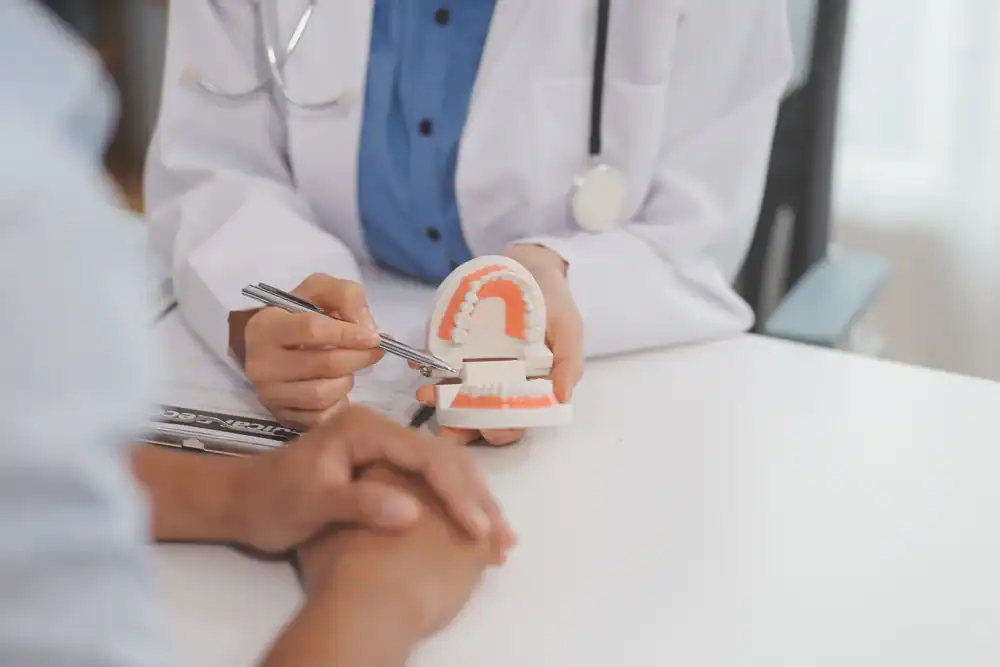
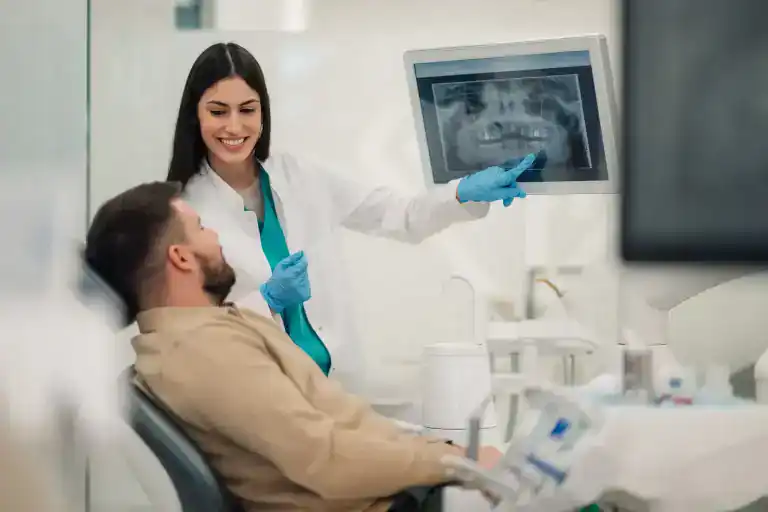
It starts with a consultation — not a sales pitch, but an actual clinical evaluation. We review your medical history, take 3D CT images of your jawbone, and assess your bone density, nerve locations, and overall anatomy before anything else happens. That imaging step matters more than most people realize. Placing an implant without a 3D scan is like navigating without a map — technically possible, but not something you want your provider doing with your jaw.
If your bone density is sufficient, we move to the surgical placement appointment. The titanium post is placed directly into the jawbone through a small incision in the gum tissue. The site is then closed, and the healing phase begins. For most single-implant patients, this appointment takes between one and two hours, and the post-operative discomfort is typically mild — manageable with over-the-counter pain relievers for a few days.
After placement, your body does the work. Over the next three to six months, the jawbone gradually bonds with the titanium post in a process that can’t be rushed. This is osseointegration, and it’s what gives implants their long-term stability. Once that’s complete, we place the abutment — a small connector piece — and take impressions for your custom crown. The crown is fabricated to match the color and shape of your surrounding teeth, and once it’s placed, most people genuinely cannot tell the difference between the implant and a natural tooth.
One thing worth knowing upfront: if you’ve had a tooth missing for a while, you may have experienced some bone loss in that area. Bone resorption starts within weeks of a tooth being extracted and continues over time. In cases where there isn’t enough bone volume to support an implant, a bone graft may be needed before or during placement. About 61% of people considering implants don’t know this is even a possibility, so it’s worth discussing during your consultation rather than being caught off guard later.
Pain is the question almost everyone has and very few people ask out loud. The honest answer: the surgery itself shouldn’t hurt. Local anesthesia handles that. What patients sometimes experience afterward is soreness, some swelling, and mild discomfort that typically peaks around day two and improves steadily from there. Most single-implant patients are back to their normal routine within a day or two.
For patients who are anxious about the procedure — and there are a lot of them, because dental anxiety is genuinely common — sedation is an option that changes the experience entirely. We offer oral sedation, inhaled sedation (nitrous oxide), and IV sedation, which puts you in a deeply relaxed state for the duration of the procedure. Studies show that 60% of patients who experience sedation during dental surgery want it for every future procedure. Once you’ve had a major dental procedure without the white-knuckle experience, it’s hard to go back.
This is something that sets our practice apart in a real, practical way. Not every dental office offers IV sedation — it requires a separate New York State permit in addition to standard dental licensure. We offer all three sedation levels specifically because a significant portion of the patients we see have been avoiding dental care for years, sometimes decades, because of fear. If that’s you, it’s worth knowing that the procedure you’ve been putting off doesn’t have to feel the way you’re imagining it.
Across Dutchess County and into the Capital District — including Schenectady, Albany, and Rensselaer County — we regularly see patients who drove past several closer offices because they needed a provider who could actually manage their anxiety, not just acknowledge it. Sedation availability isn’t a bonus feature here. It’s built into how we practice.
Want live answers?
Connect with a Scott Kupetz expert for fast, friendly support.
Healing from dental implant surgery isn’t a single event — it’s a process that unfolds over several months, with different milestones along the way. Understanding the timeline before you start makes it a lot easier to manage expectations and plan your life around the process rather than being surprised by it.
The broad strokes: soft tissue heals within one to two weeks. The deeper bone integration — osseointegration — takes three to six months for most patients, and up to nine months in cases involving bone grafting or more complex anatomy. That sounds like a long time, but it doesn’t mean you’re sidelined for six months. Normal daily activity resumes quickly.
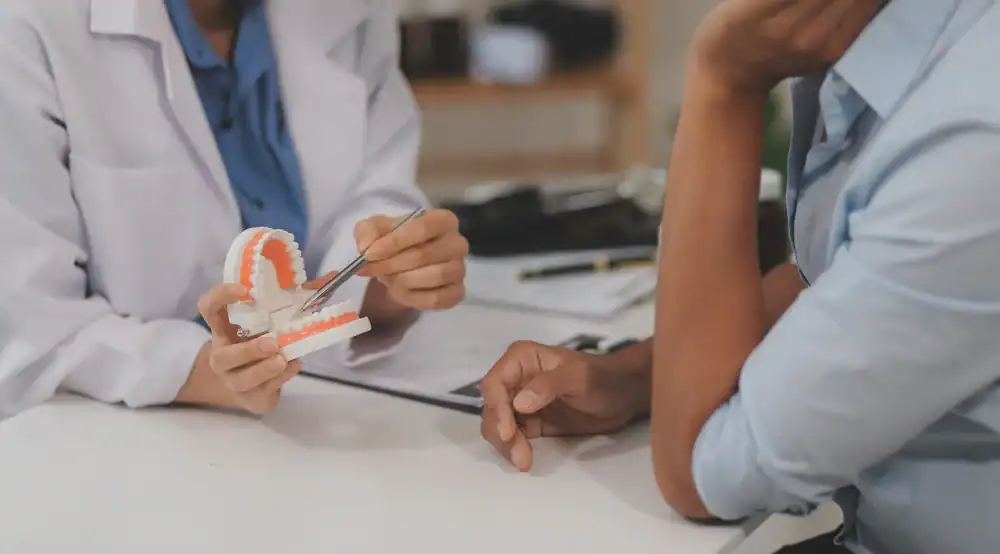
In the first 24 to 48 hours after surgery, some swelling and tenderness is normal. Cold compresses, soft foods, and rest are the standard recommendations. Most patients are comfortable enough to return to work within one to two days, though everyone heals at a slightly different pace depending on overall health, age, and the complexity of the procedure.
By the end of the first week, the gum tissue around the implant site is typically closing and the initial discomfort has largely resolved. Stitches, if used, are often dissolvable. Around day three, most patients can start introducing slightly firmer foods — pasta, rice, eggs — alongside the soft diet. By the two-week mark, most people have returned to a fairly normal diet, with the exception of very hard or crunchy foods near the implant site.
The months that follow are quiet ones. Osseointegration is happening beneath the surface, but you’re not feeling it. There’s no dramatic event — just a gradual, biological process that’s been happening successfully in patients for decades. Dental implants have been in widespread use long enough that we have strong long-term data: a 90 to 95% 10-year survival rate, with four out of five implants lasting 20 years or more when properly cared for. That’s not a marketing claim — it’s what the research consistently shows.
Once osseointegration is confirmed — typically through imaging at a follow-up appointment — the abutment is placed, the gum tissue around it heals for another two to three weeks, and then the final crown is fitted. From start to finish, the complete process for a single implant usually spans four to eight months. For patients who’ve been living with a missing tooth for years, that timeline tends to feel very manageable once they understand what’s actually happening at each stage.
If you’re missing most or all of your teeth — or you’re dealing with failing dentures that have made eating and speaking a daily frustration — full-arch implant solutions are worth understanding in detail. Most people have heard of All-on-4, which uses four strategically placed implants per arch to support a full set of teeth. It’s widely available and works well for many patients. But All-on-6 uses six implants per arch, and for certain patients, that difference matters significantly.
The core advantage of All-on-6 is stability. Six implants distribute bite forces more evenly across the arch, which reduces the load on any single implant and lowers the risk of implant overload over time. For patients with moderate bone density — not enough to support the angled placement that All-on-4 relies on, but enough to support six implants in optimal positions — All-on-6 often produces a more secure, longer-lasting result. It’s not that All-on-4 is inferior; it’s that the right choice depends on your specific bone structure and anatomy, and that’s exactly what a proper consultation with 3D imaging is designed to determine.
One thing both All-on-4 and All-on-6 share: the possibility of leaving the same day with temporary functioning teeth. This is what people mean when they search for one day dental implants. You won’t have your final permanent restoration on day one — that comes after osseointegration, which still takes several months. But you won’t be walking out without teeth, either. Temporary prosthetics allow you to eat, speak, and function normally while the implants integrate with your bone.
For patients across Ulster County and Dutchess County — including those coming from Kingston, New Paltz, Wappinger Falls, and the surrounding communities where access to full-arch implant specialists is limited — this is often the option that changes everything. Driving to our office in Wappinger Falls for a consultation is a reasonable trade when the alternative is continuing to live with dentures that don’t fit or teeth that are failing one by one. The same is true for patients coming from Albany, Schenectady, or Rensselaer County who want a provider with the experience and technology to handle the full process under one roof, without referrals to separate oral surgeons or imaging centers.
Dental implant surgery isn’t a small decision, and it shouldn’t feel like one. The process takes time, it involves real surgery, and it costs real money. But for patients who go through it, the results tend to be permanent in a way that bridges, dentures, and other alternatives simply aren’t. A 98% success rate in healthy patients. Teeth that feel like your own. A jawbone that stays intact instead of slowly receding.
If you’ve been putting this off — because of cost concerns, fear of the procedure, uncertainty about whether you’re even a candidate — the most useful next step is a consultation where those questions actually get answered. Not a sales call. A clinical evaluation with 3D imaging that tells you exactly what your bone looks like and what your options are.
We’ve been doing this for more than 30 years, serving patients from Wappinger Falls and throughout Dutchess County, Kingston and Ulster County, Albany and the Capital District, and communities across Rensselaer and Schenectady counties. If you’re ready to find out whether implants are right for you, we’re here to walk through it with you — on your timeline, without pressure.
Article details:
Share:
Continue learning: