

Sharp tooth pain when you drink cold water? Throbbing that won't quit? Here's what's actually happening — and when it's time to call a dentist.
Share:
Summary:
That sharp jolt when you sip cold coffee. The dull, relentless throb that makes it hard to focus — or sleep. Tooth nerve pain has a way of demanding your full attention, usually at the worst possible moment. Most people’s first instinct is to wait it out and hope it passes. Sometimes it does. Often, it doesn’t — and ignoring it long enough turns a manageable problem into a much bigger one. This page will help you understand what’s actually going on inside your tooth, what your symptoms might be telling you, and when it’s time to stop guessing and call a dentist.
Every tooth has a soft inner core called the pulp — a bundle of nerves and blood vessels that runs from the crown of the tooth down through its roots. When that pulp is healthy, you don’t notice it. When it gets irritated, inflamed, or infected, you feel it immediately and unmistakably.
Tooth nerve pain happens when something breaches the outer layers of the tooth — the enamel and dentin — and reaches that inner nerve tissue. The most common culprits are deep cavities, cracked teeth, worn enamel from grinding, trauma from an injury, or old dental work that’s starting to fail. Once the nerve is involved, the pain tends to be sharp, throbbing, or both — and it doesn’t stay subtle for long.
This is where it helps to be specific, because not all tooth pain is the same — and the type of pain you’re experiencing tells us a lot about what’s happening inside your tooth.
Temperature sensitivity is usually the first sign. You drink something cold and feel a sharp, electric-like jolt that fades within a few seconds. That’s often an early indicator that the nerve is irritated but still alive — what we call reversible pulpitis. At this stage, the nerve can sometimes recover on its own if the cause is addressed, like getting a filling placed over a cavity before it deepens further.
When that sensitivity starts lingering — when the pain from cold water sticks around for 30 seconds or a minute after the trigger is gone — that’s a different story. Lingering pain, spontaneous throbbing that shows up without any trigger, pain that wakes you up at 2am, or a deep ache that intensifies when you lie down are all signs that the nerve is more seriously inflamed or infected. We call this irreversible pulpitis, and it doesn’t resolve without treatment.
There’s also the scenario where the pain was severe and then suddenly stopped. That might feel like good news, but it often isn’t. When a tooth nerve dies — which can happen as an infection progresses — the pain signals stop because there’s no longer a living nerve to transmit them. The infection, however, is still there and still spreading. A tooth that hurt badly and then went quiet still needs to be evaluated.
Pain when biting down, visible swelling near the tooth or jaw, a bad taste in your mouth, or swollen lymph nodes in your neck are signs that an infection may have moved beyond the tooth itself. At that point, you’re dealing with something that needs same-day attention.
A lot of people aren’t sure whether what they’re feeling is coming from the tooth itself or from the gum tissue around it. It’s a fair question, and the distinction matters because the causes and treatments are different.
Gum nerve pain is typically associated with gum disease, receding gums, or irritation along the gumline. It tends to feel more like a dull ache or soreness concentrated near the surface of the gum, and it often affects a wider area rather than one specific tooth. You might notice bleeding when you brush, sensitivity along the gumline, or tenderness that spreads across several teeth.
Tooth nerve pain, by contrast, tends to be more localized and more intense. It’s usually tied to a specific tooth — you can often point right to it — and it tends to have that sharp, shooting, or throbbing quality that makes it hard to ignore. Temperature sensitivity that’s clearly centered on one tooth is a strong indicator that the nerve inside that tooth is involved.
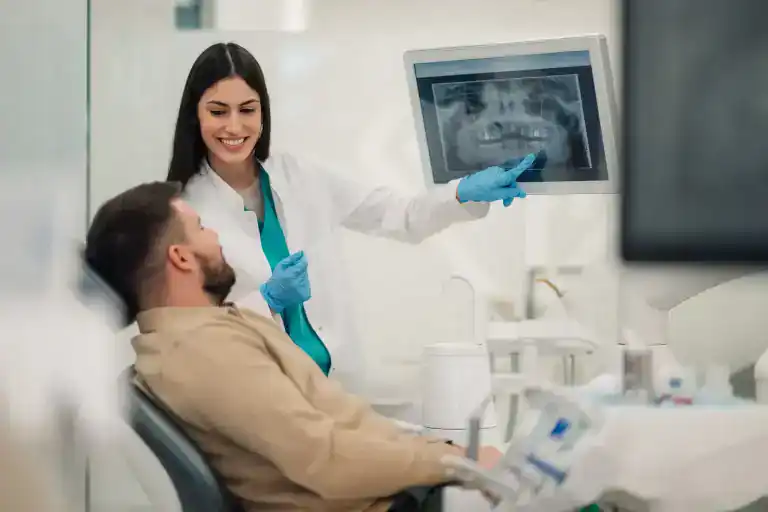
That said, the two can overlap. Advanced gum disease can expose tooth roots, which have no enamel protection, making them highly sensitive to temperature and pressure. And an infected tooth can sometimes cause referred pain that feels like it’s spreading to surrounding teeth or gum tissue. This is exactly why self-diagnosing from a search engine only gets you so far. We can look at the full picture — including X-rays that show what’s happening below the gumline and inside the tooth — and tell you precisely what you’re dealing with.
If you’ve been trying to figure out whether your pain is coming from a tooth or your gums, the honest answer is: you probably won’t know for certain until someone takes a proper look. What you can do is pay attention to whether the pain is concentrated on one tooth, whether it’s triggered by temperature, and whether it’s getting worse. Those details matter when you call.
Want live answers?
Connect with a Scott Kupetz expert for fast, friendly support.
The right treatment depends entirely on how far the nerve involvement has progressed. Early-stage nerve irritation — the kind that causes mild temperature sensitivity — can sometimes be addressed with a filling or a crown that seals off the tooth and removes the source of irritation. The nerve, if it’s still healthy, can recover.
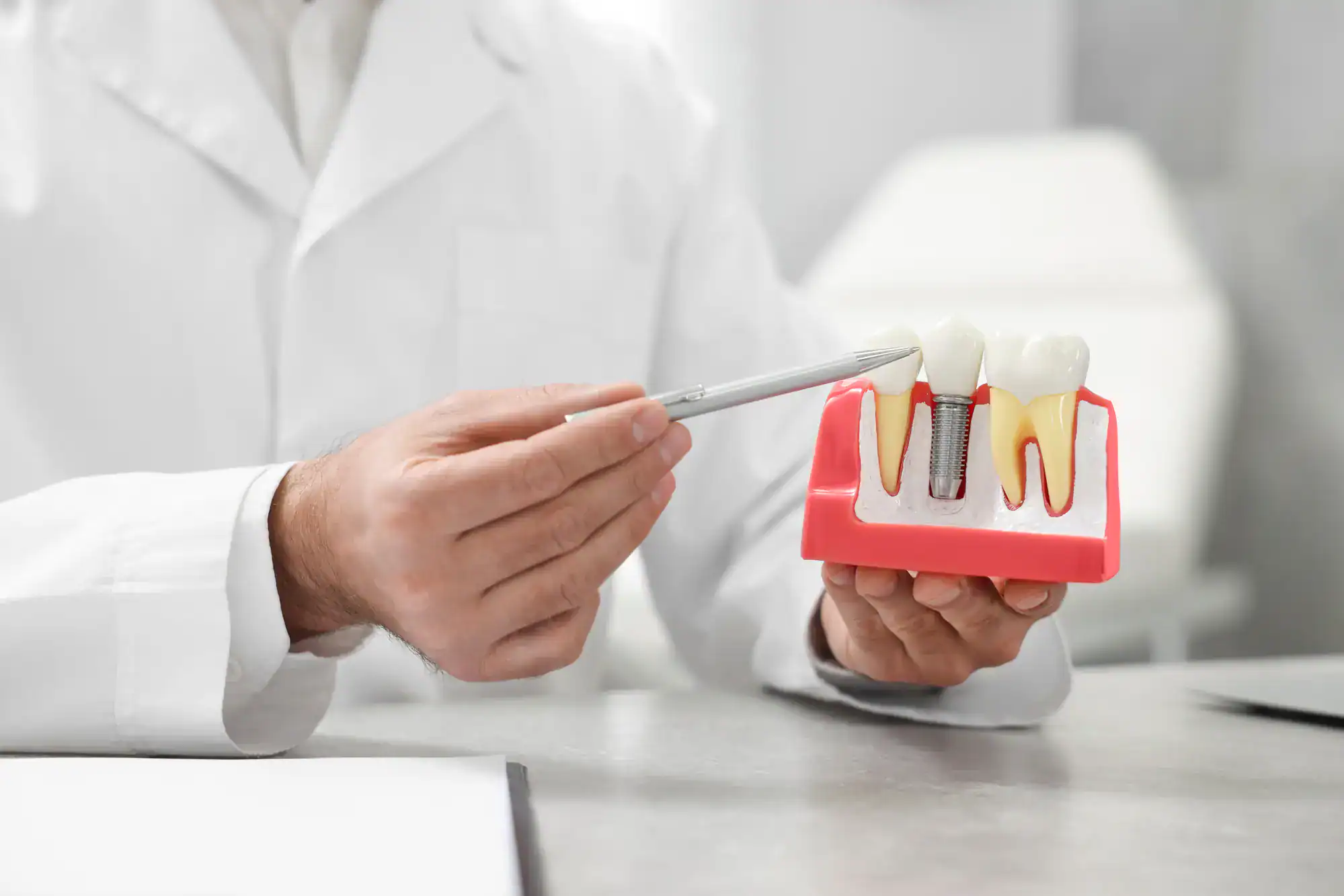
When the nerve is irreversibly inflamed or infected, root canal therapy is typically the treatment that saves the tooth. The procedure removes the damaged nerve tissue from inside the tooth, cleans and disinfects the root canals, and seals everything off. A crown is usually placed afterward to protect the tooth long-term. Done well, a root canal-treated tooth can last a lifetime.

The short answer is no — and most patients are genuinely surprised by that. The fear surrounding root canals is real, but it’s largely built on outdated experiences and stories that have been passed down for decades. Modern root canal therapy, with proper anesthesia and the right approach to patient comfort, is typically no more uncomfortable than getting a filling placed.
What people are usually remembering — or fearing — is the pain they felt before the procedure, when the infected nerve was still active and inflamed. That pre-treatment pain is real. The procedure itself, when done correctly, is not what most people expect.
We’ve been treating tooth nerve pain in Wappinger Falls and across Dutchess County since 1988. A significant part of what we do is help patients who have been putting off care specifically because they’re afraid. Some haven’t been to a dentist in years. Some have had bad experiences elsewhere that left them dreading the idea of sitting in a dental chair. We offer nitrous oxide, oral sedation, and IV sedation — a full spectrum of options that most general dental practices don’t provide — so that fear doesn’t have to be the reason you delay treatment that your tooth genuinely needs.
With proper care, a restored tooth can last a lifetime. That outcome reflects what’s possible when treatment happens before the infection has had time to spread into the surrounding bone.
The cost of waiting is real too. An untreated infected nerve doesn’t stay contained to the tooth. It spreads. What starts as nerve pain can progress to a dental abscess, then to bone loss in the jaw, and ultimately to losing the tooth entirely — at which point you’re looking at an extraction and, if you want to replace it, an implant. The root canal that felt expensive becomes the cheaper option in hindsight.
There’s a version of this where you wait a day or two and the sensitivity fades — maybe you had some mild irritation from a new filling or a particularly cold drink, and your tooth settles down on its own. That happens. But there’s another version where waiting costs you the tooth, and the difference between those two scenarios often comes down to how long you hold off.
Call us the same day if you’re experiencing severe, throbbing pain that isn’t responding to over-the-counter pain relievers. Call if the pain woke you up at night. Call if you have visible swelling in your jaw, cheek, or neck. Call if you have a fever alongside tooth pain — that combination suggests the infection has moved beyond the tooth itself and into surrounding tissue, which is a medical situation, not just a dental inconvenience.
You should also call — sooner rather than later — if you have temperature sensitivity that lingers for more than a few seconds after the trigger is gone, if you feel pain when biting down on that tooth, or if a tooth that was hurting badly has suddenly stopped hurting without any treatment. That last one, as we mentioned earlier, often signals nerve death rather than recovery.
For patients across the Hudson Valley and Capital Region — whether you’re in Poughkeepsie, Fishkill, Beacon, Kingston, Troy, Schenectady, or anywhere else in Dutchess, Albany, Ulster, Schenectady, or Rensselaer Counties — the challenge is sometimes access. Not every dental office offers same-day appointments for acute tooth pain. Not every practice has emergency availability that extends beyond standard business hours. We do. We offer same-day care for tooth nerve emergencies, because tooth pain doesn’t schedule itself for a convenient Tuesday afternoon.
Cold Hudson Valley winters have a way of making tooth sensitivity impossible to ignore. Stepping outside on a January morning in Wappinger Falls and feeling that sharp jolt through your tooth is one of those moments where you realize you can’t keep putting this off. That discomfort is your tooth telling you something. It’s worth listening to.
Tooth nerve pain is one of those things that’s easy to push to the back of your mind until it becomes impossible to ignore. By then, the problem is usually bigger than it needed to be. The good news is that with the right diagnosis and the right approach, most tooth nerve problems are very treatable — and the sooner they’re addressed, the more options you have.
Whether you’re dealing with early sensitivity that’s been nagging at you for weeks or acute pain that showed up overnight, the next step is the same: get it looked at by someone who knows what they’re doing. Understanding what you’re dealing with is the only way to make a real decision about how to handle it.
If you’re in Wappinger Falls, across Dutchess County, or anywhere in the Hudson Valley and Capital Region, we’ve been treating tooth nerve pain — and the anxiety that comes with it — for more than 35 years. Reach out, describe what you’re experiencing, and let’s figure out what’s actually going on. We’re located at 260 New Hackensack Road in Wappingers Falls, NY, and we serve patients throughout Dutchess, Albany, Schenectady, Ulster, and Rensselaer Counties.
Article details:
Share:
Continue learning: