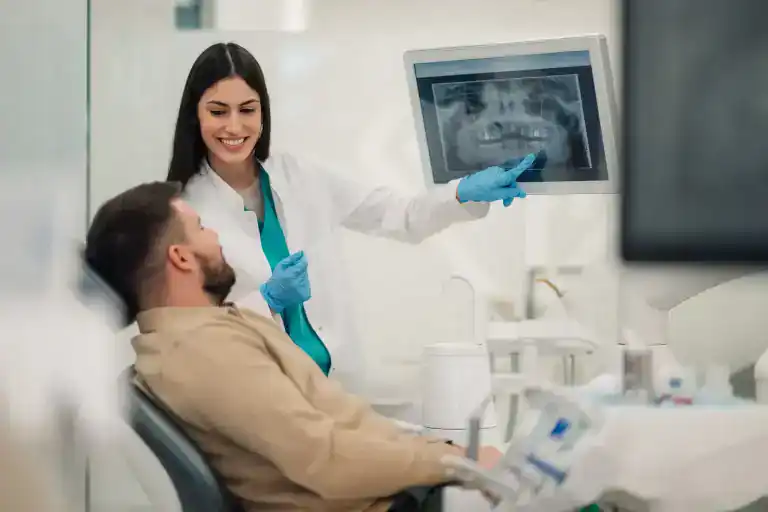

Hospital ERs can't perform dental procedures. Emergency dentists provide actual treatment for toothaches, broken teeth, and infections—often at a fraction of the cost.
Share:

Summary:
You’re in pain. Your tooth is throbbing, maybe broken, possibly infected. It’s 9 PM on a Saturday and you need help now. So where do you go—the hospital ER or an emergency dentist?
It’s a question thousands of people in Schenectady County face every year, and the answer isn’t always obvious. But here’s what you need to know: where you go determines whether you get actual treatment or just a prescription and a bill. Let’s break down the real differences so you can make the right call when it counts.
Hospital emergency rooms serve a critical purpose, but fixing teeth isn’t one of them. Most ERs don’t have dentists on staff. They’re equipped to handle life-threatening medical emergencies, not dental procedures.
When you show up with a toothache or broken tooth, ER doctors can assess your symptoms and provide temporary relief. That usually means pain medication, maybe antibiotics if there’s an infection, and instructions to follow up with a dentist. Then you’re sent home, still dealing with the underlying problem.
The ER visit might cost you anywhere from $400 to over $1,500, depending on what they do. And you’ll still need to see a dentist within days to actually fix the tooth. You’re essentially paying twice—once for temporary relief, once for the real solution.

There are specific situations where the hospital ER is the right choice, and they’re important to recognize. If you have uncontrolled bleeding that won’t stop after 15 minutes of pressure, head to the ER. If you’ve suffered facial trauma that might involve broken bones, jaw dislocation, or head injury, the hospital needs to evaluate you first.
Difficulty breathing or swallowing is another red flag. If swelling from a dental infection is spreading to your neck, closing your airway, or causing a high fever, that’s a medical emergency requiring immediate hospital care. Same goes if you’re experiencing severe swelling around your eyes or under your tongue.
These scenarios involve more than just your teeth. They’re systemic issues that need medical intervention before dental treatment. In these cases, ER staff can stabilize you, control bleeding, manage the infection with IV antibiotics, and ensure you’re safe. Once you’re stabilized, they’ll refer you to a dentist or oral surgeon for follow-up care.
But here’s the key: these life-threatening situations represent a small fraction of dental emergencies. Most urgent dental issues—severe toothaches, broken teeth, lost fillings, abscesses that aren’t spreading—don’t require hospital-level care. For those, an emergency dentist is faster, more effective, and significantly less expensive.
The limitation isn’t about competence—it’s about specialization and equipment. ER physicians are trained to handle medical emergencies across the entire body. They can diagnose issues, manage pain, and prescribe medications. But they don’t have the specialized training or tools to perform root canals, extract teeth, place crowns, or repair dental work.
Most hospitals don’t maintain the dental equipment needed for these procedures. Even if they wanted to help, they physically can’t do the work. Some larger hospitals have dentists on call for severe trauma cases, but that’s rare and typically reserved for situations involving significant facial injuries or jaw fractures.
What this means for you: if you go to the ER with a cracked tooth, severe cavity, or dental abscess, they’ll give you something for the pain and possibly start you on antibiotics. Then they’ll tell you to see a dentist as soon as possible—often within 24 to 48 hours. You leave with temporary relief but no actual resolution.
The infection is still there. The broken tooth is still broken. The cavity is still decaying. And now you’re facing both an ER bill and an upcoming dental bill. Meanwhile, the problem may worsen while you wait for a dental appointment, potentially requiring more extensive (and expensive) treatment than if you’d gone straight to an emergency dentist in the first place.
Want live answers?
Connect with a Scott Kupetz expert for fast, friendly support.
Emergency dentists are equipped to handle urgent dental problems with actual treatment, not just symptom management. We have the training, tools, and authority to perform procedures on the spot.
Severe toothache from an infection? We can perform a root canal or extraction that day. Broken tooth? We can repair it with bonding, place a crown, or extract it if necessary. Lost filling or crown? We can replace it immediately, protecting the exposed tooth from further damage.
This is the fundamental difference. While an ER sends you home with prescriptions and hope, an emergency dentist solves the problem. You walk out with the issue resolved, not postponed.
Cost matters when you’re already stressed and in pain. Emergency room visits for dental issues cost roughly three times what you’d pay at a dentist’s office. Recent data shows ER visits for non-traumatic dental conditions average $749 without hospitalization, compared to $90 to $200 for similar treatment at a dental office.
But it’s worse than just the price difference. That ER visit doesn’t eliminate your need for dental care—it just delays it. You’re paying $749 for temporary relief, then paying again when you see the dentist days later for the actual fix. The total cost can easily exceed $1,000 to $2,000 for problems that could have been handled in one emergency dental visit.
Emergency dentists who offer same-day appointments eliminate this double-billing scenario. You call, get seen that day, and leave with the problem resolved. One visit, one bill, problem solved. At our practice serving Schenectady County with locations in Rotterdam and Wappingers Falls, same-day emergency appointments are standard practice, not a special accommodation.
Time is another factor people underestimate. ER wait times can stretch for hours, especially if your dental issue isn’t deemed life-threatening compared to other patients. You might sit in the waiting room for three or four hours, finally see a doctor for 15 minutes, get your prescription, and head home—all without anyone actually fixing your tooth. An emergency dentist appointment typically gets you in and out within an hour or two, with your issue actually addressed.
Understanding what an emergency dentist can do helps you make better decisions when pain strikes. Root canal therapy can be performed the same day for infected teeth, relieving pain and saving the tooth. Tooth extractions—whether simple or surgical—can be done immediately when a tooth is too damaged to save or causing severe infection.
Dental abscesses can be drained and treated properly, addressing the infection at its source rather than just prescribing antibiotics and hoping it clears up. Broken or chipped teeth can be repaired with bonding, crowns, or veneers depending on the damage. Knocked-out teeth have the best chance of being saved if you reach an emergency dentist within 30 to 60 minutes of the injury.
Lost fillings and crowns can be replaced on the spot, protecting the vulnerable tooth structure underneath. Severe gum injuries can be treated and sutured if needed. Orthodontic emergencies like broken wires or brackets can be addressed to prevent further injury to your mouth.
Our practice offers all these services with an added advantage: sedation dentistry options for patients who experience dental anxiety. Many people avoid seeking emergency care because they’re nervous about dental procedures, but sedation options—from nitrous oxide to oral sedation—make treatment comfortable even during stressful situations. With over 30 years of experience helping Schenectady County residents since 1988, we combine expertise with advanced technology and genuine understanding of patient concerns.
Here’s the bottom line: most dental emergencies belong at the dentist’s office, not the hospital. Unless you’re dealing with uncontrolled bleeding, difficulty breathing, severe facial trauma, or spreading infection with high fever, an emergency dentist will serve you better.
You’ll get actual treatment instead of temporary relief. You’ll spend less money. You’ll save time. And you’ll walk out with your problem solved, not postponed. The ER has its place for true medical emergencies, but a toothache, broken tooth, or dental abscess isn’t one of them.
If you’re in Schenectady County, NY and facing a dental emergency, we offer same-day emergency appointments at our locations in Rotterdam and Wappingers Falls. Don’t waste hours and hundreds of dollars at an ER that can’t fix your tooth. Get the care you actually need from someone who can actually provide it.
Article details:
Share:
Continue learning: