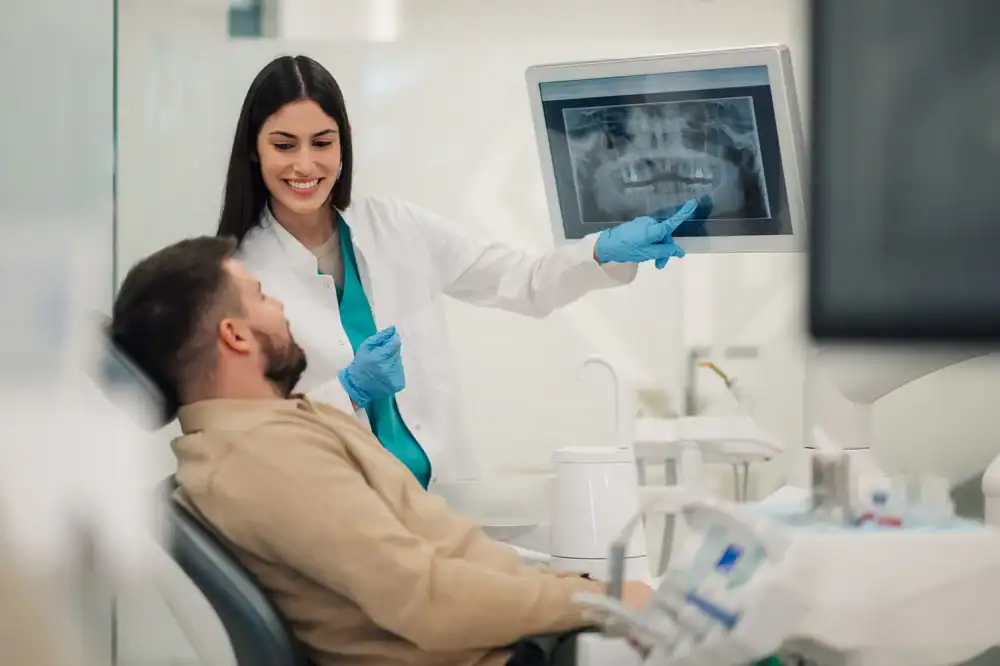

Store-bought guards vary a lot. Fit, coverage, material and professional supervision are what differ, and not every store guard is the same.
Share:

Summary:
The short answer, before anything else
NIDCR lists mouth guards, also called intraoral appliances, among the treatments for bruxism, describing them as separating the teeth to protect them. That applies to the principle, not to any particular product.
Store-bought guards are not all the same, so the useful comparison is not store versus custom as two fixed categories. Four things differ, and they differ by product: fit, coverage, material and professional supervision. Each one is set out below.
A guard you already own can be brought to a dental visit and checked against those four points. That is usually worth doing before spending anything further.
Most people arrive at a night guard the same way. A dentist mentions wear on the back teeth, or they wake with a sore jaw, and the first stop is the pharmacy aisle. That is a reasonable thing to try. It is worth knowing what varies between products.
A guard that meets your teeth evenly spreads the load. One that contacts hard on some teeth and not others concentrates it. A custom guard is adjusted in the chair until the contact is even; a boil-and-bite guard takes the shape of your teeth as they are, without that adjustment step.
Full-arch coverage means every tooth in that arch is included. Some store products cover a full arch and some cover only the front teeth. Partial coverage is the variable most worth checking, because teeth that are not covered have nothing to meet against.
If your bite feels different in the morning, or your back teeth do not meet the way they did, stop wearing it and have it looked at. Sustained pressure is the principle behind orthodontic treatment, so a device that loads some teeth and not others, worn for hours nightly over months, is worth taking seriously. Have it assessed rather than waiting to see what happens.
Guards are made in soft, hard and dual-layer materials. The evidence on whether soft material increases jaw muscle activity is mixed and comes from small studies. Some small trials have found higher muscle activity with soft splints and lower activity with hard ones. A 2023 comparison in people with bruxism found no significant difference between hard and soft splints in masseter muscle activity. Sample sizes in this area are small, the populations studied differ, and no systematic review settling the question was located.
What that means practically: material is a clinical decision rather than a rule, and it is a reasonable thing to ask your dentist about for your own wear pattern.
This is the one that is hard to replicate at home. It covers checking that the fit is even, adjusting it, reviewing the guard over time, and reading the wear on it at later appointments. It also covers noticing if something is not working as expected.

| Store-bought boil-and-bite | Custom made | |
|---|---|---|
| Coverage | Varies by product. Some cover a full arch, some only the front teeth | Full arch by design |
| Fit | Takes the shape of your teeth without adjustment | Checked and adjusted so contact is even across the arch |
| Material | Commonly soft. Varies by product | Chosen with your dentist. Ask what is used and why |
| Supervision | None | Fit checked, reviewed at later visits |
| Cost | Lower | Higher |
Reasonable to try
Worth having looked at
Want live answers?
Connect with a Scott Kupetz expert for fast, friendly support.
A guard separates the teeth and protects them. It does not reduce the muscle activity itself.
If jaw muscle symptoms continue despite a well-fitting guard, that warrants an assessment rather than an assumption about what comes next. NIDCR lists several approaches for bruxism: behavior change to adjust resting jaw position, stress management including counseling, mouth guards, and dental repair for damaged teeth. It also lists contributing factors worth reviewing, including alcohol, caffeine, smoking and certain medications. Which of those is relevant depends on the findings.
Botulinum toxin injections into the jaw muscle are sometimes discussed in this situation. They are covered in our separate page on masseter Botox, including the fact that this is an off-label use in the United States and what the published evidence shows about how long it lasts. It is one option among several, and whether it is appropriate depends on the examination rather than on the symptoms alone.
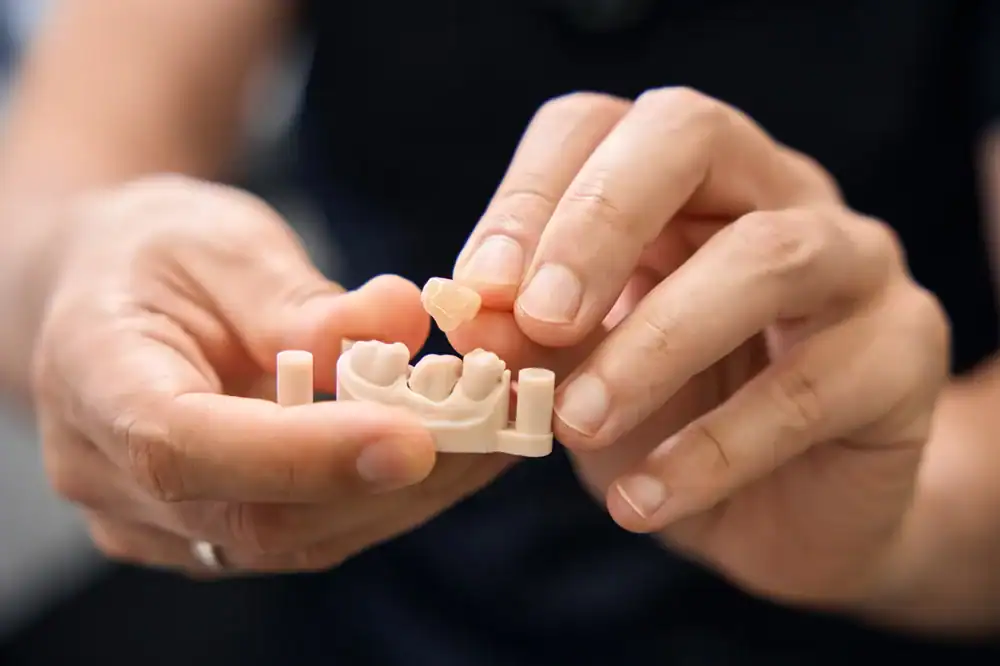
Rinse it and brush it with a soft brush and cool water. Keep it dry in a vented case rather than sealed wet. Never use hot water and never put it in a dishwasher, because heat can distort the material, and a distorted guard no longer fits the bite it was made for.
Have it looked at if you can see through a thinned spot, if it has cracked, if it no longer stays in place, or if it has gone cloudy and smells despite cleaning. A guard that has become loose is worth attention, since that can mean the guard has distorted or that something has changed in your mouth.
Grinding can contribute to problems people put down to bad luck: cracked teeth, restorations that come loose, wear on the heavily loaded side. Where wear is found, discussing a guard is part of addressing the cause rather than only the result. If you are not sure whether you grind at all, we wrote separately about the signs worth checking at home.
If you already own a store-bought guard, bring it. We can look at the coverage, check whether the contact is even, and tell you what we find. That answer is worth having before you spend anything further.
Dutchess and Ulster County
260 New Hackensack Road
Wappingers Falls, NY 12590
Albany, Rensselaer and Schenectady
1221 Curry Road
Rotterdam, NY 12306
Call 845-372-5975 and say you want your grinding looked at. If the muscle itself turns out to be the issue, our Botox and masseter treatment page covers that option. We accept CareCredit.
Article details:
Share:
Continue learning: