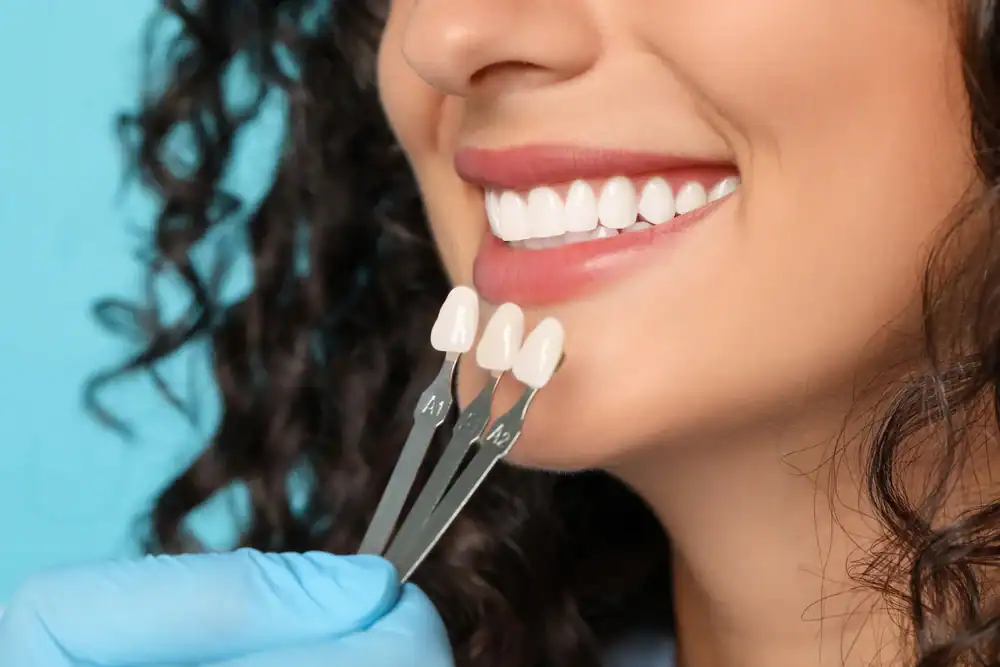

Cavity? Broken crown? Learn about fillings, crowns, and costs — from a Wappingers Falls dentist who's been doing this since 1988.
Share:

Summary:
Most people don’t search for a dentist until something hurts, something broke, or they’ve been putting it off long enough that the guilt finally wins. If that’s where you are right now, this page is for you. We’re going to walk through the difference between fillings and crowns, when each one makes sense, what the process actually looks like, and what you’re likely to pay — especially if you don’t have insurance. No pressure, no upsell, just the information you actually need to make a smart decision about your teeth.
A filling is exactly what it sounds like — we remove the decayed portion of a tooth and fill the space with a material that restores its shape and function. It’s one of the most common dental procedures in the world, and for good reason: roughly 92% of American adults have had a cavity at some point in their lives. You’re not unusual for needing one.
The decision to get a filling usually comes down to how much of the tooth is affected. Small to moderate cavities are ideal candidates. If the decay has spread further — taking out a significant chunk of the tooth’s structure — a filling alone may not hold up, and that’s when we start talking about onlays or crowns instead.
For most of dental history, silver amalgam was the standard. It’s durable, it’s been around for over a century, and it holds up well under chewing pressure. But it’s also visible — and that matters to a lot of people. When you laugh or yawn and someone can see a mouth full of silver, it’s a reminder that’s hard to ignore.
Composite resin — the tooth-colored alternative — has become the dominant choice for most patients today, and for good reason. It bonds directly to the tooth structure, which means less drilling than amalgam typically requires. It can be shaded to match your natural tooth color almost exactly, making it functionally invisible once placed. Nearly 68% of people choose tooth-colored restorations over amalgam when given the option.
That said, composite fillings don’t last quite as long on average. A composite filling has an expected lifespan of around five to seven years under normal conditions, while amalgam typically holds for about twelve. Modern composites have improved significantly, and with good oral hygiene and regular checkups, many patients get well beyond that average. But it’s worth knowing going in.
Gold fillings are the third option — rarely chosen for cosmetic reasons, but the most durable of all, often lasting twenty years or more. They’re also the most expensive and require custom fabrication, which means multiple visits. For most patients, composite is the practical sweet spot between aesthetics and function.
One thing worth knowing: the FDA updated its guidance in 2020 to recommend against amalgam in certain groups — including pregnant women, children under six, and people with kidney conditions. We don’t place amalgam fillings; composite is our standard.
This is one of the most common questions people ask before they ever call our office, and it’s a completely reasonable thing to want to know. The honest answer is that it depends on the size of the cavity, the number of tooth surfaces involved, and the material used — but we can give you a real range.
Composite fillings generally run between $150 and $450 per tooth. A small, single-surface cavity on the lower end; a larger, multi-surface fill on the higher end. Amalgam fillings, if you’re comparing, typically fall between $100 and $250. Gold and porcelain inlays are a different category — those can range from $300 to $1,500 or more depending on complexity.
If you have insurance, most plans cover fillings at 50% to 80% after your deductible. Some plans still classify composite as a cosmetic upgrade over amalgam and only reimburse at the amalgam rate — so it’s worth checking your specific plan before your appointment.
For patients in Wappingers Falls, Dutchess County, Ulster County, Schenectady County, Albany County, and Rensselaer County who are paying out of pocket, the most important thing to know is this: a cavity treated today with a $200 filling is far less expensive than the same cavity left untreated. Small decay that reaches the nerve becomes a root canal. A root canal plus a crown can run $2,000 to $4,000. The math on waiting is not good.
We give you a clear cost estimate before any work begins. No surprises at checkout. If cost is a concern, ask us about payment options — we’d rather find a way to help you move forward than have you leave without getting the care you need.
Want live answers?
Connect with a Scott Kupetz expert for fast, friendly support.
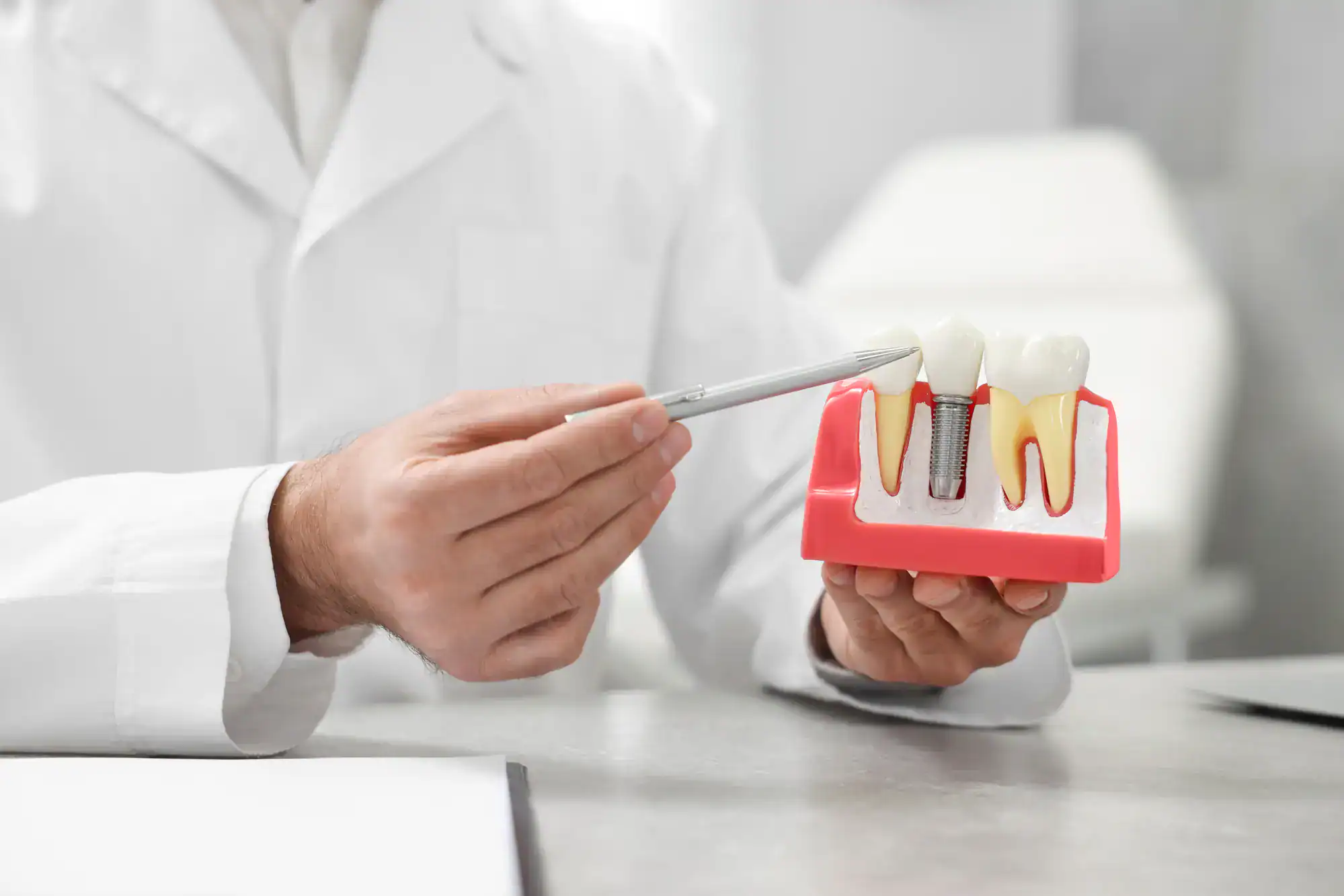
A crown is a full cap that fits over the entire visible portion of a tooth, restoring its shape, strength, and appearance. It’s the right call when a tooth is too damaged for a filling to hold — whether from a large cavity, a crack, a break, or significant wear. The tooth itself stays; the crown protects and reinforces what’s left.
We also use crowns after root canals, to anchor a dental bridge, or to cover an implant. They’re not a last resort — they’re a reliable, long-term solution for teeth that need more support than a filling can provide.
This is where a lot of patients get confused — or skeptical. We say you need a crown, but you’ve heard that onlays exist and you’re wondering if you’re being upsold. It’s a fair question, and the answer depends on how much of the tooth structure is still intact.
Think of it as a spectrum. A filling works when the damage is contained — a cavity that hasn’t spread too far. An onlay (sometimes called a partial crown) is the middle ground: it covers one or more cusps of the tooth but doesn’t require capping the whole thing. A full crown comes in when the damage is extensive enough that the remaining structure can’t support a smaller restoration on its own.
The case for onlays is real. Research from the National Institutes of Health has confirmed that onlays are increasingly accepted as a way to restore tooth contours and protect weakened cusps while preserving significantly more natural tooth structure than a full crown. Full crown preparations typically remove 67% to 75% of the remaining tooth structure — that’s a meaningful difference when there’s a less invasive option that will hold just as well.
Our approach is to recommend the least invasive option that will actually work for your specific tooth. If an onlay is the right call, we’ll tell you. If a crown is genuinely necessary, we’ll explain exactly why. You’ll never leave our office with a treatment plan you don’t understand.
Not all crowns are made from the same material, and the difference matters more than most patients realize. The right material depends on where the tooth is in your mouth, how hard you bite, and whether aesthetics are a priority.
BruxZir is a full-strength zirconia crown — essentially indestructible under normal chewing forces. It’s our preferred choice for back teeth, where bite pressure is highest, and for patients who grind their teeth. It’s not the most translucent material, but for molars that no one sees, durability wins. BruxZir crowns have over a decade of strong clinical research behind them.
E.max is a lithium disilicate glass-ceramic, and it’s the gold standard for front teeth. The translucency is exceptional — it mimics the way natural enamel catches light in a way that zirconia simply can’t match. If you’re getting a crown on a tooth that’s visible when you smile, e.max is typically the most aesthetic option available. The trade-off is that it’s less resistant to fracture than zirconia, which is why it’s not the first choice for heavy grinders or back molars. But for anterior teeth under normal bite forces, it performs beautifully.
Then there’s CEREC — and this is where the conversation changes for a lot of patients. CEREC is a CAD/CAM technology that allows us to design, mill, and place your permanent ceramic crown in a single appointment. No temporary crown. No second visit two weeks later. No waiting on a dental lab. For patients driving from Schenectady County, Albany County, Rensselaer County, or across Dutchess County to our Wappingers Falls office, that means one trip instead of two. It means you’re not walking around with a temporary for two weeks hoping it stays put. The crown is made from the same high-quality ceramic used in traditional lab-fabricated restorations — the speed comes from eliminating the lab shipping time, not from cutting corners on the material.
If you’ve been searching for same-day crowns and wondering whether the quality holds up, the short answer is yes — when the technology is used properly and the fit is verified before cementing, CEREC crowns perform on par with traditionally fabricated ones.
Whether you’ve got a cavity you’ve been ignoring, a filling that fell out last week, or a tooth that needs a crown, the most important thing is getting an honest assessment from someone who will explain your options clearly and recommend only what you actually need.
We’ve been doing exactly that from our office at 260 New Hackensack Road in Wappingers Falls since 1988. Patients come to us from across Dutchess County, Ulster County, Albany County, Rensselaer County, and Schenectady County — some because they want same-day CEREC crowns and can’t afford two days off work, some because they’ve been avoiding the dentist for years and finally need a practice that takes that seriously, and some simply because they want a dentist who’s been part of this community long enough to be trusted.
If you have questions about what type of filling or crown is right for your situation, or you just want to know what something is going to cost before you commit to anything, reach out to us. A conversation costs nothing, and it might be the thing that finally gets you moving in the right direction.
Article details:
Share:
Continue learning: