


Hear from Our Customers

A missing tooth doesn’t just affect how you look it quietly changes how you eat, how you speak, and how you feel walking into a room. Most people in Scotia who’ve been dealing with it for a while have already adjusted their habits around it without even realizing it. You chew on one side. You don’t bite into certain foods. You keep your mouth closed in photos. That’s not living with the problem solved that’s living around it.
The bigger issue is what’s happening underneath. When a tooth is gone, the jawbone beneath it starts to shrink. That process begins within the first few months and doesn’t stop on its own. For residents in Scotia who’ve been putting this off through a long Mohawk Valley winter telling themselves they’ll deal with it when things slow down the biology doesn’t wait. Bone loss makes future implant placement more complicated and more expensive. The longer the gap sits empty, the more your options narrow.
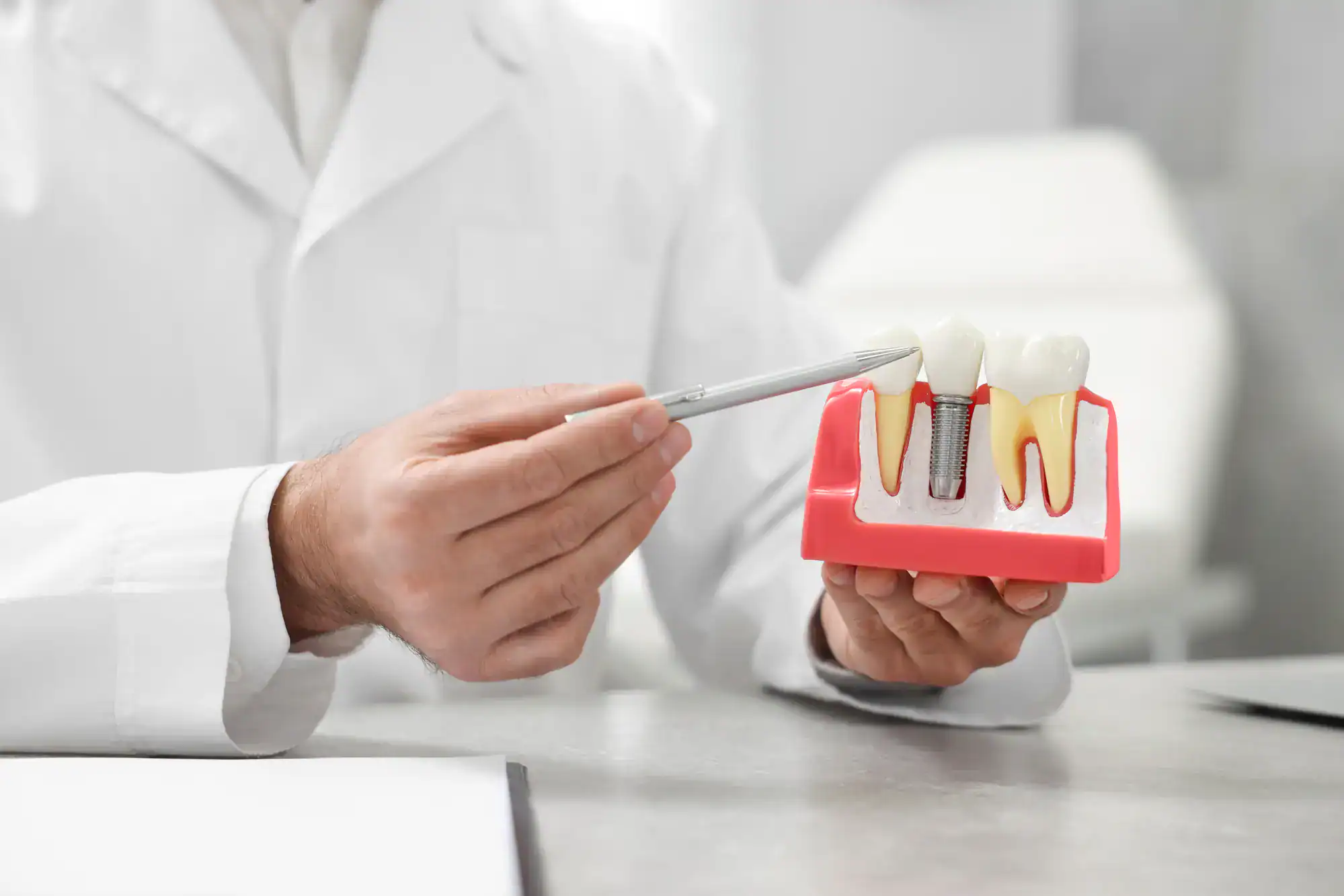
A tooth implant addresses both the visible gap and the structural problem beneath it. It’s the only replacement option that actually replaces the root, which is what keeps the jawbone stimulated and intact. You get something that functions like a real tooth, holds its position, and doesn’t require grinding down the healthy teeth on either side the way a bridge does. For people in Scotia who want a permanent teeth replacement not a patch, not a workaround this is the conversation worth having.
Dr. Scott Kupetz has been practicing dentistry since 1988 over 35 years of placing implants, restoring smiles, and actually getting to know his patients. He graduated from Fairleigh Dickinson College of Dental Medicine and has spent his entire career building the kind of practice where you see the same face every single time you walk in. That’s not a small thing. In a dental market where corporate chains rotate staff and you’re lucky to see the same associate twice, it matters that the doctor who reviews your X-rays is the same one placing your titanium post and delivering your final crown.
We serve patients across the Capital Region, including families and longtime residents in Scotia and throughout Schenectady County. If you’ve worked at GE Vernova or Knolls, raised kids in the Scotia-Glenville school district, or have simply lived in this community long enough to know what real accountability looks like this is the kind of practice that reflects those same values. No revolving door. No handoffs. Just one experienced doctor who’s responsible for your outcome from the first consultation to the finished result.

The process starts with a consultation where Dr. Kupetz looks at your full picture your bone density, the condition of surrounding teeth, your health history, and what you’re actually hoping to accomplish. This isn’t a quick scan and a sales pitch. It’s a real conversation about whether a single tooth implant, a molar implant, or a more comprehensive solution makes the most sense for where you are right now.
If you move forward, the first clinical step is placing the titanium post into the jawbone. This is done under local anesthesia, and for patients with anxiety, sedation is available which changes the experience entirely for people who’ve been avoiding dental care for years. After placement, there’s a healing period of several months while the post integrates with the bone. This phase is important and can’t be rushed, but it’s also mostly passive you go about your life while the implant does its job.
Once the bone has fully bonded with the post, Dr. Kupetz places the abutment and then the final dental implant crown. Because everything happens under one roof with the same doctor, there are no referrals, no gaps in communication, and no starting over with someone new. For patients in Scotia who’ve been quoted a process that involves multiple specialists across multiple offices, this matters. You get the full continuum of care in one place, with one provider who knows your case from day one.
Ready to get started?
Dental implants are the only missing teeth replacement option that works from the root up. A bridge sits on top of the gum line and relies on adjacent teeth for support which means those healthy neighboring teeth get permanently altered to hold it in place. Dentures sit on the gum surface entirely and do nothing to prevent the bone loss happening underneath. An implant, by contrast, is anchored directly in the jaw. It stimulates the bone the way a natural root does, which is why it’s the only option that actually prevents the facial collapse that happens over time when bone loss goes unaddressed.
For Scotia residents weighing the single tooth implant versus bridge question, the long-term math is worth understanding. A bridge typically runs $3,000–$4,000 upfront and usually needs to be replaced within a decade. A single implant in the Scotia area averages around $5,075 and when it’s placed correctly and cared for properly, it can last a lifetime. That’s one investment versus a recurring cost that compounds over time. We offer financing options, so the monthly reality of that investment is often more manageable than the sticker price suggests.
If you’ve been told in the past that you’re not a candidate because of bone loss, that conversation may be worth revisiting. Bone grafting has changed what’s possible for patients who lost teeth years ago and assumed they’d missed their window. Dr. Kupetz evaluates each case individually and for many people who assumed the door was closed, it isn’t.
The average cost for a single dental implant in the Scotia, NY area runs around $5,075, though the final number depends on your specific situation whether bone grafting is needed, which tooth is being replaced, and what the crown restoration involves. Molar implants, for example, can run slightly higher because of the bite force demands in that area of the mouth.
What’s worth understanding is the comparison. A bridge might look cheaper upfront at $3,000–$4,000, but it typically needs to be replaced every 8–12 years and permanently alters the healthy teeth on either side. Over a 20-year period, a bridge often costs more and delivers less. Most patients in Scotia who go through that math find the implant investment makes more sense. We offer financing through options like CareCredit, which makes it possible to manage the cost in monthly payments rather than a single lump sum.
Bone loss after tooth extraction is extremely common in fact, the most significant loss happens in the first 12 to 18 months after a tooth is gone. So if you’ve been missing a tooth for a few years and you’re worried you’ve already lost your window, that’s a very understandable concern. But it’s not automatically a dealbreaker.
Bone grafting has made implants accessible to a much wider range of patients than was possible even a decade ago. The graft builds up the area where bone has diminished, creating a stable foundation for the implant post. Dr. Kupetz evaluates bone density and jaw structure during your initial consultation, and many patients who were told “no” elsewhere have been successfully treated. The only way to know for certain is to have the evaluation done not to assume the answer based on what someone told you years ago.
Most traditional dental insurance plans in New York treat implants as a cosmetic or elective procedure and provide limited or no coverage for the implant post itself. Some plans will cover a portion of the crown or the extraction that precedes it, but the implant component is often out of pocket. This is frustrating, and it’s one of the most common surprises patients in the Scotia area run into when they start researching their options.
That said, many residents in Schenectady County who work at large employers like GE Vernova or Knolls Atomic Power Laboratory carry employer-sponsored dental plans that may include partial implant coverage or higher annual maximums than standard individual plans. It’s worth calling your benefits coordinator directly to ask specifically about implant coverage not just “major restorative” coverage, since implants are sometimes listed separately. If your benefits reset on January 1, the fall window is often a smart time to use remaining benefits toward the consultation or any preliminary work like extractions or bone grafting.
A dental bridge spans the gap left by a missing tooth by anchoring to the two teeth on either side of it. To do that, those neighboring teeth have to be permanently ground down healthy tooth structure that can never be restored. The bridge itself sits above the gum line and does nothing for the jawbone underneath, which continues to shrink over time. Bridges are also not permanent; they typically last 8–12 years before needing replacement.
A single tooth implant works completely differently. The titanium post is placed directly into the jawbone, where it fuses with the bone over a period of several months. This process called osseointegration is what makes an implant stable and what keeps the jawbone stimulated so it doesn’t continue to deteriorate. The neighboring teeth are left completely untouched. For patients in Scotia who still have healthy teeth on either side of a gap, preserving those teeth is a significant long-term advantage that a bridge simply can’t offer.
The implant procedure itself is performed under local anesthesia, so you shouldn’t feel pain during the placement. Most patients are surprised by how manageable it actually is compared to what they’d imagined. Post-procedure soreness is normal for a few days and is typically handled with over-the-counter pain relief.
For patients who have significant dental anxiety which is genuinely common among adults in the Scotia area who’ve deferred care for years sedation is available. Sedation doesn’t just take the edge off; for many people, it’s the reason they’re finally able to move forward with a procedure they’ve been putting off for a long time. Dr. Kupetz has spent over three decades working with anxious patients, and the approach here isn’t to rush you through. If you’ve avoided the dentist because of fear, that history doesn’t disqualify you it just means the conversation about sedation should happen early so you know what your options are before you commit to anything.
From initial consultation to final dental implant crown, the full process typically takes somewhere between three and six months for most straightforward cases. The longest part of that timeline is the healing phase after the titanium post is placed the bone needs time to fully integrate with the post before the crown can be attached, and that process generally takes two to four months depending on the individual.
If bone grafting is needed first, that adds time the graft itself needs to heal before implant placement can happen, which can extend the overall timeline by several months. For patients in Scotia who’ve been missing teeth for years and have experienced bone loss, this is worth factoring in when you’re planning. The good news is that most of the timeline is passive you’re not in the chair every week. You have a few key appointments spread out over several months, and the rest of the time you’re just waiting for biology to do its job. Dr. Kupetz walks through the expected timeline with each patient during the consultation so there are no surprises about what the process involves.
Other Services we provide in Scotia