


Hear from Our Customers
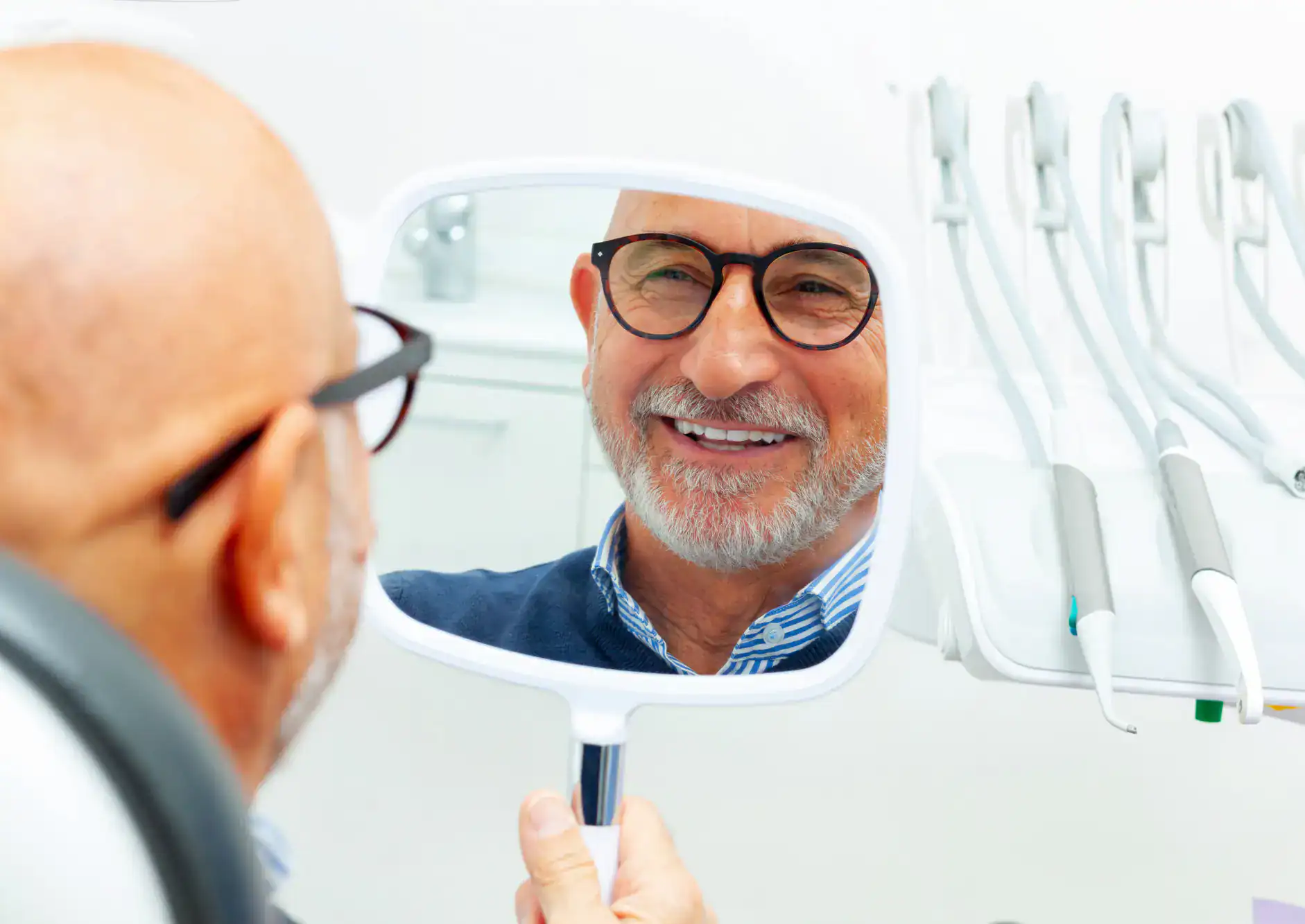
You stop thinking about it. That’s the honest answer. No more adjusting how you chew, no more covering your mouth when you laugh, no more quietly dreading the day someone notices. A permanent tooth implant in Menands, NY gives you back the kind of confidence that doesn’t require a second thought.
Beyond the obvious, there’s something most patients don’t know until after the fact: a dental implant is the only tooth replacement option that actually preserves your jawbone. Every month a tooth is missing, the bone beneath it shrinks. That bone loss shifts neighboring teeth, changes your bite, and over time, alters the shape of your face. Menands residents who’ve been putting this off whether it’s been six months or six years are dealing with a problem that’s quietly getting harder to fix.
Menands skews younger than most Albany County communities, with a median age right around 31. A lot of people here lost a tooth to an injury, an accident, or early gum disease not old age. That matters, because a younger patient with good bone density has decades of benefit ahead of them. Getting a permanent teeth replacement in Menands, NY now means you’re done dealing with it for the rest of your life.
Dr. Scott Kupetz has been placing dental implants for Albany County patients since 1988 before most of the chain clinics now advertising near Menands even existed. That’s not a number thrown in to impress you. It means thousands of cases, a deep familiarity with the range of patients this region produces, and a track record that no newer provider can replicate.
What makes our practice different isn’t just experience. It’s that you always see Dr. Kupetz. Not a rotating associate, not whoever’s available that day Dr. Kupetz, from your first consultation to your final crown. For patients coming in from Menands along the Broadway corridor or off I-787, and for those exploring dental implants in Albany County more broadly, that consistency matters. You’re not starting over with someone new at every appointment.
We handle everything in one place: consultation, implant placement, bone grafting if needed, and the final restoration. No referrals across town, no navigating multiple billing departments, no re-explaining your situation from scratch. Just one doctor, one location, and a clear plan from start to finish.

It starts with a conversation, not a sales pitch. At your first appointment, Dr. Kupetz takes a close look at your bone density, gum health, and overall oral condition to figure out what you’re actually working with. If there’s been significant bone loss which is common when a tooth has been missing for a while bone grafting may be part of the plan. That’s not a dealbreaker. It just means there’s a step before the implant placement that gives the site the foundation it needs.
Once the site is ready, the titanium post is placed into the jawbone. This is the part most people are nervous about, and it’s also where sedation makes a real difference. We offer sedation dentistry specifically for patients who want to get through this without being anxious the entire time. Most patients are surprised by how manageable it actually is. After placement, there’s a healing period typically a few months where the post integrates with the bone. This process, called osseointegration, is what makes the implant stable for the long term.
The final step is the dental implant crown in Menands, NY the visible tooth that sits on top of the implant. It’s matched to your natural teeth and built to function like the real thing. Albany County winters are long, and cold sensitivity is a real issue for patients with exposed bone or gaps in their smile. Getting the crown in place closes that off entirely. From that point forward, you brush and floss it like any other tooth.
Ready to get started?
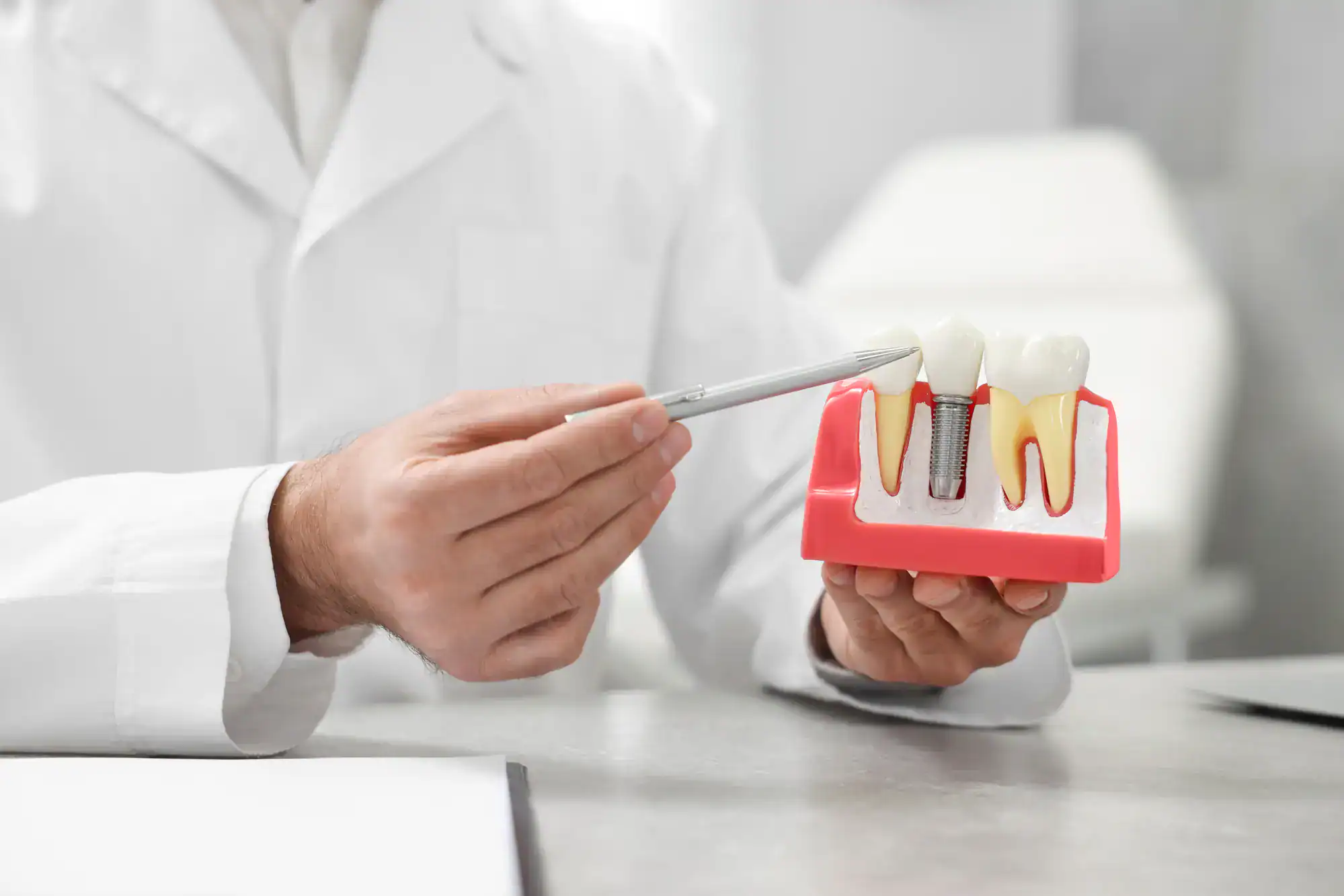
Whether you’re missing one tooth or several, the approach starts with what’s actually right for your situation not what’s fastest or cheapest to provide. A single tooth implant in Menands, NY replaces the root and the crown without touching the healthy teeth on either side. Compare that to a traditional bridge, which requires permanently grinding down two perfectly good adjacent teeth just to have something to anchor to. Those teeth will never be the same, and the bridge typically needs to be replaced within 5 to 10 years anyway.
Molar implants in Menands, NY are one of the most common cases we see and one of the most underestimated. People put off replacing back teeth because nobody can see them. But molars carry the load when you chew. When one is missing, neighboring teeth start drifting, bite pressure shifts unevenly, and what starts as one missing back tooth can quietly turn into a much bigger problem. Replacing it with a permanent implant is one of the highest-value decisions you can make for your long-term dental health.
For patients dealing with multiple missing teeth or failing dentition across a full arch, we also offer implant-supported dentures and All-on-4 restorations. These aren’t the removable dentures your grandparents wore they’re fixed, stable, and function like natural teeth. And for patients who’ve been told they’re not candidates due to bone loss, that conversation is worth having again. Bone grafting has changed what’s possible, and many patients who assumed the answer was no are surprised to find out there’s a real path forward.
A single dental implant in Menands, NY generally runs between $3,000 and $5,000 when you factor in the implant post, abutment, and crown together. If bone grafting is needed which is common when a tooth has been missing for a year or more that adds to the total. It’s worth knowing upfront so you’re not caught off guard.
The reason implants cost more than a bridge or partial denture isn’t arbitrary. A bridge has to be replaced. A denture has to be adjusted, relined, and eventually replaced. An implant, placed correctly and maintained well, can last the rest of your life. When you run the numbers over 20 or 30 years, the implant is often the more cost-effective option. We offer financing through CareCredit, and our team will walk you through what your insurance may cover before you commit to anything.
The core difference is what happens to the teeth around the gap. A bridge uses the two healthy teeth on either side as anchors which means those teeth have to be permanently ground down and capped, whether they need it or not. Once that’s done, it can’t be undone. The bridge then sits on top of the gum, which means the bone underneath continues to deteriorate because there’s no root stimulating it.
A single tooth implant in Menands, NY replaces the root itself. The titanium post goes into the jawbone, the bone grows around it, and the result is a stable, permanent foundation that preserves bone and leaves adjacent teeth completely untouched. It functions, looks, and feels like a natural tooth. For patients who are still on the fence between the two options, the long-term picture almost always favors the implant especially for patients in their 30s and 40s who have decades of use ahead of them.
Possibly, yes and it’s worth asking before you assume the answer is no. Bone loss is one of the most common reasons patients self-disqualify before ever picking up the phone, and it’s also one of the most frequently misunderstood barriers. The extent of the loss matters, but in many cases, bone grafting can restore enough density to make implant placement viable.
Bone grafting involves adding bone material to the area where the implant will be placed, giving it a solid foundation to integrate with. It adds time to the overall process typically a few months of healing before the implant post is placed but it opens the door for patients who would otherwise have no permanent replacement option. If you’ve been told you’re not a candidate, or if you’ve been missing a tooth for several years and assume the window has closed, it’s worth having a direct conversation with Dr. Kupetz about what the imaging actually shows and what your options are from there.
Yes, and for a lot of patients, it’s the reason they finally make the call. Dental anxiety is real, and it doesn’t discriminate it affects people across every income level, age group, and background. If the idea of implant surgery has been keeping you from addressing a missing tooth, sedation dentistry changes that equation entirely.
We offer sedation as a standard part of the implant process for patients who want it. You’re not white-knuckling your way through the procedure. Most patients who use sedation describe the experience as far less intense than they expected, and many are genuinely surprised by how manageable the recovery is. For Menands residents who’ve been putting this off specifically because of fear whether it’s been one year or ten sedation is often the thing that finally makes moving forward feel possible. It’s not an upsell. It’s a real option that exists specifically for this situation.
The short answer: the problem gets harder to fix. When a tooth is lost, the jawbone beneath it starts to break down because there’s no longer a root providing the stimulation it needs to stay dense. The most significant bone loss happens within the first 18 months, but the deterioration doesn’t stop there it continues for as long as the gap remains.
That bone loss has real consequences. Neighboring teeth begin to drift toward the empty space. Opposing teeth can over-erupt, growing toward the gap. Your bite shifts, chewing becomes uneven, and the structural integrity of your surrounding teeth takes on stress it wasn’t designed to handle. Over time, what started as one missing molar in Menands, NY can cascade into a situation involving multiple teeth. The longer you wait, the more likely bone grafting becomes necessary before an implant can even be placed which adds time and cost to the process. Acting sooner keeps your options open.
A well-placed dental implant, properly maintained, can last 20 to 30 years and in many cases, a lifetime. That’s not a guarantee, but it’s a realistic expectation for a healthy patient who brushes, flosses, and keeps up with regular checkups. The titanium post tooth replacement in Menands, NY integrates directly with your jawbone, which is what gives it that kind of longevity. There’s no adhesive, no framework resting on soft tissue, no dependency on adjacent teeth holding it in place.
Compare that to a traditional bridge, which typically lasts 5 to 15 years before it needs to be replaced and each replacement means more work on the anchor teeth. Removable dentures require relining and adjustment over time as the jawbone changes shape beneath them. For Albany County patients who are younger and active, the implant’s lifespan is a significant part of what makes it the right investment. You’re not solving the problem for now you’re solving it for good.
Other Services we provide in Menands