
Wondering if you're too old for dental implants? Age alone doesn't determine candidacy. Learn about success rates, costs, and options specifically for seniors in Schenectady County, NY.
Share:
Summary:
You’ve probably heard that dental implants are the gold standard for replacing missing teeth. But when you’re over 65, a different question starts creeping in: Am I too old for this?
Here’s the short answer—no. Age alone doesn’t disqualify you from getting dental implants. What matters is your overall health, bone structure, and willingness to follow through with the process. If you’re tired of dentures that slip during meals or avoid certain foods because your teeth can’t handle them anymore, implants might be exactly what you need.
This isn’t about convincing you to do something unnecessary. It’s about giving you the facts so you can decide whether dental implants make sense for your situation. Let’s start with what actually determines success.
The idea that there’s an age cutoff for dental implants is a myth. Studies consistently show that seniors in their 70s and 80s have success rates that match or even exceed those of younger patients. In fact, research found that patients over 75 had a 96.8% five-year survival rate compared to 92.1% for those aged 65-75.
Your chronological age matters far less than your health status and bone quality. If you’re in reasonably good health and your jawbone can support an implant—or can be built up to do so—you’re likely a candidate. The evaluation process looks at factors like controlled diabetes, cardiovascular health, and bone density, not the number on your birthday cake.
What does matter is whether you’re committed to the healing process and can maintain good oral hygiene afterward. If you can brush your teeth and show up for follow-up appointments, age becomes just a number in your chart.
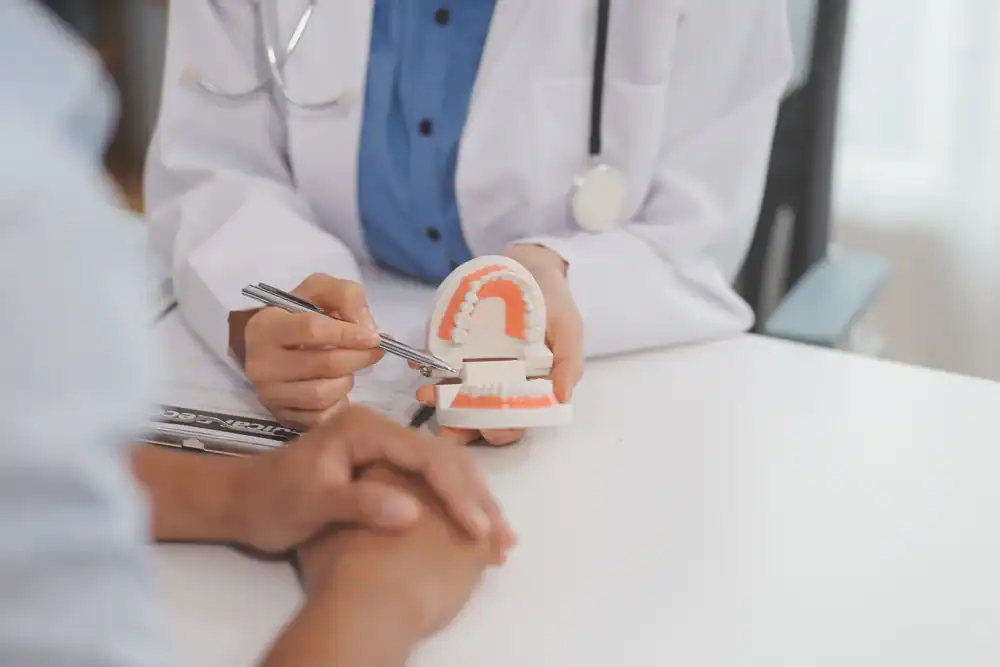
The data on dental implants for seniors is encouraging. Multiple studies report success rates around 95% for older adults, with some research showing even higher numbers for patients over 75. These aren’t just short-term results either—many implants last 15 to 20 years or longer with proper care.
Success depends more on your overall health than your age. Seniors who maintain good oral hygiene and attend regular dental checkups often experience implant longevity comparable to much younger patients. The key is managing any existing health conditions before starting treatment.
Conditions like osteoporosis, diabetes, and heart disease don’t automatically disqualify you. They just require additional planning and coordination with your medical team. Well-controlled diabetes poses no significant issue for dental implants, though uncontrolled diabetes can slow healing and increase infection risk. Similarly, patients with cardiovascular disease can safely receive implants when their condition is properly managed.
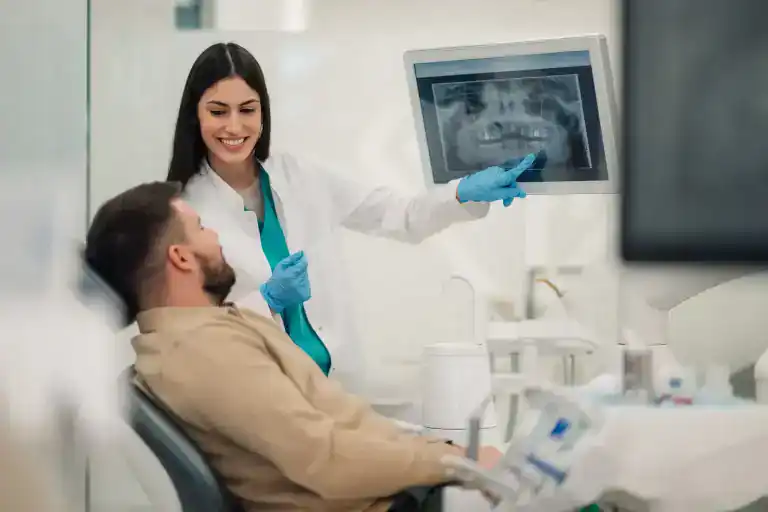
Bone density is often a concern for seniors, particularly women who’ve gone through menopause. While osteoporosis can affect implant stability, it’s not an automatic barrier. Even with diminished bone density, procedures like bone grafting can prepare your jaw to support implants successfully. We assess your bone quality using imaging technology and determine whether additional steps are needed.
The healing process may take slightly longer for seniors compared to younger patients. As we age, tissue and bone regeneration naturally slow down. Where a younger patient might complete the osseointegration process in three to four months, seniors might need four to six months. This extended timeline isn’t a failure—it’s simply your body working at its own pace to create a stable, long-lasting foundation.
What really impacts success is following post-operative care instructions. Seniors who stick to soft food diets during initial healing, maintain excellent oral hygiene, and attend all follow-up appointments see excellent outcomes. The commitment to care matters more than the speed of healing.
Many seniors take medications that could impact dental implant surgery and healing. Blood thinners, commonly prescribed for heart conditions, can increase bleeding risk during the procedure. Osteoporosis medications, particularly bisphosphonates, may affect how bone heals around the implant. This doesn’t mean you can’t get implants—it means we need to know about every medication you’re taking.
We review your complete medical history before recommending implants. This includes discussing any chronic conditions, current medications, and recent health changes. In some cases, we coordinate with your primary care physician or specialist to ensure the timing and approach are safe for your specific situation.
Diabetes is one of the most common concerns among seniors considering implants. If your blood sugar is well-controlled, implants can be just as successful for you as for someone without diabetes. The key is maintaining stable glucose levels before, during, and after surgery. Uncontrolled diabetes slows wound healing and increases infection risk, so getting your levels stable before proceeding is essential.
Cardiovascular disease requires careful management but isn’t a barrier to implant treatment. We may consult with your cardiologist, especially regarding blood-thinning medications. Some patients need to temporarily adjust their medication schedule around surgery, while others can proceed without changes. These decisions are made on a case-by-case basis with input from your entire medical team.
Osteoporosis deserves special attention because it directly affects bone density. While the condition can make implant placement more challenging, research shows that implants can still be successful in patients with osteoporosis. The jawbone is often less affected than other bones in the body, and techniques like bone grafting can create adequate support even when density is reduced.
Smoking is perhaps the most controllable risk factor. It restricts blood flow and significantly lowers implant success rates. If you smoke, quitting before the procedure dramatically improves your chances of a successful outcome. We typically recommend patients stop smoking several weeks before surgery and throughout the healing period.
The bottom line is that most health conditions can be managed to allow for safe implant placement. Honest communication with us about your complete health picture ensures we can create a treatment plan that works for you.
Want live answers?
Connect with a Scott Kupetz expert for fast, friendly support.
Cost is often the biggest concern for seniors on fixed incomes. A single dental implant typically ranges from $3,000 to $6,000, which includes the implant post, abutment, and crown. If you need multiple teeth replaced, those numbers add up quickly.
Full-mouth restoration using implants can range from $15,000 to $90,000 depending on the approach and materials used. That’s a significant investment, especially when you’re living on retirement savings or Social Security. Understanding what drives these costs and what coverage options exist helps you make an informed decision.
The price reflects more than just the materials. You’re paying for surgical expertise, advanced imaging technology, custom-fabricated restorations, and follow-up care over several months. Unlike dentures that need replacement every 5 to 10 years, implants are designed to last decades with proper care. When you calculate the long-term cost per year, implants often become more economical than repeatedly replacing dentures.
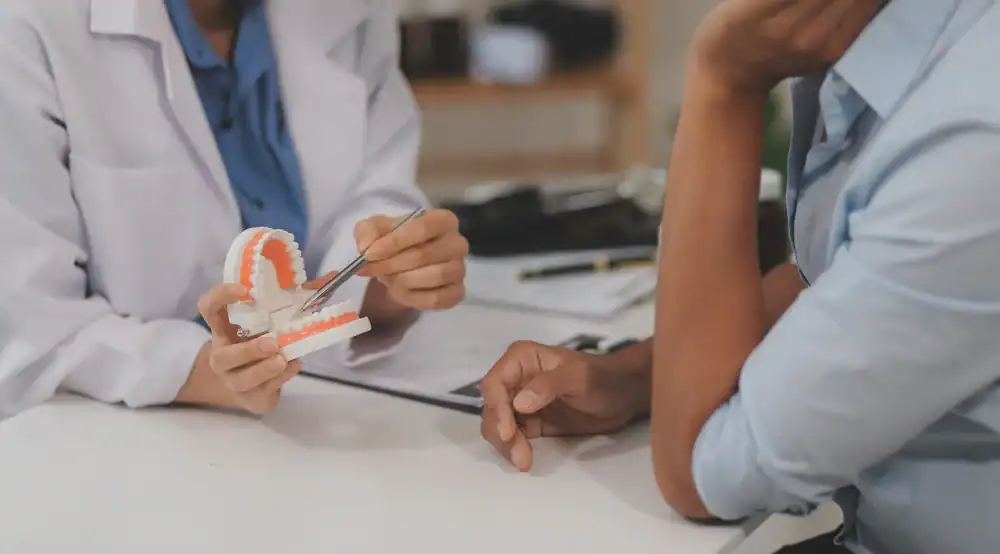
Understanding what you’re actually paying for helps make sense of dental implant costs. The total price typically covers several distinct components and stages of treatment. Many clinics advertise only the cost of the implant post to make the price look lower, but the complete treatment involves much more.
The implant post itself is a biocompatible titanium or ceramic screw that’s surgically placed into your jawbone. This serves as the foundation for your replacement tooth. While critical to success, the post is often not the most expensive part of the overall treatment. The surgical procedure to place it, including anesthesia and the surgeon’s expertise, adds significant cost.
After the implant is placed, you enter a healing period where the bone fuses with the implant through osseointegration. During this time, you may need temporary restorations to maintain appearance and function. Once healing is complete, an abutment—a connector piece—is attached to the implant. Finally, a custom-made crown is created and placed on top.
Each of these components requires specialized materials and expertise. The crown alone can range from $500 to $3,000 depending on the material used. Porcelain and zirconia crowns cost more than metal or composite options but provide superior aesthetics and durability.
Additional procedures may be necessary before implants can be placed. Tooth extractions, if you still have damaged teeth in the area, add to the total cost. Bone grafting to build up insufficient jawbone can add $300 to $3,000 per site. Sinus lifts, sometimes needed for upper jaw implants, involve additional surgical fees.
Diagnostic imaging is another component of the total investment. Advanced CT scans or cone beam imaging help us evaluate bone quality and plan precise implant placement. These scans typically cost $200 to $600 but are essential for successful outcomes, especially in seniors where bone density may be a concern.
Follow-up appointments throughout the healing process are usually included in the quoted price, but it’s worth confirming. You’ll need several visits over three to six months to monitor healing and ensure the implant is integrating properly. These checkups are crucial for catching any issues early.
When comparing quotes from different providers, make sure you’re comparing complete treatment costs, not just the implant post. Ask for a detailed breakdown that includes all surgical fees, materials, temporary restorations, and follow-up care. This transparency helps you avoid surprise charges later in the process.
Original Medicare doesn’t cover dental implants in most situations. Part A and Part B exclude routine dental care, and implants are typically classified as elective rather than medically necessary. This leaves many seniors paying out of pocket or seeking alternative coverage options.
Medicare Advantage plans offer your best chance at some implant coverage. These Part C plans, offered by private insurance companies, often include dental benefits that Original Medicare doesn’t provide. Some Medicare Advantage plans cover a portion of implant costs, though coverage varies significantly between plans.
Even with Medicare Advantage dental coverage, you’ll likely face annual maximums around $1,500 to $2,000. Since a single implant can cost $3,000 to $6,000, these maximums rarely cover the full treatment. You’ll need to pay the difference out of pocket. Still, getting $1,500 toward a $4,000 implant is better than paying the entire amount yourself.
Review your plan’s Evidence of Coverage document carefully. Search for terms like “dental implants” or “prosthodontics” to see exactly what’s covered. Some plans cover the surgical placement but not the crown, or vice versa. Others may cover implants only when deemed medically necessary, such as after an accident or cancer treatment.
If you don’t currently have a Medicare Advantage plan with dental coverage, you can switch during the annual enrollment period from October 15 to December 7. Working with a licensed insurance agent who understands dental benefits can help you find a plan that includes implant coverage for the following year.
Beyond insurance, several payment options can make implants more affordable. CareCredit and similar healthcare financing companies offer payment plans specifically for dental work. These plans often feature promotional periods with zero interest if you pay off the balance within 12 to 24 months. Monthly payments of $200 to $300 can make a $4,000 implant manageable on a fixed income.
Health Savings Accounts (HSAs) or Flexible Spending Accounts (FSAs) allow you to use pre-tax dollars for dental implants. If you have access to these accounts through a spouse’s employer or your own retirement benefits, they can reduce your effective cost by 20% to 30% depending on your tax bracket.
Some dental practices offer in-house discount plans or senior discounts ranging from 10% to 15%. While not insurance, these programs can reduce your out-of-pocket costs. Ask whether we offer any special pricing for seniors or payment arrangements that spread costs over the treatment timeline.
Dental schools sometimes provide implant services at reduced rates, with procedures performed by supervised students. While this option takes longer and requires more appointments, it can cut costs by 30% to 50%. The trade-off is extended treatment time and less control over which provider you see.
The key is exploring all options before assuming implants are financially out of reach. Many seniors find that combining a Medicare Advantage dental benefit with financing makes treatment affordable within their budget.
Dental implants for seniors aren’t about vanity. They’re about maintaining your ability to eat nutritious foods, speak clearly, and feel confident in social situations. The decision comes down to whether the benefits align with your health goals and whether the investment makes sense for your situation.
Age alone won’t stop you from getting implants. What matters is your overall health, bone quality, and commitment to the process. If you’re tired of dentures that don’t stay put or you want a permanent solution that lets you eat what you want, implants deserve serious consideration.
The costs are significant, but so are the long-term benefits. When you factor in decades of use without replacements, along with improved nutrition and quality of life, many seniors find implants worth the investment. Exploring Medicare Advantage options and financing plans can make treatment more accessible than you might expect.
If you’re in Schenectady County, NY or the surrounding areas and want to explore whether dental implants are right for you, we offer comprehensive evaluations with over 30 years of experience. We specialize in sedation dentistry for anxious patients and provide same-day emergency appointments when needed. Your first step is a consultation to assess your specific situation and discuss all available options.
Article details:
Share:
Continue learning: