

Regular dental cleanings remove hardened plaque and tartar that brushing alone can't eliminate, preventing gum disease and expensive treatments down the road.
Share:
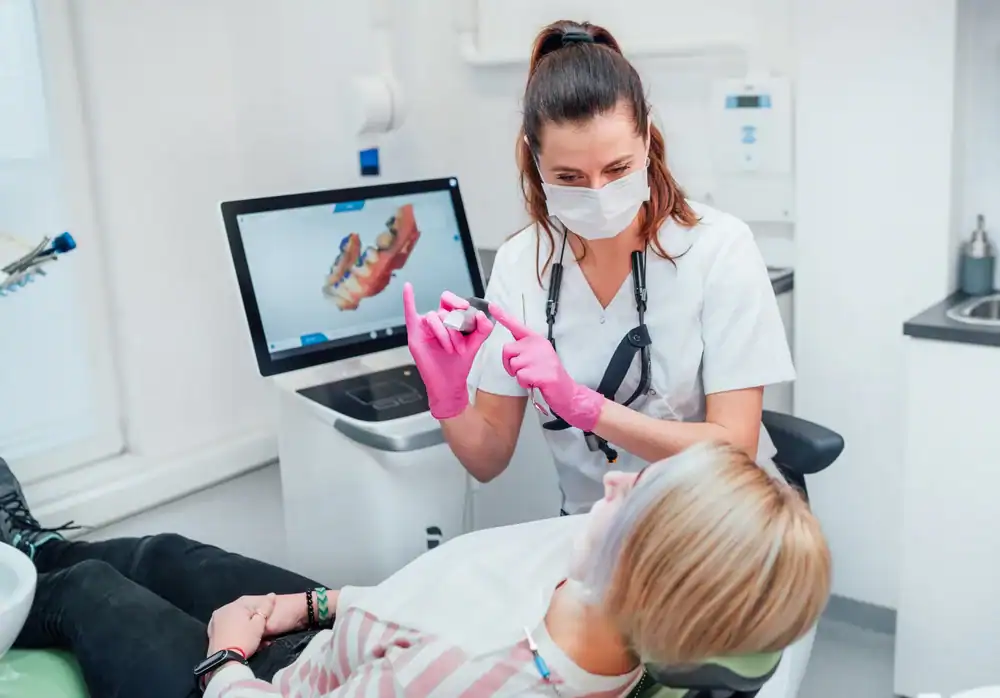
Summary:
You brush twice a day. You floss when you remember. But even the most diligent home care can’t remove everything building up on your teeth.
That sticky film you feel in the morning? It’s plaque, and within 24 to 72 hours, it hardens into tartar that only professional tools can remove. Left unchecked, that buildup leads to cavities, gum disease, and treatments that cost far more than a simple cleaning.
If you’re wondering what actually happens during a dental cleaning, how much it costs, or why dentists keep recommending them every six months, here’s what you need to know.
A professional dental cleaning isn’t just a quick polish and you’re done. It’s a systematic process that removes buildup your toothbrush can’t touch and catches problems before they become painful.
The cleaning typically takes 30 to 60 minutes, depending on how much tartar has accumulated since your last visit. Your dental hygienist uses specialized tools—including ultrasonic scalers that vibrate plaque loose and manual instruments for stubborn spots—to clean areas between your teeth and below your gumline.
Most people describe the experience as uncomfortable at worst, not painful. You’ll hear scraping sounds and feel pressure, but it shouldn’t hurt. If you haven’t been to the dentist in a while, expect a bit more time spent on removing built-up tartar.

Understanding what happens during your appointment can ease a lot of anxiety. Here’s the actual process, step by step.
First, your hygienist examines your mouth with a small mirror, checking for signs of inflamed gums, cavities, or other concerns. If they spot anything serious, they’ll call in the dentist before proceeding. This initial check only takes a minute or two but catches problems early.
Next comes scaling—the removal of plaque and tartar from your teeth and gumline. Your hygienist uses an ultrasonic scaler, which uses high-frequency vibrations and a water spray to break up hardened deposits. For tighter spaces and stubborn tartar, they’ll switch to hand-held scalers. You’ll hear scraping. That’s normal. The more tartar you have, the longer this step takes, which is exactly why regular cleanings matter.
After scaling, your hygienist brushes your teeth with a high-powered electric brush and gritty toothpaste called prophylaxis paste. This isn’t your bathroom toothbrush—it’s designed to polish away any remaining tartar and surface stains. You’ll often get to choose your toothpaste flavor, which is a small comfort during an otherwise clinical experience.
Professional flossing comes next. Even if you floss daily at home, a hygienist can reach deeper between teeth and remove debris left from earlier steps. This also gives them a chance to check for bleeding or inflammation between teeth.
Finally, you’ll rinse with a fluoride solution, and we often apply a fluoride treatment—either a gel in a mouthpiece or a varnish painted directly on your teeth. Fluoride strengthens enamel and helps prevent cavities for months after your visit. You’ll need to avoid eating or drinking for about 30 minutes to let it absorb.
The dentist then does a final examination, checking for any issues the hygienist noted and addressing questions you might have. If everything looks good, you’re done. If not, we’ll discuss next steps.
Not all dental cleanings are the same, and understanding the difference can save you confusion and money.
A regular cleaning—technically called prophylaxis—is what most people with healthy gums get twice a year. It cleans above the gumline, removing plaque and tartar from tooth surfaces. It’s preventive. It keeps your mouth healthy.
A deep cleaning, called scaling and root planing, goes below the gumline. It’s a treatment for gum disease, not routine maintenance. If you have periodontal pockets (spaces between your gums and teeth) deeper than 4mm, bleeding gums, or bone loss visible on X-rays, we’ll likely recommend deep cleaning.
Deep cleaning is usually broken into multiple appointments and often requires local anesthesia because the hygienist is working beneath your gums. It costs significantly more—anywhere from $400 to $1,800 for a full mouth, compared to $75 to $200 for a routine cleaning. Some patients need periodontal maintenance every three to four months after a deep cleaning to keep gum disease under control.
Here’s the key: if you keep up with regular cleanings every six months, you’re far less likely to ever need a deep cleaning. Prevention is cheaper, faster, and a lot more comfortable than treatment.
Want live answers?
Connect with a Scott Kupetz expert for fast, friendly support.
Cost is one of the biggest reasons people delay or skip dental cleanings, but understanding what you’ll actually pay makes it easier to plan.
In Schenectady County, NY, a routine dental cleaning typically costs between $75 and $200 without insurance. That price usually includes the cleaning itself, a basic exam, and sometimes X-rays, though X-rays are often billed separately.
If you have dental insurance, most plans cover preventive cleanings at 100% twice a year when you visit an in-network dentist. That means you pay nothing out of pocket. Even if your dentist is out of network, you’ll likely pay significantly less than the full cost.

Let’s break down what affects the price you’ll actually pay.
Location matters. Urban dental offices in areas like Albany or Saratoga Springs tend to charge more than practices in smaller communities like Rotterdam or Scotia. Cost of living, rent, and local competition all play a role. In Schenectady County, you’re looking at prices on the lower to mid-range compared to major metropolitan areas.
The type of cleaning you need is the biggest cost driver. A routine prophylaxis cleaning for someone with healthy gums runs $75 to $200. A deep cleaning for gum disease can cost $200 to $435 per quadrant of your mouth—meaning a full-mouth deep cleaning could reach $800 to $1,800.
Your insurance status changes everything. Most dental insurance plans categorize routine cleanings as preventive care and cover them fully, twice per year. If you don’t have insurance, ask about payment plans or financing options like CareCredit, which many practices accept.
Additional services add to the total. Bitewing X-rays might add $50 to $150. Fluoride treatments can add another $20 to $50. A comprehensive new patient exam could add $50 to $400 to your first visit. Always ask for a cost estimate before agreeing to treatment.
Here’s the math that matters: a $150 routine cleaning twice a year costs $300 annually. Compare that to a root canal ($800 to $1,500) or a crown ($1,000 to $3,000)—both of which become necessary when preventable problems go untreated. Regular cleanings aren’t an expense. They’re an investment that saves you money.
The standard recommendation is every six months, and there’s solid science behind it.
Plaque forms on your teeth within 20 minutes of eating. Within 24 to 72 hours, that soft, sticky film hardens into tartar, which you cannot remove with brushing or flossing. Only professional tools can scrape it off. By the six-month mark, enough tartar has typically accumulated to warrant removal, even if you have excellent home hygiene.
The six-month schedule also gives your dentist regular opportunities to catch problems early—small cavities that need simple fillings instead of root canals, early-stage gum inflammation that reverses with better brushing instead of requiring deep cleaning and antibiotics.
That said, six months isn’t universal. Some people need cleanings every three to four months. If you have a history of gum disease, diabetes, dry mouth, smoke, or are prone to cavities, more frequent visits help keep problems under control. We’ll recommend a schedule based on your specific risk factors.
On the flip side, some people with exceptional oral health wonder if they can stretch cleanings to once a year. Technically possible, but risky. Even healthy mouths develop tartar, and skipping that second annual cleaning gives small problems time to grow into bigger, more expensive ones. Most dental professionals agree: twice a year is the sweet spot for most people.
If it’s been more than six months since your last cleaning, you’re overdue. The longer you wait, the more buildup accumulates, and the more uncomfortable (and expensive) your next visit becomes.
Regular dental cleanings aren’t just about avoiding cavities. They prevent gum disease, which affects nearly half of American adults over 30 and has been linked to heart disease, diabetes complications, and stroke. They catch oral cancer early, when treatment is most effective. And they save you from expensive, painful procedures down the road.
Most importantly, they give you peace of mind. When you keep up with cleanings every six months, you’re not wondering if something’s wrong. You’re not avoiding the dentist because you’re embarrassed about how long it’s been. You’re taking care of your health in the most straightforward way possible.
If you’re in Schenectady County, NY and it’s time for your next cleaning—or if it’s been a while and you’re ready to get back on track—we offer comprehensive dental cleanings with a focus on your comfort. With over 30 years of experience and sedation options for anxious patients, we make it easier to get the care you need without the stress you don’t.
Article details:
Share:
Continue learning: