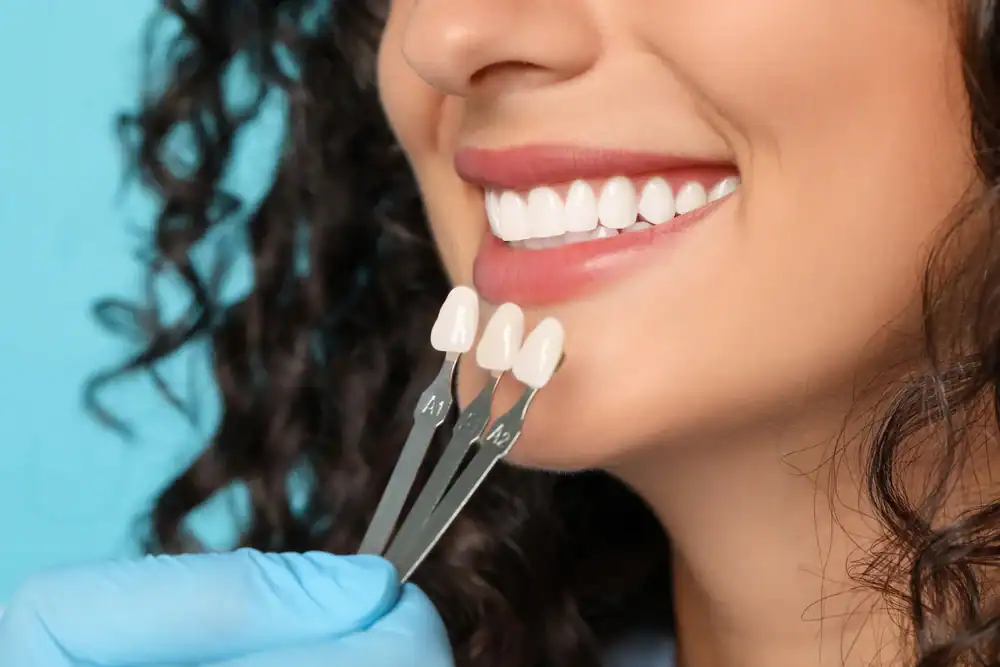

Noticed a small hole in your tooth but it doesn't hurt yet? Here's what's actually happening — and why waiting usually makes it worse.
Share:

Summary:
You ran your tongue across a tooth and felt something — a rough edge, a little pit, a spot that wasn’t there before. Or maybe you caught a glimpse in the mirror. Either way, something’s off, and now you’re wondering how serious it actually is.
The honest answer: it depends on how long you wait. A small hole in a tooth is almost always a cavity in progress, and the earlier it gets treated, the simpler and less expensive the fix. We’ll walk you through what’s happening, what comes next if you ignore it, and what treatment actually looks like — so you can make a decision with the full picture in front of you.
A small hole in a tooth is typically a cavity — dental decay that has eaten through the outer enamel and created a visible opening. Enamel is the hardest substance in the human body, but it’s not invincible. Bacteria in your mouth feed on sugar and produce acid as a byproduct, and that acid gradually wears enamel down. Once it breaks through, you’re left with a hole that will only get bigger on its own.
What makes this tricky is that cavities don’t hurt in their early stages. Pain only starts when decay reaches the dentin — the softer layer beneath your enamel — or eventually the nerve. So the fact that your tooth feels fine right now doesn’t mean the problem is small. It might just mean you caught it at the right time and may be able to address it with composite fillings before it progresses.
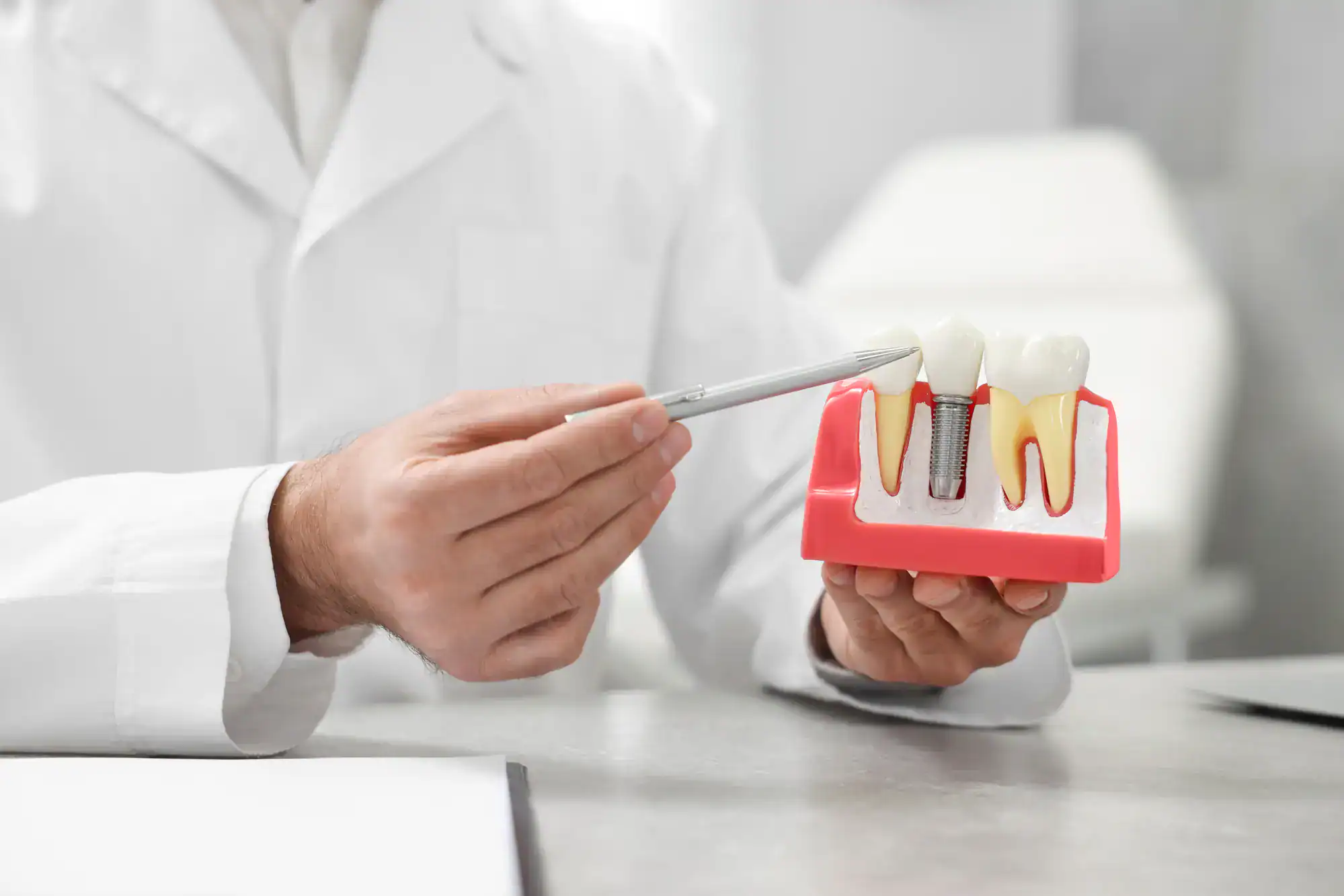
This is probably the most common question we hear when patients first notice something, and it’s worth being direct about: no, a hole in your tooth cannot heal on its own. Once enamel is gone, it’s gone. Your body doesn’t regenerate it the way it heals a cut or a bruise. Brushing more carefully, using a fluoride rinse, or cutting back on sugar can all slow the progression of decay — but none of those things will close an existing hole.
There’s a narrow exception worth mentioning. Very early-stage decay — before a hole actually forms — can sometimes be partially reversed with fluoride treatment. At that stage, the enamel is softening but hasn’t yet broken through. We might recommend a fluoride application and a close monitoring approach. But once there’s a visible pit or rough spot you can feel with your tongue, that window has closed. The decay is through the enamel, and it needs to be physically removed and filled.
This is why the “I’ll wait and see” approach tends to backfire. The hole doesn’t stay the same size. Bacteria continue to work their way inward, and what starts as a small hole in your enamel can reach the dentin in a matter of months. From there, it moves toward the pulp — the innermost part of the tooth where the nerve lives. That’s when the real pain starts, and that’s also when a simple filling is no longer enough. You’re looking at a root canal, a crown, or in some cases, an extraction.
The cost difference is significant. A filling — especially caught early — is one of the least expensive dental procedures there is. A root canal plus a crown can run several times that amount. An implant to replace a lost tooth can cost even more. Treating a small hole now, while it’s still small, is genuinely the financially smart move — not just the medically correct one.
One more thing worth knowing: over-the-counter dental cements like Dentemp can temporarily patch a lost filling or cracked tooth, but they do nothing to stop decay. Using them to buy time on a cavity just means the decay keeps advancing underneath the patch while you feel like you’ve handled it. It’s a false sense of security that tends to make things worse by the time you do come in.
If the hole you’re feeling is in a back tooth, it’s worth paying extra attention. Molars and premolars are actually the most common location for cavities, and there are a few reasons for that. Back teeth have deep grooves and pits on their chewing surfaces — natural features of the tooth’s anatomy that are great for grinding food but also perfect traps for bacteria and food debris. Those grooves are hard to clean thoroughly, even with careful brushing.
Back teeth also take the full force of chewing, which means any existing decay is under constant mechanical stress. That stress can accelerate how quickly a small hole becomes a larger one. And because molars are harder to see, people often don’t notice a hole in a back tooth until it’s been there for a while — sometimes only when they feel it with their tongue or when sensitivity starts.
Interproximal cavities — the ones that form between teeth — are another common back-tooth problem. These can’t be seen in a mirror at all. They only show up on X-rays, which is one of the reasons routine exams matter even when nothing feels wrong. We can catch decay between your molars long before it becomes a visible hole or a painful problem.
If you’ve noticed a small hole in a back tooth or molar, don’t let the out-of-sight location make it feel less urgent. Back teeth are harder to replace and do the heaviest work in your mouth. Treating decay there early — while a filling is still all that’s needed — protects a tooth you really don’t want to lose.
Dental sealants are worth mentioning here as a preventive option, especially for kids and teenagers. A sealant is a thin coating we apply to the chewing surfaces of back teeth that fills in those deep grooves and creates a smoother, easier-to-clean surface. They don’t treat an existing cavity, but they can help prevent new ones from forming in the same high-risk areas.
Want live answers?
Connect with a Scott Kupetz expert for fast, friendly support.
If the idea of getting a cavity filled is making you nervous, you’re not alone. A lot of people put off treatment specifically because they’re dreading the appointment — the needle, the drill, the sounds. But the reality of a modern filling appointment is usually a lot more manageable than the version people have built up in their heads.
The process starts with a thorough exam and digital X-rays to understand exactly how deep the decay goes. What looks like a small hole on the surface can sometimes indicate more decay underneath, and we want a clear picture before any treatment begins. From there, the tooth is numbed, the decayed portion is removed, and a tooth-colored composite resin is placed and shaped to match the natural tooth. Most filling appointments wrap up in under an hour.

The short answer is that it shouldn’t — and for most people, it doesn’t. Modern local anesthetic is highly effective, and the procedure itself is typically painless once the tooth is fully numb. The part people dread most is usually the injection, and that’s understandable. But a topical anesthetic applied to the gum before the shot significantly reduces what you feel, and technique matters a great deal here.
Patients who come to us at 260 New Hackensack Road in Wappinger Falls often mention, sometimes with genuine surprise, that the injection wasn’t what they expected. One patient put it simply: “You don’t even feel when the needle pinches you because he has a way to do it.” That kind of feedback isn’t unusual. I’ve been doing this since 1988 — more than 35 years of refining technique and learning what actually makes patients comfortable, not just what looks good on paper.
For patients who have more significant anxiety — the kind that’s kept them away from the dentist for years — we offer three levels of sedation: nitrous oxide (inhaled), oral sedation, and IV sedation. Most general dental practices offer nitrous at most. We offer all three, which means we can match the level of support to what you actually need, whether that’s just taking the edge off or being fully relaxed and unaware of the procedure. Hundreds of patients from across Dutchess County, Ulster County, Albany County, Schenectady County, and Rensselaer County who avoided dental care for years have come through our doors specifically because sedation made it possible. Most of them say the same thing afterward: they wish they’d come sooner.
Post-treatment sensitivity — some mild tenderness or temperature sensitivity for a day or two after a filling — is normal and temporary. It’s nothing like the sensitivity that comes from untreated decay reaching the nerve, which is a much more persistent and disruptive kind of discomfort.
Sometimes people find this page not because they’re casually wondering about a small hole, but because that hole has started to hurt and they need help now. If that’s you, here’s what’s important to know: you don’t have to wait until Monday, or until the next available appointment weeks out.
We see urgent dental situations — including cavities that have progressed to the point of pain — on the same day, and I’m available on weekends and holidays for patients who need immediate care. That availability isn’t just a line on a website. Patients across Dutchess County and the broader Hudson Valley have called on a Sunday afternoon and been seen within hours. One patient described calling late at night for an emergency and being able to get in quickly. Another came in on a Sunday for a root canal and had it completed in under two hours.
This matters because pain from an advanced cavity doesn’t follow a Monday-through-Friday schedule. If decay has reached the pulp of your tooth, you’re dealing with real discomfort — and leaving it untreated even for a few extra days can allow an infection to develop. A dental abscess is a pocket of infection at the root of the tooth, and it’s both extremely painful and genuinely serious if it spreads.
We serve patients coming from across the region — Wappinger Falls, Dutchess County, Ulster County, Albany County, Schenectady County, and Rensselaer County — and the distance is worth it for patients who want a practice that actually picks up the phone and makes time for them. If you’re coming from Kingston, Troy, or Schenectady, you’re not making a long trip for a routine cleaning. You’re coming because you want a dentist who’s been in this community for over three decades, who offers sedation when you need it, and who will see you when something goes wrong — not just when it’s convenient.
For patients concerned about cost, we accept CareCredit with interest-free financing options for qualified patients. If the expense of treatment has been part of why you’ve been putting this off, that’s worth a conversation. A filling paid over a few months is a very different financial picture than the lump-sum cost of a root canal or implant down the road.
Here’s the simplest version of everything on this page: a small hole in your tooth is not an emergency today, but it will become one if you leave it alone long enough. The painless stage — the one you’re probably in right now — is the best possible time to treat it. A filling is quick, affordable, and comfortable with the right care. Everything that comes after a filling is more complicated, more expensive, and harder to recover from.
If you’ve been putting this off because you’re nervous, because you’re busy, or because you weren’t sure how serious it was — you now have the full picture. The next step is straightforward.
I’ve been treating cavities and everything that comes with them for patients across Wappinger Falls and the wider Hudson Valley since 1988. Reach out to schedule an exam, and find out exactly what you’re dealing with — and what it takes to fix it.
Article details:
Share:
Continue learning: