Professional teeth whitening delivers dramatically faster, safer results than DIY kits—but the cost difference has you wondering which route makes sense for your smile.
Share:
Summary:
You want whiter teeth. That’s not vanity—it’s normal. Your smile shows up in every Zoom call, every photo, every first impression. And if yours isn’t as bright as you’d like, you’ve probably started looking at options.
The question isn’t whether teeth whitening works. It’s which method actually delivers results without wasting your time or damaging your teeth. DIY kits promise convenience and savings. Professional treatments promise speed and safety. But what do you actually get for your money? And more importantly, what are you risking if you choose wrong?
Let’s walk through what each option really offers—and what it doesn’t.
Professional teeth whitening uses concentrated bleaching agents—typically hydrogen peroxide or carbamide peroxide—applied under controlled conditions by a dentist. The process isn’t complicated, but the details matter.
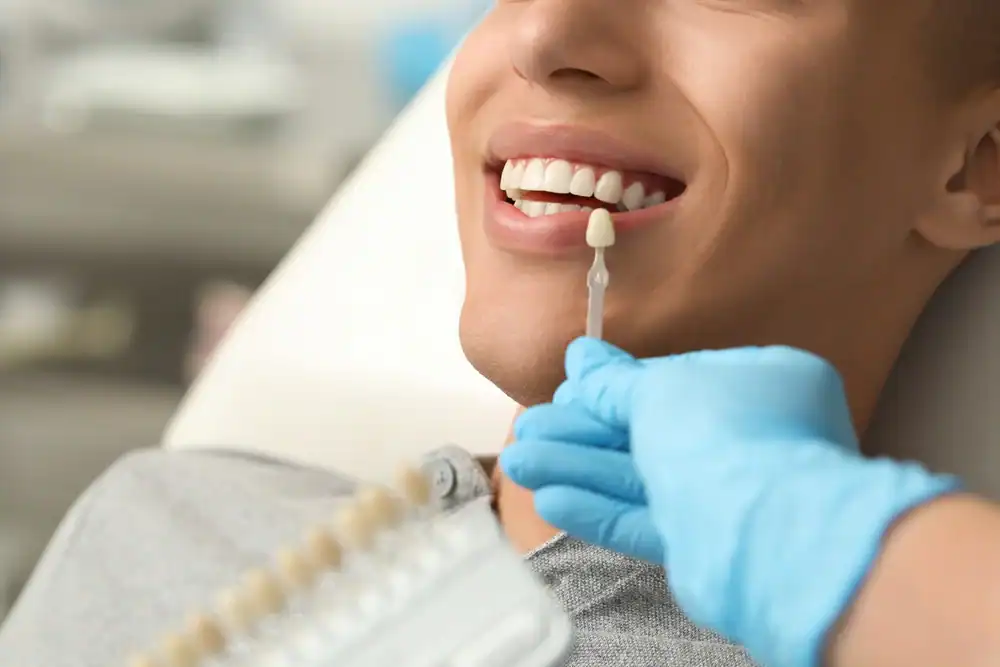
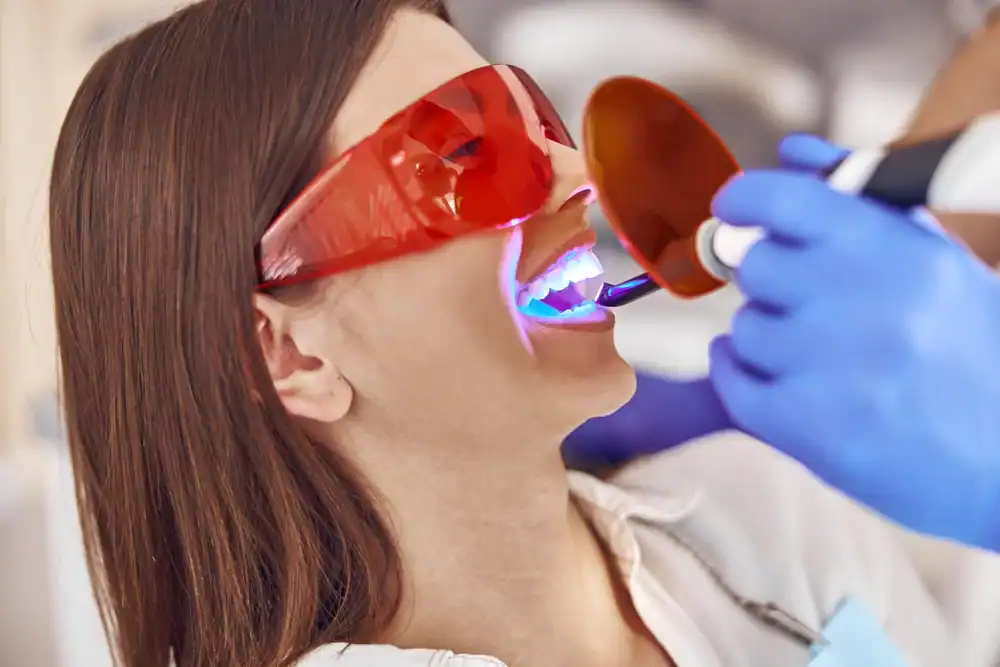
During an in-office treatment, we apply a protective barrier to your gums and soft tissues. Then a high-concentration whitening gel (usually 15% to 43% peroxide) goes directly on your teeth. Some systems use LED or UV light to activate the gel and speed up the chemical reaction that breaks down stains.
The entire appointment typically takes 60 to 90 minutes. You walk in with discolored teeth and leave several shades brighter—often 3 to 8 shades in a single visit. That’s not marketing speak. That’s what happens when you use professional-grade materials with proper application.
The biggest difference between professional and DIY teeth whitening isn’t just the strength of the bleaching agent. It’s the entire approach to getting results while protecting your teeth.
Professional treatments use peroxide concentrations that would be unsafe for unsupervised use. Over-the-counter products max out around 3% to 10% hydrogen peroxide because that’s what regulatory agencies allow for consumer products. Professional-grade gels can go much higher—sometimes 40% or more—because a trained dentist controls every step of the process.
That higher concentration means deeper penetration into your enamel. It breaks down intrinsic stains (the ones inside your tooth structure) that surface-level products can’t touch. Coffee stains, wine discoloration, tobacco damage, age-related yellowing—professional whitening tackles all of it.
But here’s what really sets it apart: customization and safety. We examine your teeth first. We check for cavities, cracks, gum disease, or other issues that could turn painful if bleach hits them. We protect your gums with a barrier gel or rubber dam. We monitor your comfort throughout the treatment.
If you have sensitive teeth, we adjust the concentration or apply desensitizing agents before and after. If your staining is severe, we might recommend multiple sessions or combine in-office treatment with custom take-home trays for maintenance. You’re not guessing. You’re getting a treatment plan based on your specific situation.
And the results last. With proper care—avoiding heavy staining from coffee, wine, and tobacco—professional whitening can keep your teeth noticeably brighter for one to three years. That’s a real investment, not a temporary fix.
Not all at-home whitening is created equal. There’s a massive difference between the custom trays we provide and the one-size-fits-all kits you buy at the pharmacy.
When we make you custom trays, we start with precise impressions of your teeth. Those impressions create trays that fit your mouth exactly—no gaps, no slipping, no gel leaking onto your gums. You get professional-grade whitening gel (usually 10% to 35% carbamide peroxide) that’s stronger than anything sold over the counter but safe for home use under our guidance.
You wear these trays for a set amount of time each day—maybe 30 minutes, maybe overnight, depending on the concentration and your sensitivity. Over two to four weeks, you see gradual, controlled whitening that rivals in-office results. The difference is time. In-office gives you dramatic change in one sitting. Custom trays give you the same endpoint, just spread out.
Now compare that to drugstore whitening strips or generic trays. Those products use lower concentrations because they’re designed for the masses. The trays don’t fit your teeth properly, so gel ends up on your gums, causing irritation. The strips don’t cover your entire tooth surface, leading to uneven whitening. And because the peroxide concentration is weak, you need weeks of consistent use to see even modest results.
Plenty of people try OTC products first. They’re cheaper upfront—$20 to $100 instead of a few hundred for custom trays. But here’s what happens: they use the product for a week or two, see minimal change, buy another box, repeat. Before long, they’ve spent $150 on mediocre results and still don’t have the smile they wanted. That’s not savings. That’s wasted money.
Custom take-home trays cost more initially, but they work. You get professional-strength gel, perfect fit, and a dentist monitoring your progress. If sensitivity becomes an issue, you adjust. If results plateau, you troubleshoot. You’re not alone with a box of strips hoping for the best.
Want live answers?
Connect with a Scott Kupetz expert for fast, friendly support.
DIY teeth whitening isn’t inherently bad. It’s just limited. And if you don’t understand those limitations going in, you’re setting yourself up for disappointment.
The core issue is concentration. Over-the-counter products can’t use the same strength bleaching agents that dentists use. That’s a safety regulation, not a conspiracy. But it means DIY products can only tackle surface stains. If your discoloration goes deeper—and it usually does—you’ll see some improvement, but not the dramatic change you’re hoping for.
Most at-home kits brighten teeth by three to four shades at best. Professional treatments routinely deliver six to eight. That’s the difference between “slightly better” and “noticeably whiter.” And because OTC products are weaker, you need to use them longer and more consistently to get even those modest results. Miss a few days, and your progress stalls.
The appeal of DIY whitening is obvious: convenience, privacy, and lower upfront cost. But there are risks most people don’t consider until they experience them firsthand.
Tooth sensitivity is the big one. When you use whitening products without professional supervision, you’re essentially guessing at what your teeth can handle. Some people have naturally thin enamel or exposed dentin. Others have microscopic cracks or recession that makes their teeth more vulnerable. Apply a bleaching agent to those teeth, and you’re in for sharp, uncomfortable sensitivity to hot and cold.
Professional whitening causes some sensitivity too—it’s a normal side effect of the peroxide penetrating your enamel. But we can minimize it with desensitizing gels, lower concentrations, or staggered treatments. With DIY kits, you’re on your own. If it hurts, your only option is to stop using the product.
Gum irritation is another common problem. Those generic whitening trays don’t fit your mouth. Gel leaks out, sits on your gums, and causes chemical burns. It’s not dangerous in the long term, but it’s painful and entirely avoidable with custom trays.
Then there’s the uneven results. Whitening strips don’t cover your entire tooth surface. They miss the edges, the curves, the spaces between teeth. You end up with a smile that’s brighter in some spots and still discolored in others. That’s not the look you were going for.
And here’s the kicker: if you have underlying dental issues—cavities, cracked teeth, gum disease—applying bleach without addressing those problems first can cause serious pain. We catch those issues during your exam. A box of strips doesn’t.
DIY whitening can work for people with mild surface stains, healthy teeth, and realistic expectations. But if your goal is significant, lasting whitening without risking your enamel or comfort, professional treatment is the smarter play.
Let’s talk about cost, because that’s usually the sticking point. Professional teeth whitening runs anywhere from $300 to $1,000 depending on your location, the technology used, and whether you need multiple sessions. That’s not pocket change.
But here’s what you’re actually buying: expertise, safety, and results that last. You’re paying for a dentist who examines your teeth before treatment and makes sure you’re a good candidate. You’re paying for professional-grade materials that work faster and better than anything you can buy at a store. You’re paying for protective measures that keep your gums safe and minimize sensitivity.
Most importantly, you’re paying for accountability. If something goes wrong—if you experience severe sensitivity, if the results aren’t what you expected—you have us to call. With DIY kits, you’re stuck with whatever happens.
Now compare that to the cost of repeated OTC purchases. A box of whitening strips costs $30 to $50. Sounds reasonable. But one box rarely delivers the results you want, so you buy another. Then another. Before long, you’ve spent $150 on gradual, uneven whitening that fades in a few months. That’s not a bargain. That’s throwing money at a problem without solving it.
Professional whitening costs more upfront, but the results last one to three years with proper maintenance. Divide that cost over 24 or 36 months, and you’re looking at pennies a day for a smile you’re actually proud of. That’s value.
And if cost is still a concern, we offer financing. CareCredit and similar programs let you spread payments over time, making professional treatment accessible even on a tight budget. You don’t have to choose between affordability and effectiveness. You just have to prioritize what actually works.
So which option is right for you? It depends on what you’re trying to fix and what you’re willing to invest.
If your teeth are mildly stained from coffee or tea and you’re okay with gradual improvement, a reputable OTC product might get you there. Look for strips or kits with the ADA Seal of Acceptance, follow the directions exactly, and manage your expectations. You’ll see some change, but it won’t be dramatic.
If you want real results—the kind that make people notice your smile—professional teeth whitening is the move. It’s faster, safer, and more effective. You’re not gambling on a product that might work. You’re investing in a treatment that will.
And if dental anxiety has kept you from pursuing professional whitening, know that options exist. We offer sedation dentistry to make it possible to get the treatment you need without the stress. You don’t have to white-knuckle your way through an appointment or settle for inferior results because you’re too nervous to see a dentist.
Your smile matters. It affects how you feel about yourself, how others perceive you, and how confidently you move through the world. Don’t settle for a solution that gets you halfway there. If you’re ready for teeth whitening that actually delivers, reach out to us. With over 30 years of experience serving Schenectady County, NY, and the surrounding areas, we have the expertise and technology to give you the smile you’ve been looking for.
Article details:
Share:
Continue learning: