


Hear from Our Customers

When a tooth is gone, the bone underneath it starts to shrink. Not dramatically at first but steadily, and it doesn’t stop. Within the first 18 months after an extraction, you lose the most bone volume. After that, it keeps going. A dental implant is the only tooth replacement option that actually goes into the bone, stimulates it, and stops that process. Everything else just sits on top.
For Pine Plains residents who’ve been putting this off whether it’s been a year or five that gap isn’t just a cosmetic issue. A missing molar changes how you chew, how your other teeth shift over time, and eventually how your jaw looks from the outside. The longer it goes, the more likely bone grafting becomes part of the conversation before an implant can even be placed.
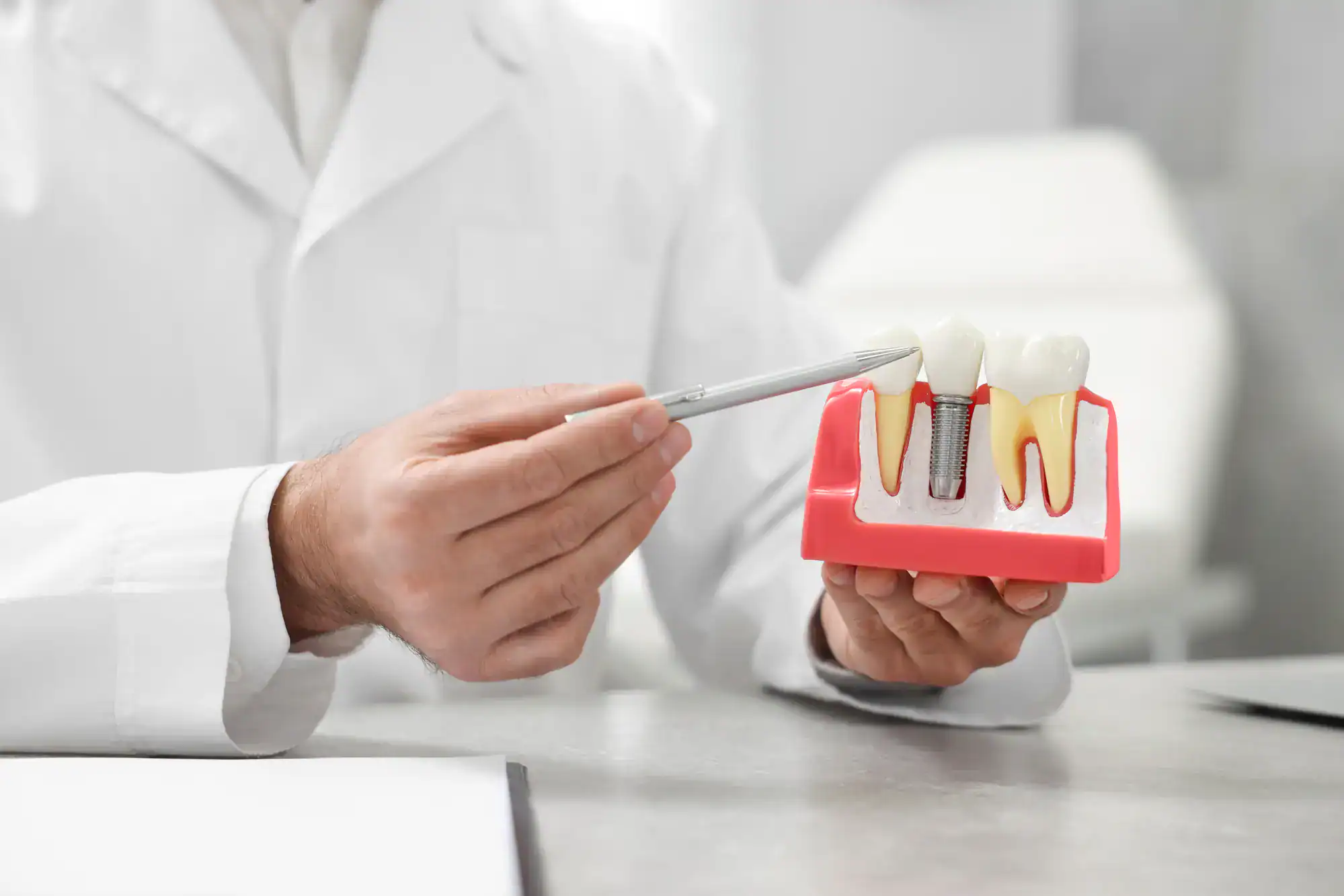
The good news is that implants work. The success rate sits above 96%, and for patients who are good candidates, they last decades often a lifetime. You’re not patching the problem. You’re replacing the root itself with a titanium post, capping it with a crown, and getting back a tooth that functions like the original. No grinding down healthy neighbors. No slipping. No removing it at night.
We’ve been practicing general and implant dentistry in the Hudson Valley since 1988 before most of the dental chains operating in this region today even existed. Dr. Scott Kupetz graduated from Fairleigh Dickinson College of Dental Medicine and has spent his entire career building a single-doctor practice where patients don’t get shuffled between associates or handed off to whoever’s available that week. You see Dr. Kupetz. Every time.
That matters more than people realize, especially for something like a dental implant where the process spans multiple visits and you’re trusting someone to place a titanium post in your jawbone. Northern Dutchess County patients from Pine Plains down through Stanfordville and along the Route 82 corridor have been making the drive to Wappinger Falls for decades because the continuity is real, not a marketing line.
We also offer sedation dentistry, which is a genuine difference-maker for patients who’ve been avoiding care for years. And yes, we’ve seen patients on Sundays. That’s not a gimmick it’s just how our practice operates.

It starts with a consultation. We review your X-rays, evaluate the bone at the implant site, and give you a straight answer about what you’re working with. If you’ve had a tooth missing for a while which is common for patients coming in from rural areas like Pine Plains where local implant options are limited there may be some bone loss to address first. If bone grafting is needed, that gets done before the implant post is placed, and you’ll have a clear timeline for how long the healing phase takes.
Once the site is ready, the titanium post is placed directly into the jawbone. This is the part most patients dread, and it’s consistently the part they say was easier than expected especially with sedation available. The post then integrates with the bone over a period of a few months, which is what gives the implant its stability. There’s no rushing this phase. It’s biology, not a scheduling preference.
After the bone and post have fully bonded, the final crown is attached. At that point, you have a permanent tooth replacement that looks, feels, and functions like a natural tooth. The whole process from consultation to final crown typically runs several months, but the active time in the chair is a fraction of that. Most of the timeline is just your body doing what it needs to do.
Ready to get started?
Whether you’re missing a front tooth, a molar, or several teeth across your mouth, the implant approach is tailored to the specific situation. A single tooth implant uses one titanium post and one crown straightforward, and the most common scenario. A molar implant follows the same process but in a higher-load area of the mouth, which is worth mentioning because molars take the brunt of chewing force. Replacing one changes how your whole bite functions.
For patients missing multiple teeth, implant-supported options exist that don’t require an individual post for every single tooth. We’ll walk you through what makes sense for your case specifically not a one-size pitch. If you’ve been told in the past that you’re not a candidate because of bone loss, that conversation may be worth revisiting. Bone grafting techniques have advanced significantly, and many patients who were previously turned away are now viable candidates.
We handle everything in-house consultation, grafting if needed, post placement, and the final crown. Pine Plains patients don’t need a separate referral to an oral surgeon in Poughkeepsie or Kingston and then back again. The full process happens with one doctor who already knows your history, your concerns, and what you’re trying to accomplish.
There’s no implant specialist with a physical office in Pine Plains itself the local dental practices in the hamlet appear to offer general dentistry, and patients needing implants have typically had to travel. Our practice in Wappinger Falls is one of the closest experienced implant providers accessible from Pine Plains via Route 82 south, connecting to the US 9 corridor through Dutchess County. It’s a reasonable drive for a procedure that’s meant to last decades, and it’s significantly closer than the specialty practices in Albany or Kingston that some northern Dutchess patients have been referred to in the past.
The more important point is that not all implant providers are equal. Experience matters with this procedure. We’ve been placing implants for over 35 years and handle the entire process from initial evaluation through final crown without bouncing you between multiple offices. For Pine Plains residents who’ve been putting this off because of the distance or the uncertainty about who to trust, this is a straightforward option worth a consultation call.
A single dental implant including the post, abutment, and crown typically runs between $3,000 and $5,000 depending on the complexity of the case and whether any preparatory work like bone grafting is needed. If bone grafting is required before placement, that adds to the overall cost. Most dental insurance plans don’t cover implants fully, though some will cover portions of the process like the crown or the extraction that preceded it.
Financing options are available, which matters for a lot of patients in northern Dutchess County where the cost of a full implant can feel like a significant upfront commitment. The more useful way to think about it is long-term value: a bridge which is usually the cost comparison people make requires grinding down healthy adjacent teeth, doesn’t stop bone loss, and typically needs to be replaced within 10 years. An implant, done correctly, can last the rest of your life. Over 20 or 30 years, the math shifts considerably. Our office can walk you through realistic cost expectations and payment options at your consultation.
Bone loss is one of the most common reasons people assume they’ve been disqualified from getting an implant and it’s also one of the most frequently misunderstood. If a dentist told you years ago that you didn’t have enough bone, that assessment may no longer be accurate. Bone grafting techniques have improved substantially, and many patients who were previously turned away are now able to move forward with implants after a grafting procedure rebuilds the necessary volume.
This is particularly relevant for Pine Plains patients who lost a tooth years ago and have been living without it. The longer a tooth has been missing, the more bone resorption has occurred but that doesn’t automatically mean implants are off the table. It means the process may require an additional step. We evaluate each case individually with current imaging, not assumptions based on how long the tooth has been gone. The only way to know for certain whether you’re a candidate is to come in and get a proper evaluation. A lot of patients are surprised by what’s actually possible.
This is the question most patients are actually thinking about but don’t always ask directly. The honest answer is that the procedure is far more manageable than most people expect and sedation dentistry makes it even more so. Local anesthesia is used during placement, which means you won’t feel the procedure itself. Sedation options go a step further for patients who want to be relaxed or even minimally aware during the process.
Post-procedure soreness is real typically a few days of mild to moderate discomfort that over-the-counter pain medication handles well for most patients. Swelling is common in the first 48 hours. What most patients report afterward is that the anticipation was significantly worse than the actual experience. For Pine Plains residents who’ve been avoiding this because of fear especially those who haven’t been to a dentist in years sedation is available specifically for that reason. You don’t have to muscle through it. We’ve worked with anxious patients for decades, and there’s no judgment about how long it’s been or why you’ve been putting it off.
A dental bridge replaces a missing tooth by crowning the two teeth on either side of the gap and suspending a false tooth between them. To do that, the dentist has to permanently file down those two adjacent teeth even if they’re perfectly healthy so the crowns can fit over them. Those teeth are then structurally compromised for life. The bridge sits on top of the gumline, which means there’s no root going into the bone, and the jawbone underneath the gap continues to shrink over time.
A dental implant replaces the root itself. The titanium post goes into the bone, the bone grows around it, and the result is a freestanding tooth that doesn’t depend on or affect the teeth next to it. It also stimulates the bone the way a natural root would, stopping the resorption process. Bridges typically last 5 to 15 years before they need to be replaced, largely because flossing under them is difficult and root decay on the anchor teeth is common. An implant, maintained like a normal tooth, can last a lifetime. For most patients who are viable candidates, the implant is the better long-term answer both clinically and financially.
The full timeline from first consultation to final crown typically runs anywhere from three to nine months, depending on whether bone grafting is needed and how quickly your body heals. If you’re a straightforward candidate with adequate bone, the process moves faster. If grafting is required first which is more common in patients who’ve had a missing tooth for a year or more, as is the case for many patients coming in from rural areas like Pine Plains you’re looking at additional healing time before the implant post can be placed.
The actual time you spend in the chair across all appointments is a fraction of the total timeline. Most of the process is your body doing the work the bone healing around the graft, then integrating with the titanium post. Once that osseointegration is complete, the final crown goes on and you’re done. The waiting can feel frustrating if you’re eager to have the tooth replaced, but it’s not negotiable a properly integrated implant is what makes it last decades. Rushing the healing phase is how implants fail. We’ll give you a realistic timeline at your consultation based on your specific imaging and bone condition, not a generic estimate.
Other Services we provide in Pine Plains