


Hear from Our Customers

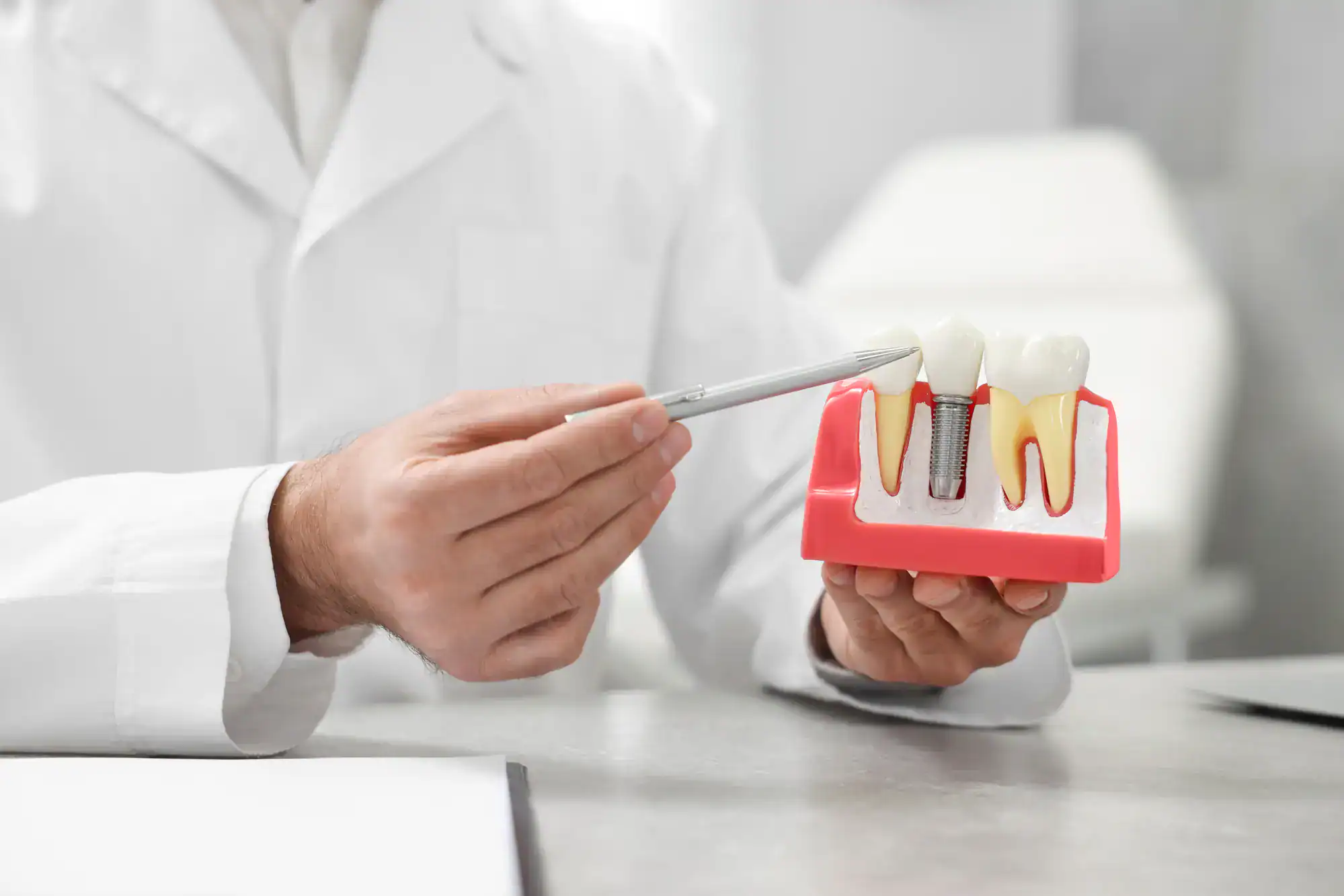
The moment a tooth is gone, the bone beneath it starts to change. Most people don’t know that the most significant bone loss happens within the first 18 months after an extraction and it doesn’t stop there. Without the stimulation of a tooth root, that bone continues to shrink quietly over time. A titanium post tooth replacement is the only option that actually stops that process, because it integrates directly into the jaw the way a natural root does.
For Woodstock residents where the median age sits around 61 and a large portion of the community has been managing tooth loss for years this matters more than most places. Many people here have been living with a gap, an old bridge, or a partial denture, telling themselves they’ll deal with it eventually. The longer that window stays open, the more bone is lost, and the more complex the path to implants becomes.
Living inside Catskill Park also means that specialist dental care isn’t around the corner. Every unnecessary referral, every extra trip to Kingston or beyond, adds friction to an already significant decision. We place and restore implants under one roof by one doctor who knows your full history which is a practical advantage that makes a real difference when you’re already making the drive.
We’ve been practicing in the Hudson Valley since 1988. That’s more than three decades of serving patients across Ulster County, Dutchess County, and the communities in between long before the Catskills became a destination for city transplants and second-home buyers. We understand what it means to live in Woodstock and the surrounding area, where access to specialized care requires planning and commitment.
Our practice in Wappinger Falls is a single-doctor office. You see us at your consultation, at your implant placement, and at every follow-up. There’s no rotating associate, no handoff, no explaining your situation to someone new each time. For a procedure this significant, that continuity matters and it’s something the larger multi-provider practices in the area simply can’t offer.
For Woodstock patients making the roughly 45-to-55-minute drive down Route 375 to the Thruway, the combination of experience, consistency, and full-service implant care under one roof makes the trip worth it. We offer sedation for patients who’ve been putting this off because of anxiety and there’s no judgment about how long it’s been.

It starts with a consultation where we look at what’s actually going on your bone density, the condition of surrounding teeth, and whether any prep work like bone grafting is needed before placement. If you’ve been told in the past that you’re not a candidate because of bone loss, that conversation is worth having again. Techniques have advanced, and many patients who were told no years ago are now good candidates.
Once you’re cleared for placement, the titanium post is surgically positioned into the jawbone. This is where sedation makes a meaningful difference for patients who’ve been avoiding dental care for years. The post then goes through a healing period typically a few months during which it fuses with the bone through a process called osseointegration. This is what gives an implant its stability and longevity.
After that healing period, the dental implant crown is attached the visible, functional tooth that sits on top of the post. From that point forward, you clean it like a natural tooth. No special adhesives, no removal at night, no worrying about it shifting when you eat. For Woodstock patients who’ve been navigating Catskill winters and limited local healthcare options, the goal is simple: solve this once, solve it well, and not have to think about it again.
Ready to get started?
A fixed bridge is often presented as the simpler, less expensive path. What doesn’t always get explained clearly is what that actually requires: permanently grinding down the two healthy teeth on either side of the gap to serve as anchors. Those teeth are altered forever. And bridges typically fail within five to ten years, often because flossing around them is difficult and decay builds up at the roots. When a bridge fails, the adjacent teeth the ones that were ground down to support it are now compromised too.
A single tooth implant replaces only what’s missing. The healthy teeth on either side stay untouched. The implant root stimulates the jawbone, preventing the bone loss and facial changes that come with any other missing teeth replacement option. And with proper care, the titanium post can last the rest of your life the crown may need replacement after a decade or more, but the foundation underneath is built to stay.
For patients in Bearsville, Shady, Lake Hill, or anywhere else in the Woodstock area who are weighing a molar implant against a bridge or partial denture, the long-term math is worth understanding. A bridge that fails twice over twenty years plus the downstream damage to adjacent teeth often costs more in total than an implant placed once and maintained well. We offer financing options to make the upfront investment more manageable.
Bone loss is one of the most common reasons people assume they can’t get implants and it’s also one of the most frequently misunderstood barriers. The reality is that bone grafting has made implants accessible to many patients who were told years ago that they didn’t qualify. A bone graft uses material to rebuild volume in the jaw, giving the titanium post a stable foundation to integrate into. It adds time to the overall process, but it doesn’t rule out implants in most cases.
If you’ve been living with a missing tooth for several years which is common for many Woodstock residents who’ve been managing with a bridge or partial the bone beneath that gap has likely changed. That’s exactly why a proper consultation matters before assuming the answer is no. We’ll assess your bone density and give you a straight answer about what’s realistic, what prep work might be needed, and what the full timeline looks like. The goal is to give you accurate information, not to oversell a procedure that isn’t right for your situation.
The upfront cost of a bridge is usually lower, which is why it gets recommended often. But the comparison changes significantly when you factor in what a bridge actually does to your mouth over time. To place a bridge, the two teeth on either side of the gap have to be permanently reduced shaped down to serve as anchors. Those teeth are healthy until that point. After the bridge is placed, they’re not. And because bridges sit above the gumline rather than in the bone, they don’t prevent the bone loss that continues beneath a missing tooth.
Bridges also have a lifespan. Most last somewhere between five and fifteen years before they need to be replaced, and flossing under a bridge is difficult enough that decay at the root surfaces is a common reason for failure. When a bridge fails, you’re not just replacing the bridge you’re often dealing with the condition of the anchor teeth underneath it. A single tooth implant doesn’t touch the adjacent teeth, stops bone loss at the site, and with proper care, the post itself can last decades. The crown on top may eventually need replacement, but the foundation stays intact.
The honest answer is that it depends on where you’re starting from. For a patient with adequate bone density and no complicating factors, the process from implant placement to final crown typically takes somewhere between three and six months. The longest part is the healing phase the period after the titanium post is placed during which it fuses with the jawbone. This osseointegration process can’t be rushed, because the stability of the final restoration depends on it.
If bone grafting is needed first which is common for patients who’ve had a missing tooth for a year or more that adds a healing period before the implant post can even be placed. In those cases, the full timeline might extend to nine months or longer. For Woodstock patients planning around the Catskill seasons, it’s worth knowing that scheduling your initial consultation in late winter or early spring gives you the best chance of completing the process before the following winter. We’ll give you a realistic timeline at your first visit based on your specific situation, not a generic estimate.
Most patients describe a fully healed implant as feeling indistinguishable from a natural tooth. There’s no looseness, no pressure sensation when you bite, and nothing that signals it’s artificial. The dental implant crown is shaped and shaded to match your surrounding teeth, so visually it blends in. You brush it and floss around it the same way you would a natural tooth no special tools, no adhesives, no removal.
The adjustment period immediately after placement is a different story. Some soreness and swelling in the days following surgery is normal, and most patients manage it with over-the-counter pain relief. Sedation during the procedure itself means the placement is not the stressful experience many people anticipate. By the time the crown is placed and the healing is complete, the implant functions the way a tooth is supposed to you eat what you want, you speak normally, and you stop thinking about it. For patients who’ve been compensating around a gap or dealing with an ill-fitting partial for years, that shift in daily comfort is often the most meaningful part of the outcome.
Sedation is available and used regularly for implant procedures at our practice. It’s not just for patients with extreme dental phobia it’s genuinely useful for anyone who wants to be comfortable and relaxed during a surgical procedure, regardless of their anxiety level. For patients who have been putting off dental care for years because of fear or a past bad experience, sedation removes the single biggest barrier between where they are now and the care they need.
Woodstock has a significant population of older residents many of whom have been managing dental avoidance for a long time. If that describes you, there’s no judgment about how long it’s been or what condition things are in. The consultation is a conversation, not an evaluation. We’ve been working with anxious patients for over 35 years, and the approach is straightforward: you should feel safe and informed before anything happens. Sedation options will be discussed based on your health history and the specifics of your procedure, so you know exactly what to expect before you commit to anything.
That’s a fair question, and it deserves a direct answer. The drive from Woodstock to Wappinger Falls typically down Route 375 to Route 28 to the Thruway south runs about 45 to 55 minutes depending on where in town you’re starting. That’s not nothing, especially for a multi-appointment procedure.
What makes it worth considering is what you’re getting in exchange. We see patients on weekends and same-day for urgent needs, which matters when you’re mid-treatment and something comes up. You see the same doctor at every single appointment, which is not the case at larger multi-provider offices. And because we handle the full implant process in one location consultation, placement, crown, and follow-up you’re not being sent to a specialist in Kingston or Poughkeepsie for part of the process. For patients in Bearsville, Lake Hill, or Wittenberg who are already accustomed to driving for healthcare, the calculus often comes down to: who do you trust with something this permanent? That’s the conversation worth having.
Other Services we provide in Woodstock