

Hear from Our Customers
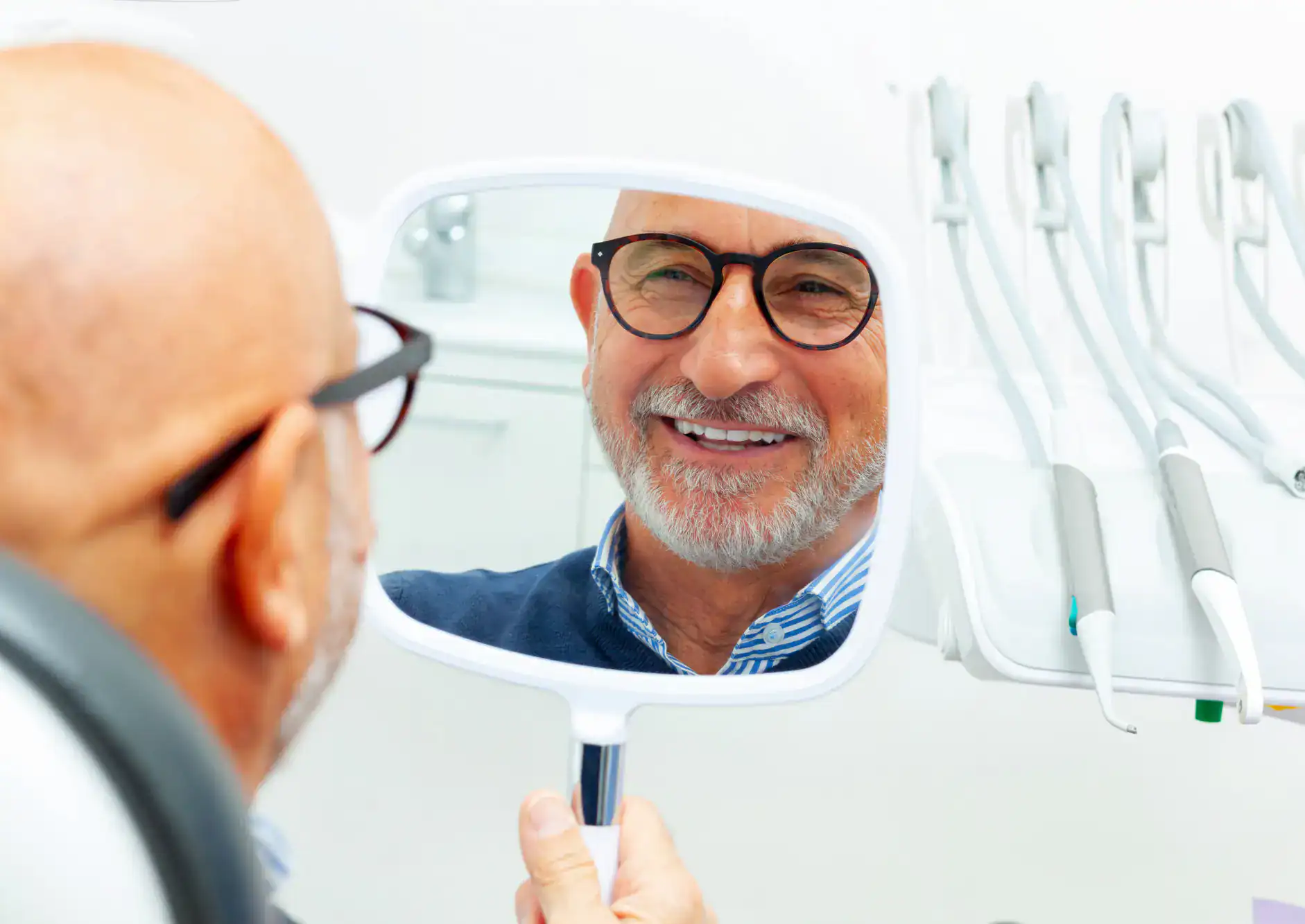
When a tooth is missing, the problem doesn’t stay local. The jawbone underneath starts to shrink quietly, without pain and within 18 months, that bone loss is already reshaping your face and shifting your bite. A dental implant replaces the root, not just the visible tooth, which is what stops that process entirely. You get something that chews, holds, and functions exactly like what was there before.
For Ruby residents who spend time outdoors hiking the Highwoods, working physical jobs, living an active life in the Catskill foothills a missing molar isn’t just a cosmetic issue. It affects what you can eat, how you feel day to day, and how your jaw holds up over time. Implants give you that function back without grinding down the healthy teeth next to the gap the way a bridge would.
And because Ruby sits at the crossroads of the Kingston and Saugerties service areas with no dental provider inside the hamlet itself every appointment you make is already a drive. The difference with our practice is that you make that drive once per phase, not once to a consultation, once to a specialist, and once back again. The entire process lives under one roof.
We’ve been practicing in the Hudson Valley since 1988 long before most of the dental chains advertising in Kingston today had opened their first location. We graduated from Fairleigh Dickinson College of Dental Medicine and built a single-doctor practice that has served patients across Ulster County for decades, including Ruby residents who value continuity of care. That means when you come in, you see the same doctor. At your consultation, at your implant placement, at your follow-up. The same person, every time.
That matters more than it sounds. For patients from small, close-knit communities like Ruby where the Church of St. Wendelinus has anchored the same neighborhood for over a century being able to name your doctor and trust that person specifically is not a small thing. It’s the whole thing.
We also specialize in sedation dentistry, which means if you’ve been putting this off because you’re anxious, that’s not a reason to keep waiting. It’s exactly the kind of situation our practice is built for.

It starts with a consultation. We take a close look at your jawbone, your bite, and your overall oral health to confirm you’re a good candidate and if bone loss has already started, we’ll talk through whether bone grafting makes sense before moving forward. Many patients who assume they don’t qualify because of long-standing bone loss are surprised to find out that modern techniques have expanded their options significantly.
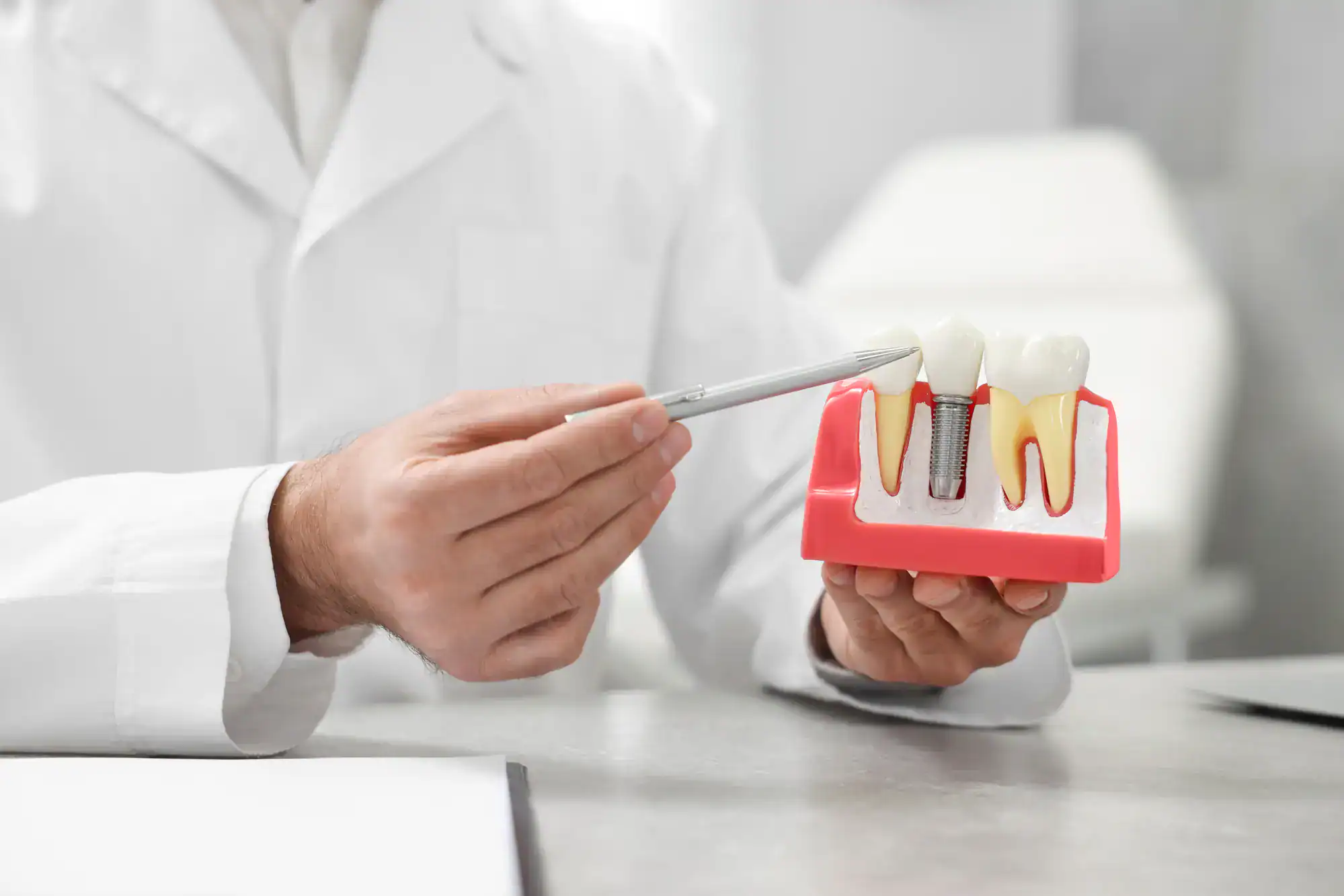
Once the plan is set, the titanium post gets placed into the jawbone. This is the part most people are nervous about, and it’s also where sedation dentistry makes a real difference. You’re comfortable throughout. The post then bonds with the bone over the following months a process called osseointegration and once that’s solid, the abutment and final dental implant crown go on top. The result looks and functions exactly like a natural tooth.
For Ruby residents, the practical reality is that this process spans a few appointments over several months. Because the hamlet’s rural roads can get complicated in spring flooding season, it’s worth starting sooner rather than later not to pressure you, but because the timeline is longer than most people expect, and bone loss doesn’t pause while you’re deciding.
Ready to get started?
Whether you’re missing one molar from a work injury, several teeth from years of deferred care, or you’re looking at implant-supported dentures as a permanent alternative to removable plates, we handle all of it without referring you out. Single tooth implants, molar implants, implant-supported bridges, and All-on-4 full-arch restorations are all available in our practice.
The titanium post tooth replacement process is the same regardless of how many teeth are involved the post goes into the bone, the bone heals around it, and the crown or arch gets attached on top. What changes is the complexity of the plan and the number of appointments. For Ruby residents who are already driving to access dental care, having a provider who can handle every phase rather than being handed off to an oral surgeon in Poughkeepsie after the consultation is a meaningful difference.
It’s also worth knowing that if cost is a concern, the long-term math on implants is often better than it looks upfront. Dentures need ongoing adjustments and eventual replacement. Bridges typically fail within a decade and often require more extensive work when they do. A well-placed implant, maintained properly, can last the rest of your life. Financing options are available, and we’ll work with your insurance to maximize what you have.
There is no dental office physically located within Ruby’s hamlet boundaries. Ruby is a small residential community in the Town of Ulster roughly 918 residents, no commercial center, no dental provider. Every Ruby resident seeking dental care, including implants, is already making a drive to Kingston, Saugerties, or somewhere else in Ulster County.
That’s actually why our practice works so well for Ruby residents. Rather than driving to a Kingston chain for a consultation and then being referred somewhere else for the surgical portion, you make the trip once per phase to a single-doctor practice that handles the full implant process from start to finish. The drive is longer than a local appointment would be, but it’s a much simpler path than bouncing between providers.
Most patients say the procedure is far less uncomfortable than they expected and that the anxiety leading up to it was worse than the appointment itself. The implant site is fully numbed before anything happens, and for patients with real dental anxiety, sedation options are available that make the entire experience much more manageable. You’re not white-knuckling through anything.
Post-procedure soreness is normal for a few days, similar to what you’d feel after a tooth extraction. Over-the-counter pain relief handles most of it. The healing phase where the titanium post bonds with the jawbone is largely painless because bone doesn’t have the same nerve sensitivity as soft tissue. By the time the final dental implant crown goes on, most patients wonder why they waited as long as they did.
When a tooth is extracted or falls out, the jawbone underneath it starts to resorb the body essentially stops maintaining bone in that area because there’s no root stimulating it. The most significant bone loss happens within the first 18 months, but it continues over time.
For Ruby residents with an active, physical lifestyle people who work with their hands, spend time outdoors in the Highwoods or Bluestone Wild Forest, or simply want to eat without restriction that bone loss has real consequences. It changes your bite, shifts neighboring teeth, and can eventually affect the structure of your face. A dental implant is the only tooth replacement option that addresses the root-level problem, not just the visible gap. The longer you wait, the more complex and costly the solution becomes.
Not necessarily, and this is one of the most common reasons people self-disqualify before they ever pick up the phone. Bone loss does make implant placement more complex, but modern bone grafting techniques have significantly expanded who qualifies. A graft can rebuild the bone volume needed to support a titanium post and while it adds time to the overall process, it opens the door for patients who assumed they’d missed their window.
The only way to know for certain where you stand is a proper evaluation. We’ll look at your bone density and volume, talk through your history, and give you an honest answer about what’s realistic. If grafting is needed, that gets factored into the plan upfront no surprises. Many patients from Ulster County communities like Ruby who come in expecting to be turned away leave with a clear path forward.
A bridge can look fine on the surface, but the way it works is worth understanding before you commit. To place a fixed bridge, the two healthy teeth on either side of the gap have to be permanently ground down to serve as anchors. Those teeth will never be the same again. And because bridges sit above the gumline, they’re difficult to floss properly which leaves the root surfaces of those anchor teeth vulnerable to decay over time. Most bridges need to be replaced within 5 to 10 years.
A single tooth implant doesn’t touch the adjacent teeth at all. The titanium post goes directly into the jawbone, the dental implant crown attaches on top, and the surrounding teeth stay exactly as they are. It also stimulates the bone underneath, which a bridge cannot do. Upfront, an implant costs more. Over a 20-year horizon factoring in bridge replacement, potential decay on anchor teeth, and ongoing bone loss the implant is almost always the better investment.
Kingston has dental providers, including a corporate chain on Ulster Avenue that advertises implants. The question isn’t whether options exist closer to Ruby it’s what those options actually deliver. A corporate practice rotates staff. You may meet one provider at your consultation and a different one for your procedure. There’s no continuity, no single person who knows your history, and no real accountability when something feels off.
We’ve served Ulster County patients for over 35 years as a single-doctor practice. The person you meet at your consultation is the same person placing your implant and seeing you at every follow-up. For patients from a community like Ruby where 87% of households are owner-occupied, where people put down roots and stay that kind of long-term, personal accountability means something. The drive from Ruby is real, but so is the difference between a provider who knows you and a chain that processes patients.
Other Services we provide in Ruby