


Hear from Our Customers

A missing tooth isn’t just a cosmetic problem. Every month that gap goes unfilled, the jawbone underneath it is shrinking. The most significant bone loss happens in the first 18 months after an extraction and it doesn’t stop there. That bone deterioration changes the structure of your face over time, shifts surrounding teeth out of alignment, and can make future treatment more involved and more expensive. Waiting isn’t neutral. It’s a slow compounding problem.
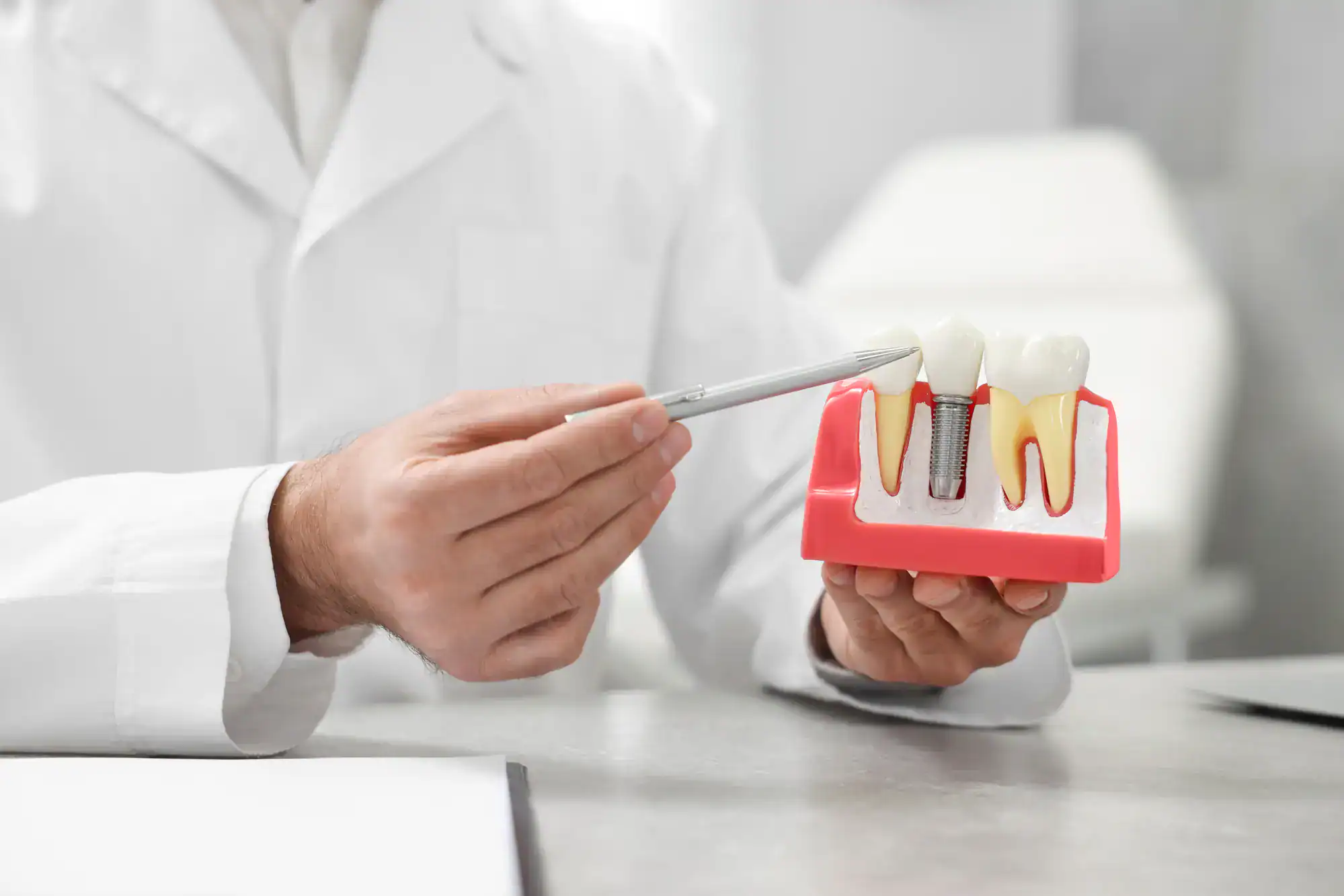
For Red Hook residents who’ve already been navigating limited local dental options or who tried to get in somewhere and couldn’t that delay isn’t entirely your fault. But it does mean the clock has been running. A dental implant replaces the root itself with a titanium post, which stimulates the bone the way a natural tooth would. That stops the deterioration and gives you back full function: chewing, speaking, smiling without thinking twice about it.
Red Hook’s mix of long-term homeowners, Bard College professionals, and Hudson Valley transplants all tend to think in terms of long-term value. A dental implant fits that mindset. A bridge costs less upfront but typically fails within five to ten years and it requires grinding down the two healthy teeth on either side of the gap just to anchor it. Those teeth are permanently altered. An implant doesn’t touch them. It stands on its own, preserves the bone beneath it, and with proper care, it lasts the rest of your life.
Dr. Scott Kupetz has been practicing dentistry in the Hudson Valley since 1988 a graduate of Fairleigh Dickinson College of Dental Medicine with more than three decades of continuous experience serving Dutchess County patients, including those who drive down Route 9 from Red Hook, Tivoli, Annandale-on-Hudson, and the surrounding northern communities who want an experienced provider without the referral runaround.
What makes our practice different isn’t a tagline. It’s the fact that when you come in for a consultation, you see Dr. Kupetz. When you come back for your implant placement, you see Dr. Kupetz. When your dental implant crown is placed, it’s still Dr. Kupetz. No rotating associates, no being handed off mid-treatment. One doctor who knows your case from the first appointment to the last.
The entire implant process from the titanium post placement to the final crown is handled in one location in Wappinger Falls. For Red Hook patients who are already making a drive for quality care, that means no second office, no specialist referral, no starting over with someone new.

The process starts with a consultation where Dr. Kupetz reviews your X-rays, evaluates the bone at the implant site, and walks you through your options. If you’ve had a tooth missing for a while which is common for patients coming in from rural northern Dutchess County communities like Red Hook, where dental care access has historically been limited bone loss may be a factor. If it is, we address that first, sometimes with a bone graft, before the implant post is placed. This is normal, and it doesn’t automatically disqualify you.
Once the site is ready, the titanium post is surgically placed into the jawbone. This is the part most patients dread and the part most patients say was far easier than they expected, especially with sedation available. The post then integrates with the bone over a healing period of a few months. During that time, you’re not walking around with a visible gap a temporary restoration keeps things looking normal.
After the bone has fully fused with the post, the final dental implant crown is placed on top. That’s it. No ongoing adjustments, no adhesives, no removing it at night. It functions and feels like a natural tooth and for most patients, it becomes something they stop thinking about entirely. That’s the goal.
Ready to get started?
Not every missing teeth replacement option looks the same, because not every situation is the same. A single tooth implant in the front of the mouth is a different conversation than a molar implant in the back molars take the most chewing force, and replacing them with something that actually holds up matters. We handle both, along with implant-supported dentures and full-arch solutions like All-on-4 for patients who’ve experienced more extensive tooth loss.
For Red Hook patients who’ve been wearing a partial denture or living with a gap for years, the conversation often starts with bone evaluation. Long gaps between extraction and treatment are common in communities where in-town dental access is limited, and the good news is that modern bone grafting techniques have expanded who qualifies for implants significantly. Even if you’ve been told you’re not a candidate elsewhere, it’s worth having that conversation with Dr. Kupetz directly.
Sedation is available for patients who experience dental anxiety and that’s not a small detail. A lot of people in northern Dutchess County have delayed care for years, sometimes decades, because of fear or past experiences. Sedation changes that equation. You don’t have to white-knuckle your way through implant surgery. Most patients who use it say they wish they hadn’t waited so long.
Our practice is located in Wappinger Falls, which is roughly 20 to 25 miles south of Red Hook via US Route 9 a straight, direct drive that most Red Hook residents already use for shopping, healthcare, and commuting. For context, that’s a similar distance to driving to Poughkeepsie for a specialist appointment, which northern Dutchess County residents are already accustomed to doing.
The drive is worth framing honestly: Red Hook’s in-town implant options are limited, and the most locally convenient provider has reportedly restricted new patient availability. When the alternative is waiting indefinitely for a local opening, a 25-minute drive down Route 9 to an experienced implant dentist who is actively accepting new patients is a straightforward trade-off. Most patients make the trip once for a consultation and decide quickly that the commute is a non-issue.
A bridge fills the gap left by a missing tooth, but it does it by anchoring to the two teeth on either side which means those teeth have to be permanently ground down to serve as supports. Once that’s done, it can’t be undone. The bridge also sits on top of the gum line, which means it does nothing to stop the bone loss happening underneath it. Most bridges last five to ten years before they need to be replaced, and when they fail, you’re often dealing with more damage than you started with.
A dental implant replaces the root itself. The titanium post goes into the jawbone, which preserves the bone, leaves the neighboring teeth completely untouched, and supports a crown that looks and functions like a natural tooth. For Red Hook homeowners who are used to thinking about long-term value whether it’s a roof, a furnace, or a piece of land the implant math tends to make sense quickly. It costs more upfront. It lasts significantly longer and protects more of what you already have.
Yes and this is one of the most important things to understand before you decide to wait. When a tooth is extracted or falls out, the jawbone that used to support that root no longer receives stimulation. Without that stimulation, the bone begins to resorb, meaning the body gradually breaks it down and reabsorbs it. The most significant deterioration happens in the first 18 months, but it continues over time. This affects the shape of your jaw, the support structure for neighboring teeth, and in some cases, the appearance of your face.
For patients in Red Hook who’ve had a missing tooth for a year or more which is common given the limited local options and the tendency to delay in rural communities some degree of bone loss has likely already occurred. That doesn’t automatically rule out implants. Bone grafting can rebuild the site in many cases, and Dr. Kupetz evaluates each situation individually. The key is not to let more time pass. The longer the gap goes unfilled, the more complex the solution becomes.
Yes, sedation is available at Scott Kupetz, DMD for patients undergoing implant procedures. This matters more than it might seem on the surface. A significant portion of patients who need dental implants in northern Dutchess County have been avoiding dental care for years sometimes because of fear, sometimes because of past negative experiences, and sometimes simply because accessible, trustworthy care hasn’t been easy to find in communities like Red Hook. Sedation removes the anxiety barrier that’s been keeping them from getting treatment they actually need.
With sedation, most patients describe the implant procedure as far more manageable than they anticipated. Many say the recovery was the harder part and even that is typically mild and short-lived. If dental anxiety has been part of why you’ve delayed replacing a missing tooth, that’s worth mentioning when you call to schedule a consultation. Our team is used to working with patients who come in nervous, and sedation is a real, available option not just something listed on a website.
Possibly, yes and it’s a question worth asking rather than assuming the answer is no. Molar implants are placed in the back of the jaw where chewing force is highest, and they require adequate bone density to anchor the titanium post securely. If significant time has passed since the molar was lost, bone loss at that site is likely. But bone loss doesn’t automatically mean you’re not a candidate. Bone grafting a procedure that rebuilds the jawbone at the implant site using grafting material has made implants accessible to a much broader range of patients than was possible even a decade ago.
The only way to know for certain is a proper evaluation with current X-rays or a 3D scan. Dr. Kupetz reviews each case individually and will give you a straight answer about what’s possible, what it involves, and what the timeline looks like. Patients who’ve been told elsewhere that they’re not a candidate have sometimes found that a second opinion with updated imaging tells a different story. It’s worth the consultation before you write off the option entirely.
A single dental implant including the titanium post, the abutment, and the final crown typically ranges from $3,000 to $5,000 depending on the complexity of the case. If bone grafting is needed beforehand, that adds to the overall cost. Full-arch solutions like All-on-4 are priced differently and are discussed during consultation once Dr. Kupetz has evaluated the full picture. These numbers are real, and it’s fair to factor them into your decision.
What’s also worth factoring in is what the alternative costs over time. A bridge that fails in seven years and requires replacement while also having permanently altered the teeth anchoring it adds up. A denture that needs ongoing adjustments and eventual replacement adds up. For Red Hook residents who carry employer-sponsored dental benefits through institutions like Bard College or Northern Dutchess Hospital, some portion of implant costs may be covered depending on your plan. Financing options are available for patients who need to spread the cost out. The best starting point is a consultation where you get a clear, specific number for your situation not a range from the internet.
Other Services we provide in Red Hook