


Hear from Our Customers
Most people who come in about a missing tooth aren’t just dealing with a gap. They’re dealing with the way they hold their mouth in photos, the foods they quietly stopped ordering, the self-consciousness that crept in so gradually they almost forgot it wasn’t always there. A dental implant fills the space and gives you back the function and confidence you’ve been working around.
Hurley’s population skews older than most Hudson Valley towns, with a median age right around 50. That’s the exact window when tooth loss tends to catch up with people and also when a permanent solution makes the most financial sense. An implant placed today can last 20, 30, even 40 years. A bridge or denture won’t come close to that, and both carry ongoing costs and complications that add up over time.
There’s also something worth understanding about bone loss that most people don’t hear until it’s already a problem. The moment a tooth is gone, the jawbone beneath it starts to shrink. It’s not dramatic at first, but it’s constant and it changes the shape of your face over time, makes future treatment more complex, and can eventually limit your options entirely. Getting an implant isn’t just about the tooth. It’s about protecting everything around it.
Dr. Scott Kupetz has been practicing in the Hudson Valley since 1988 which means he was already here, already treating patients, long before most of the corporate dental chains in Kingston ever opened their doors. He graduated from Fairleigh Dickinson College of Dental Medicine and has spent more than 35 years building a single-doctor practice where patients always know exactly who they’re seeing.
That matters more than it might sound. In a community like Hurley, where people have deep roots and trust is earned through consistent care, a rotating roster of associates doesn’t cut it. When you come in for a consultation, Dr. Kupetz is the one you meet. When your implant post is placed, he’s the one doing it. When your final dental implant crown goes in, same answer. That kind of continuity is rare in dentistry right now, and it’s something patients across Ulster County have come to rely on.
If dental anxiety has kept you from making this call sooner, that’s something we take seriously. Sedation dentistry is available for patients who need it not as an upsell, but because comfortable patients get better care.

The first step is a consultation where we evaluate your bone density, your overall oral health, and whether you’re a candidate for a dental implant. If you’ve been told before that you have too much bone loss to qualify, it’s worth getting a current assessment bone grafting techniques have improved significantly, and many patients who were turned away years ago are now good candidates.
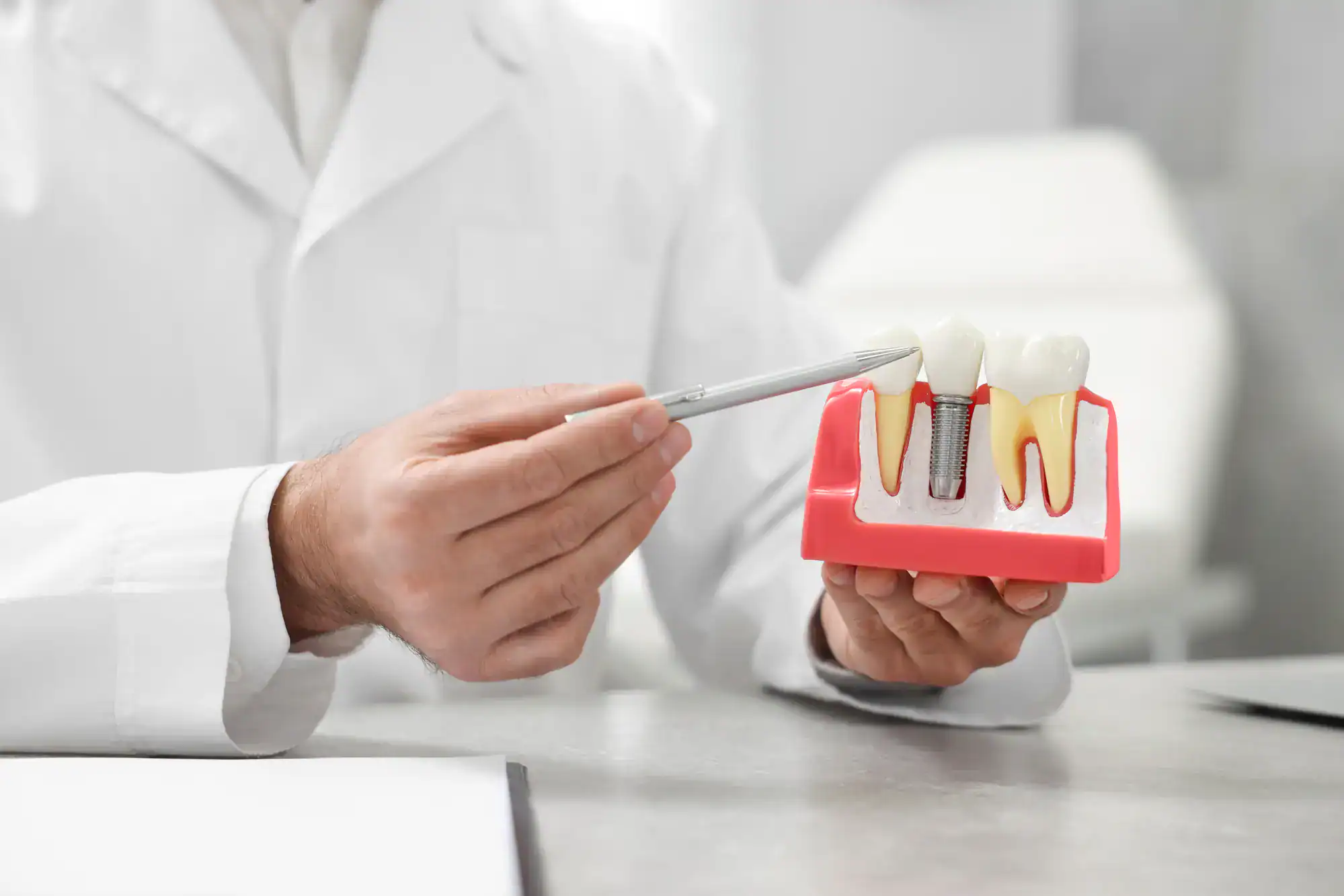
If you’re a candidate, the process moves to implant placement. A small titanium post is positioned in the jawbone where the root of the missing tooth used to be. This is the part most patients dread, and it’s almost always far less uncomfortable than they expected especially with sedation available. The post is then given time to fuse with the bone, a process called osseointegration that typically takes a few months. This is what makes an implant fundamentally different from a bridge or denture: it’s anchored in the jaw itself, not resting on top of it.
Once the post has integrated, an abutment is attached, and then your custom dental implant crown is placed on top. The crown is matched to the size, shape, and color of your natural teeth. Most patients leave that final appointment genuinely surprised at how natural it looks and feels. From first consultation to completed crown, the full timeline is typically several months but for most people, it’s the last time they’ll ever deal with that tooth.
Ready to get started?
Not every missing tooth situation looks the same, and the right solution depends on where the tooth is, how long it’s been gone, and what’s happening with the surrounding bone. A single tooth implant is the most common scenario one titanium post, one crown, one permanent fix. For back teeth, a molar implant follows the same basic process but accounts for the additional bite pressure those teeth carry. We handle both entirely in-house, from evaluation through final restoration.
For patients who are dealing with multiple missing teeth or failing teeth across a full arch, implant-supported options like All-on-4 are worth discussing at your consultation. These use a small number of strategically placed implants to support a full set of fixed teeth no adhesive, no removal at night, no slipping. The survival rate on these systems is well-documented and high.
One comparison worth addressing directly: the single tooth implant vs bridge question comes up constantly. A bridge might seem like the simpler path, but it requires permanently altering the two healthy teeth on either side of the gap to use them as anchors. Those teeth are changed forever. And when the bridge eventually fails typically within 5 to 10 years you’re now dealing with three compromised teeth instead of one missing one. An implant leaves your neighboring teeth completely untouched. For Hurley residents who think in terms of long-term investment, the math isn’t complicated.
The cost of a single dental implant in the Hurley, NY area typically falls somewhere between $3,000 and $5,500 depending on the complexity of your case, whether bone grafting is needed, and what the final crown requires. That range is consistent with what you’ll find at other reputable practices in Kingston and the surrounding Ulster County area.
What’s worth understanding is what that cost actually covers. A dental implant isn’t just a tooth replacement it’s a titanium post tooth replacement that integrates with your jawbone, preserves bone density, and is designed to last decades. Compare that to a bridge that will likely need to be replaced within 10 years, or dentures that require ongoing adjustments and eventually stop fitting well as the jawbone continues to change shape. Over a 20 or 30-year horizon, an implant is almost always the more cost-effective choice. We offer financing options for patients who want to spread the cost out, and our team can walk you through what your insurance may or may not cover at your consultation.
Bone loss is one of the most common reasons people assume they’re not a candidate for a dental implant and it’s also one of the most frequently outdated assumptions. If you were told years ago that you didn’t have enough bone for an implant, that answer may not hold today. Bone grafting procedures have advanced considerably, and many patients who were previously turned away are now successfully treated.
The tooth loss bone loss connection is real and worth taking seriously. Every month a tooth is missing, the jawbone in that area continues to deteriorate. The most significant loss happens in the first 18 months after extraction, but it doesn’t stop there. The longer you wait, the more complex and potentially costly the grafting process becomes. The best way to know where you actually stand is a current evaluation not a years-old verdict from a different provider. We’ll assess your bone density directly and give you an honest picture of your options, including whether grafting is needed and what that would involve.
The core difference comes down to what each option actually does to your mouth. A dental bridge fills the visible gap, but it does so by grinding down the healthy teeth on either side to use them as support anchors. Those teeth are permanently altered even if they were in perfect condition before. And a bridge sits on top of the gum line, which means it does nothing to stop the bone loss happening underneath it. The jawbone continues to shrink, and over time that affects both the fit of the bridge and the structure of your face.
A single tooth implant works completely differently. The titanium post is placed directly into the jawbone, replacing the root not just the visible tooth. This stimulates the bone the same way a natural tooth root does, which stops the deterioration. The neighboring teeth aren’t touched at all. The implant crown on top looks and functions like a natural tooth, and because the foundation is in the bone itself, it doesn’t shift, slip, or require adhesive. For most patients who are candidates, it’s the option that creates the least long-term disruption to their overall oral health.
This is the question most people are really asking when they hesitate to call. The honest answer is that the procedure is far less uncomfortable than most patients expect and sedation dentistry makes it even more manageable for those who are anxious going in. Most patients describe the experience as pressure rather than pain, and the sedation option means many people remember very little of the procedure itself.
Recovery after implant placement is typically mild. Some swelling and soreness in the first few days is normal and manageable with over-the-counter pain relief in most cases. The more significant phase is the healing period the months during which the titanium post fuses with the jawbone. During that time you’re not in pain; you’re just waiting. Normal eating and daily life continue throughout. The final crown placement at the end of the process is straightforward and comfortable. For patients in Hurley who have been putting this off because they’re afraid of what the procedure involves, the reality is usually a significant relief compared to what they imagined.
Dental insurance coverage for implants in New York varies widely depending on your specific plan. Many traditional dental insurance plans classify implants as a cosmetic or elective procedure and provide little to no direct coverage for the implant post itself. However, some plans will cover portions of the process the crown, the consultation, or any bone grafting that’s medically necessary which can meaningfully reduce your out-of-pocket cost.
The practical advice is to not assume you’re uncovered until you’ve actually checked. Our team can help you review your benefits and identify what your plan will and won’t apply toward. For the portions that aren’t covered, we offer financing options so the cost doesn’t have to come out of pocket all at once. Residents throughout Ulster County and the Hudson Valley deal with this same insurance landscape, and it’s a conversation worth having before you rule anything out based on cost assumptions. What most patients find is that the total investment even without full insurance coverage is more manageable than they expected when it’s broken down.
Hurley doesn’t have a dedicated implant dentist within the town itself the closest in-town dental provider in West Hurley offers general care but doesn’t specialize in implants. Most Hurley residents looking for implant treatment are already making a drive, whether that’s heading east on US-209 toward Kingston or west on Route 28 toward Woodstock. That’s just the reality of living in a rural community, and it’s not a barrier it’s a reason to be selective about where you go.
Our practice is accessible from Hurley via the familiar Hudson Valley corridor that many residents already travel for work or other services. What makes the drive worth it isn’t just proximity it’s the combination of 35 years of experience, a single-doctor model where you always see the same person, full in-house implant care from consultation through final crown, and sedation dentistry for patients who need it. There’s no referral chain, no rotating associates, no corporate intake process. If you’ve been putting off addressing a missing tooth because you weren’t sure where to go, this is a straightforward place to start a consultation costs nothing but your time, and you’ll leave with a clear picture of your actual options.
Other Services we provide in Hurley