


Hear from Our Customers
Most people in Voorheesville who come in for a consultation aren’t new to this problem. They’ve had the missing tooth for a year, maybe longer. They’ve thought about fixing it. They just haven’t done it yet and the longer that window stays open, the more the jawbone underneath quietly changes. This is what happens biologically when a root is no longer there to stimulate the bone. Within the first 18 months after a tooth is lost, the most significant bone loss occurs. After that, it slows down but it doesn’t stop.
What that means practically is that neighboring teeth begin to drift. Your bite shifts. What starts as one missing tooth can become a more complicated, more expensive problem over time. For Voorheesville residents who put down roots here many of you chose this area specifically for the school district, the community, the long-term stability a dental implant fits that same mindset. It’s not a patch. It’s a permanent replacement that functions like a natural tooth, preserves the bone beneath it, and doesn’t ask anything of the healthy teeth around it.
A bridge, by comparison, requires permanently grinding down the two teeth on either side of the gap to serve as anchors. Those teeth are altered forever. And because a bridge sits on top of the gum rather than replacing the root, bone loss continues underneath it. Bridges typically need to be replaced within 5 to 10 years. When you run the numbers over 20 or 30 years which is exactly how long-term thinkers in a community like this tend to plan the implant is often the more economical choice, not just the better clinical one.
Dr. Scott Kupetz graduated from Fairleigh Dickinson College of Dental Medicine in 1988 and has been practicing ever since. That’s not a number thrown in to sound impressive it means he has placed implants through every shift in technique, every change in materials, and every evolution in what’s possible for patients who were once told they weren’t candidates. Voorheesville and Albany County patients, including those from the surrounding New Scotland area, have been part of that story for decades.
We run this as a single-doctor practice, which matters more than it might seem. When you come in for a consultation, the same doctor who evaluates your case is the one who places the implant and sees you through to the final crown. No handoffs, no “the doctor you saw last time isn’t available today.” For a multi-stage process that unfolds over several months, that kind of continuity makes a real difference both in the quality of care and in how comfortable the whole experience feels.
The first step is a consultation where Dr. Kupetz evaluates your bone density, gum health, and overall oral condition. This isn’t a formality it’s where the actual treatment plan gets built. If there’s been significant bone loss since the tooth was extracted, bone grafting may be needed before the implant can be placed. Many patients who were told years ago that they weren’t candidates have since become good candidates as techniques have improved, so it’s worth getting a current evaluation rather than assuming the answer is still no.
Once you’re cleared for placement, the titanium post is surgically inserted into the jawbone. Sedation dentistry makes this phase far more manageable than most people expect. We offer sedation options that help patients who came in genuinely nervous leave saying it was nothing like what they’d anticipated. After placement, there’s a healing period typically a few months during which the post integrates with the bone. Albany County winters actually work in your favor here if you schedule your placement in the fall or early winter, since the recovery period lands during months when you’re naturally slowing down anyway.
Once osseointegration is complete, the abutment and final crown are placed. Everything happens in one practice no referrals to an oral surgeon across town, no coordinating between multiple offices. From the first appointment to the final crown, it’s one doctor, one location, one consistent experience.
Ready to get started?
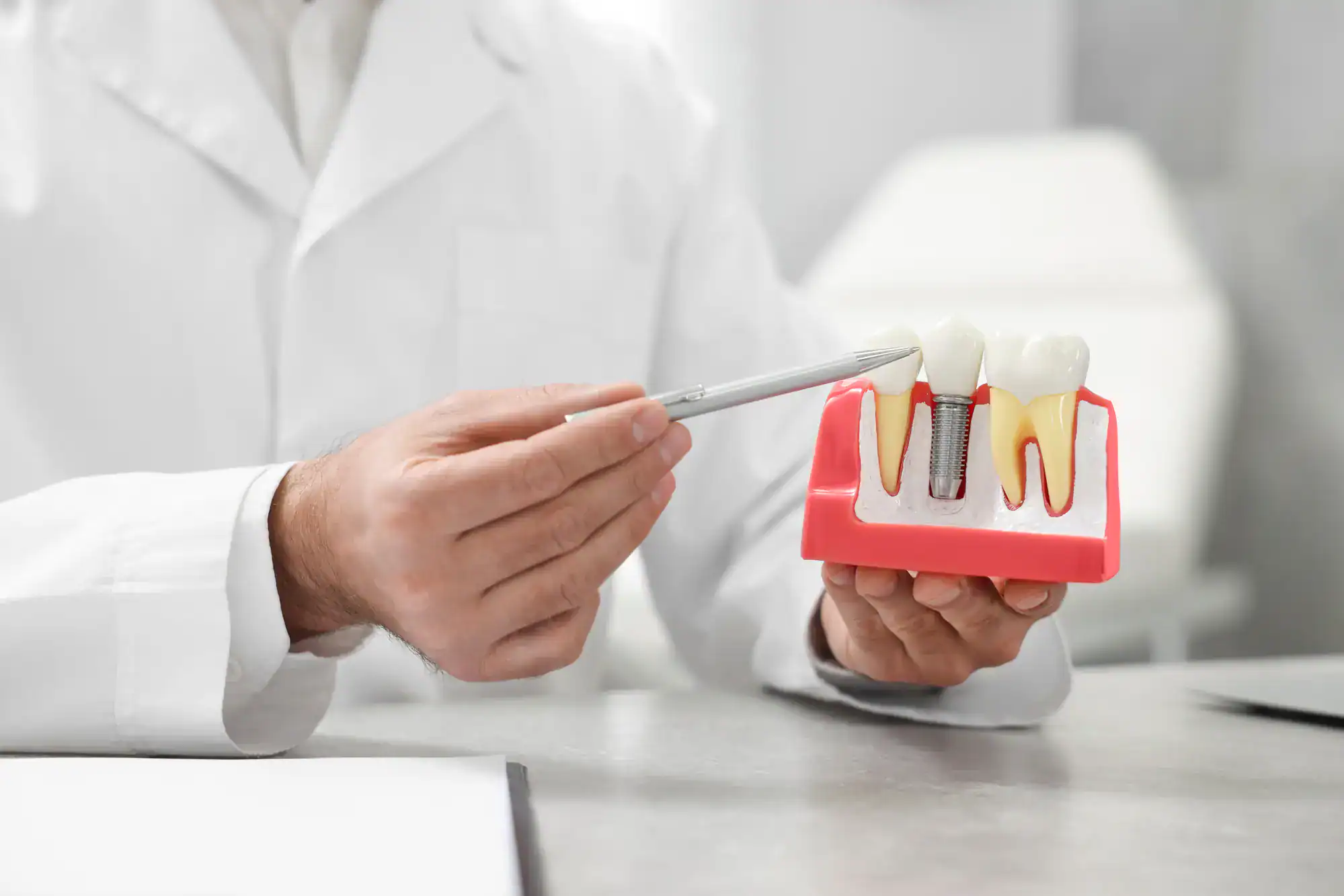
Whether you’re dealing with one missing molar or evaluating options for multiple missing teeth, we offer a full spectrum of implant solutions. A single tooth implant replaces one tooth root and crown without touching the healthy teeth around it. For patients missing several teeth, implant-supported bridges or partial solutions can restore function and appearance without the instability of a removable partial. For patients who have lost most or all of their teeth, All-on-4 implant-supported arches offer a fixed, permanent alternative to traditional dentures, anchored by four strategically placed implants with a clinical survival rate above 98%.
The molar implant question comes up often, and it’s worth addressing directly. Molars take more bite force than front teeth, which is why some patients worry about whether an implant will hold up back there. A properly placed titanium post integrates with the jawbone regardless of position molars are routinely and successfully replaced with implants, and the result is a tooth that functions exactly like the original.
For Voorheesville residents who have employer-sponsored dental benefits through state government, healthcare, or education sector jobs which covers a significant portion of this community it’s worth checking your plan before the end of the calendar year. Many dental plans include an annual maximum that resets on January 1, meaning the October through December window is often the best time to start treatment and apply remaining benefits before they expire. We also offer financing options for patients who want to spread the cost over time without delaying care.
Yes molars are one of the most common teeth we replace with implants, and the concern about whether they’ll hold up under bite pressure is understandable but generally not a barrier. The titanium post used in an implant is designed to integrate directly with the jawbone through a process called osseointegration, which creates a bond strong enough to handle the forces involved in normal chewing, including the heavier load that back teeth carry.
What matters most for a molar implant is having sufficient bone density at the site. If a molar has been missing for a while which is common for Voorheesville patients who’ve been managing with a gap or a partial there may be some bone loss at the extraction site that needs to be addressed with a bone graft before the implant can be placed. That’s not a disqualifier; it’s just an additional step that gets factored into the treatment plan during your initial evaluation. The end result is a molar that looks, feels, and functions like the original.
A single dental implant including the post, abutment, and crown typically runs between $3,000 and $5,000 when completed in full. The variation depends on the complexity of your case, whether bone grafting is needed, and the specific tooth being replaced. All-on-4 full-arch restorations are a significantly larger investment, generally starting around $20,000 per arch, though the range varies by case.
Most dental insurance plans provide limited coverage for implants some cover a portion of the crown, others offer nothing. For Voorheesville residents with employer-sponsored dental benefits through state, healthcare, or education sector jobs, it’s worth reviewing your plan’s specifics and checking your remaining annual maximum before year-end, since benefits typically reset on January 1. We offer financing options for patients who want to move forward without waiting. The more useful comparison isn’t implant cost versus zero cost it’s implant cost versus the cumulative cost of bridge replacements, adjustments, and the downstream dental work that untreated bone loss tends to create over time.
When a tooth is extracted or falls out, the root that was stimulating the jawbone is gone. Without that stimulation, the bone begins to resorb essentially, the body stops maintaining it because it’s no longer needed to support a tooth. The most significant bone loss happens within the first 18 months, but the process continues slowly for years after that.
What this means practically is that the longer you wait, the more bone you lose and the more bone you lose, the more complex future treatment becomes. Neighboring teeth start to drift into the gap, which can affect your bite and create alignment problems. Over a longer period, the structural changes in the jawbone can alter the shape of your face, contributing to the sunken appearance that people often associate with long-term denture wear. For Voorheesville residents who have been managing with a gap for a year or more, this is important context for why acting sooner is better than waiting, and why the evaluation conversation is worth having now.
Not necessarily. Bone grafting has become a standard part of implant dentistry, and many patients who were told years ago that they weren’t candidates are now good candidates because of how much the field has advanced. A bone graft rebuilds the volume and density at the implant site before the titanium post is placed, giving it a stable foundation to integrate with.
The evaluation that was done when you were first told you weren’t a candidate may have been years ago and dental technology, grafting materials, and surgical techniques have all continued to improve. Dr. Kupetz has over 35 years of experience navigating complex implant cases, including patients with significant bone loss, prior extractions, and gum disease history. The only way to know whether you’re a current candidate is to get a current evaluation. Many patients who walked in assuming the answer was still no have walked out with a treatment plan in hand.
The procedure itself is far more manageable than most patients expect, especially with sedation dentistry available. Dental anxiety is real and implant surgery sounds intimidating on paper. But under sedation, most patients report that the experience was nothing like what they’d anticipated. The area is fully numbed, and sedation keeps you relaxed throughout. The most common feedback afterward is some soreness and swelling in the first few days, which is typically managed with over-the-counter pain relief and resolves within a week for most patients.
The longer part of recovery is the osseointegration period the months during which the titanium post bonds with the jawbone before the final crown can be placed. This isn’t a painful phase; most patients go about their normal routines without significant disruption. For Voorheesville residents thinking about timing, scheduling placement in the fall or early winter works well the healing period falls during Albany County’s colder months when outdoor activity naturally slows, and you’re set up to have the final restoration in place before spring.
The core difference is what each option does and doesn’t do for the teeth around the gap and the bone beneath it. A fixed bridge fills the visible space, but it requires permanently altering the two healthy teeth on either side to serve as anchors. Those teeth are ground down and capped, which means two teeth that had nothing wrong with them are now structurally compromised for the life of the bridge. And because a bridge doesn’t replace the root, bone loss continues underneath it.
A dental implant replaces the root itself the titanium post goes into the jawbone, stimulates it the way a natural root would, and supports a crown that looks and functions like a real tooth. The healthy teeth on either side are left completely untouched. For Voorheesville residents thinking long-term which tends to be how people in a community built around stable homeownership and strong schools approach most decisions the implant holds up better over time, avoids the cumulative cost of bridge replacement, and doesn’t create a cycle of additional dental work down the road. The upfront cost is higher. The long-term picture is clearer.
Other Services we provide in Voorheesville