


Hear from Our Customers

A missing tooth isn’t just a cosmetic issue. The moment a tooth is gone, the jawbone beneath it starts to change. Within the first 18 months, the most significant bone loss happens quietly, without pain, and without warning. By the time most people decide to do something about it, the bone has already shifted enough to complicate the process. This is how the jaw works.
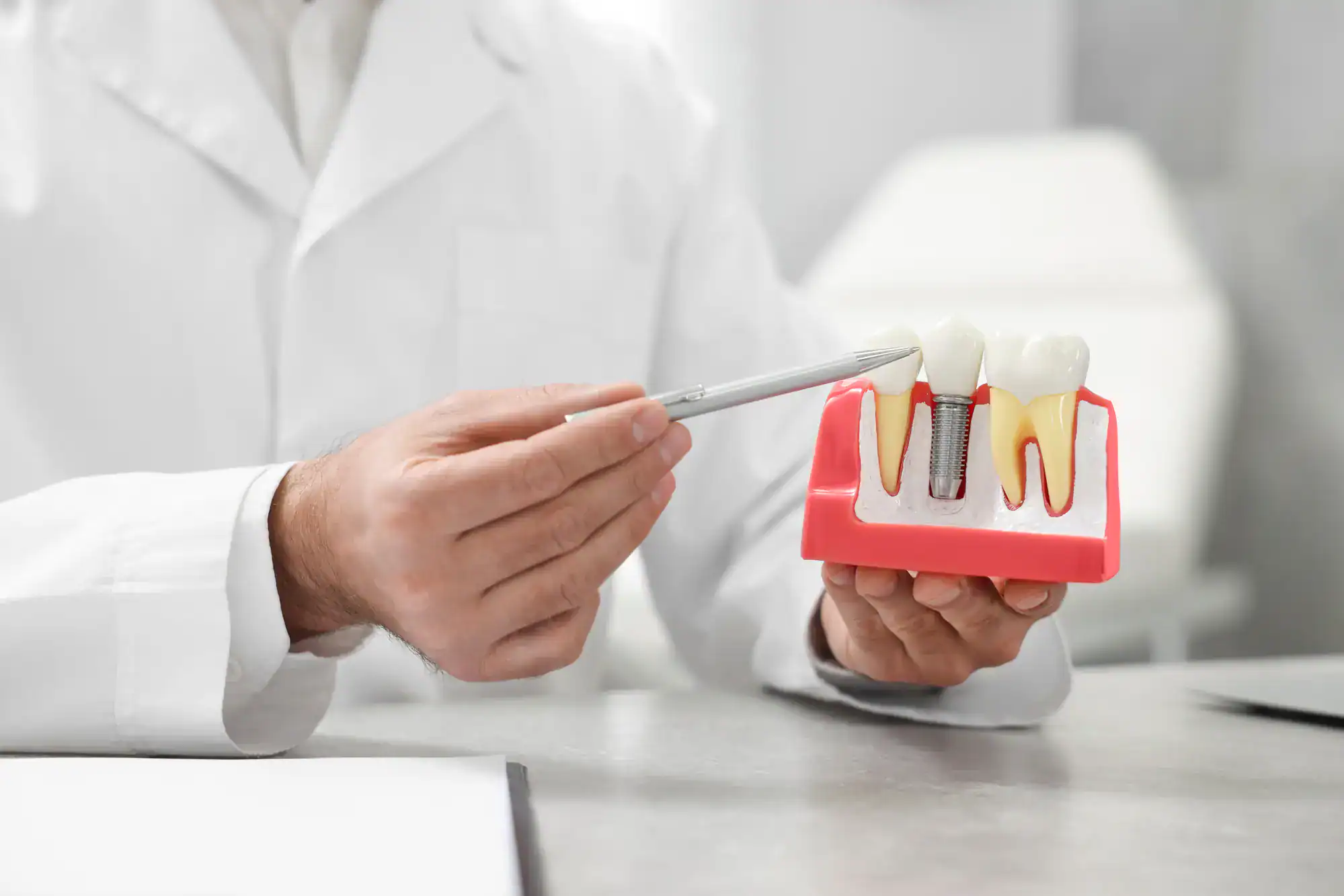
A dental implant replaces the root, not just the visible tooth. That titanium post anchors into the bone, stimulates it the way a natural root would, and stops that slow deterioration in its tracks. The crown on top looks and functions like a real tooth you eat what you want, speak clearly, and don’t think about it again.
For residents in North East and the surrounding Harlem Valley, where the nearest dental specialist isn’t exactly around the corner, this matters more than it might in a city. You’re already making a drive for quality care. The goal is to make that drive once for a solution that doesn’t need to be replaced, adjusted, or replaced again in five years. An implant, done right, is the last tooth replacement you’ll ever need.
Dr. Scott Kupetz has been practicing in the Hudson Valley since 1988 long before dental chains started opening locations in Dutchess County. Our practice in Wappinger Falls handles everything from the initial implant consultation to the final crown, in one location, with one doctor. You see Dr. Kupetz every time you come in.
For patients coming from North East, Millerton, and the communities along Route 22 and Route 44, that consistency means something. You’re already making the drive. You deserve to know exactly who you’re seeing when you get there.
We also offer sedation dentistry and documented after-hours availability including Sunday appointments because dental problems don’t wait for Monday, and neither should you.

It starts with a consultation. Dr. Kupetz evaluates your bone density, your gum health, and the condition of the surrounding teeth to determine exactly what you’re working with. If there’s been bone loss which is common in patients who’ve been missing a tooth for a year or more that gets addressed first through bone grafting before the implant is placed. You’ll know what’s needed before anything happens.
Once the foundation is solid, the titanium post is placed directly into the jawbone. This is the part most patients dread, and it’s almost always far less uncomfortable than expected especially with sedation available. The post then integrates with the bone over the following weeks, a process called osseointegration. When that’s complete, the permanent crown is attached on top.
The whole process typically spans a few months from start to finish, depending on whether bone grafting is needed. For patients traveling from North East and Millerton, we schedule appointments to minimize the number of trips while keeping the process moving efficiently. Everything happens under one roof no referrals to a separate oral surgeon, no coordination between multiple offices, no extra driving.
Ready to get started?
Whether you’re missing one molar, several teeth, or evaluating implant-supported dentures as a permanent alternative to removable ones, we offer the full range of implant options. A single tooth implant replaces one missing tooth without touching the healthy teeth on either side unlike a bridge, which requires permanently grinding down adjacent teeth to serve as anchors. That’s a trade-off a lot of patients don’t fully understand until it’s explained clearly, and it’s one worth knowing before you decide.
For patients who’ve been living with full or partial dentures and are tired of the slipping, the adhesives, and the restricted diet, implant-supported dentures offer a fixed, stable alternative. The implants anchor the prosthetic in place no movement, no removal at night, no compromise on what you can eat.
Patients in North East and across the Taconic Hills area often arrive having already been told they may not be candidates due to bone loss. That’s worth a second opinion. Advances in bone grafting have made implant treatment accessible to patients who would have been turned away a decade ago. If you’ve been carrying that assumption, a consultation is the only way to know for certain what’s actually possible.
A dental implant, when placed correctly and maintained with normal brushing and checkups, is designed to last a lifetime. The titanium post fuses with the jawbone and doesn’t decay the way a natural tooth root can. The crown on top may eventually need to be replaced after 15 to 25 years depending on wear, but the implant itself typically stays in place permanently.
A bridge, by comparison, has a significantly shorter functional lifespan. Most bridges last between 5 and 15 years before they fail often due to decay at the margins where the bridge meets the anchor teeth, or difficulty keeping the area clean underneath. And because a bridge requires grinding down two healthy neighboring teeth to place it, those teeth are permanently altered regardless of how long the bridge lasts. For patients in North East who are making a long-term investment in their dental health, the implant’s longevity makes it the more cost-effective option over a lifetime, even with the higher upfront cost.
Yes, in most cases. Bone loss is one of the most common reasons people assume they’re not implant candidates but it’s also one of the most manageable with the right approach. Bone grafting is a procedure that rebuilds the volume and density of the jawbone in the area where the implant will be placed. It uses either your own bone, donor bone, or synthetic material to restore the structure needed to support a titanium post.
The grafting process does add time to the overall treatment typically a few months of healing before the implant can be placed. But for patients in North East who’ve been missing teeth for years, often the case in rural communities where access to timely dental care has historically been limited, bone grafting is what makes implants possible at all. Dr. Kupetz evaluates bone volume at the initial consultation and will give you a straightforward answer about what’s needed and what the realistic timeline looks like.
A single tooth implant replaces one missing tooth one post, one crown, done. It’s the most straightforward application of implant technology and is ideal when you’re dealing with one or two isolated gaps, like a missing molar or a front tooth lost to injury or decay.
Implant-supported dentures are a different solution for a different problem. Instead of replacing individual teeth, they use a small number of implant posts typically two to four to anchor a full arch of replacement teeth. The denture snaps onto the implants and stays fixed in place. You don’t remove it at night. It doesn’t shift when you eat. It functions far more like natural teeth than a traditional removable denture does. For patients in the North East area who have been managing full dentures for years and are frustrated with the limitations, implant-supported dentures are often the option that changes everything. The consultation will clarify which approach fits your situation.
Most patients are surprised by how manageable the experience actually is. The placement procedure is done under local anesthesia, so you won’t feel the implant being placed. For patients with dental anxiety which is common among people who’ve had limited access to comfortable dental care sedation options are available that make the entire appointment feel far less intense than anticipated.
Recovery after implant placement typically involves a few days of soreness and swelling, manageable with over-the-counter pain relief in most cases. The more significant phase is the healing period after placement, when the implant integrates with the bone but that process happens on its own, without discomfort, over the following weeks. Most patients return to normal activity within a day or two of the procedure itself. Dr. Kupetz walks through what to expect at every stage so you’re not guessing about what’s normal and what isn’t.
A single dental implant including the post, the abutment, and the crown typically ranges from $3,000 to $5,000 depending on the complexity of the case and whether bone grafting is needed. Full-arch implant solutions like All-on-4 run higher, generally in the $20,000 to $30,000 range per arch, reflecting the scope of the procedure.
Dental insurance coverage for implants varies widely. Some plans cover a portion of the crown or the bone grafting component but exclude the implant post itself. Many patients in North East particularly those who are self-employed, in agriculture, or working in small businesses without robust employer-sponsored coverage pay partially or fully out of pocket. We can walk you through what your plan covers before any treatment begins. The more useful framing is long-term value: a single implant that lasts 25 years costs far less over time than a bridge that fails and needs to be replaced twice in that same period.
No. And that’s not a line it’s the reality of how this practice operates. A significant number of patients who come in for implant consultations have been avoiding dental care for years, sometimes decades. Life gets in the way. Access in rural communities like North East isn’t always easy. Cost is a real barrier. And for a lot of people, shame about the current state of their teeth is the biggest barrier of all.
Dr. Kupetz has been practicing in the Hudson Valley for over 35 years. He has seen every situation imaginable, and his approach has always been to start from where you are not where you should have been five years ago. The consultation is a conversation, not a critique. You’ll leave knowing exactly what your options are, what the process looks like, and what it will cost. What you won’t leave with is a lecture. If you’ve been putting this off because you’re embarrassed about what’s going on in your mouth, that’s exactly the reason to call not a reason to wait longer.
Other Services we provide in North East