


Hear from Our Customers
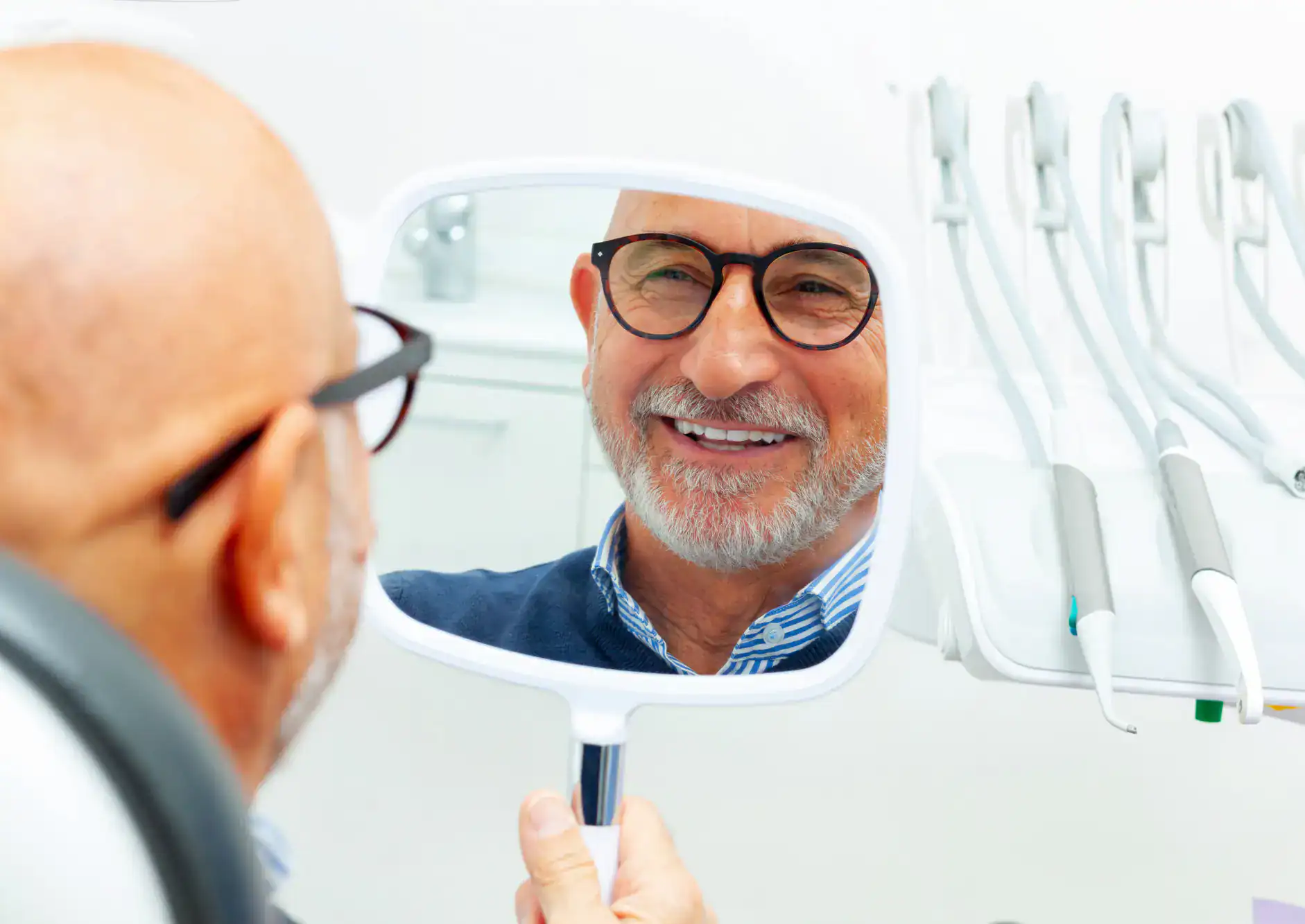
Most people don’t realize that the most significant jawbone loss after a tooth extraction happens within the first 18 months. After that, the deterioration doesn’t stop it just continues at a slower pace, quietly changing the structure of your jaw, shifting neighboring teeth, and making future treatment more involved than it needed to be. The patients who act early have the simplest path forward. The ones who wait years often find the process more complex than it had to be.
For Clinton residents, this matters in a specific way. With a median age of 45.6 in the village, a lot of people here are right in the window where tooth loss decisions carry the most long-term weight. Whether you’re faculty at Hamilton College, a long-term Kirkland homeowner, or someone who’s been quietly putting this off for a few winters, the biology doesn’t pause while life stays busy. A dental implant a titanium post placed into the jawbone is the only tooth replacement option that actually stimulates bone and stops that deterioration. Bridges and dentures don’t do that.
The difference in daily life after a well-placed implant is real. You eat what you want, speak without thinking about it, and don’t spend mental energy managing a removable appliance. More importantly, your jaw stays intact and your face keeps looking like you.
We graduated from Fairleigh Dickinson College of Dental Medicine in 1988 and have been practicing ever since. That’s over three decades of real implant cases not occasional procedures mixed into a general schedule, but a consistent, practiced focus on permanent teeth replacement across the full range of patient situations, including people with bone loss, prior extractions, and years of deferred care.
What makes our practice different isn’t a tagline. It’s structural. You see the same doctor at every appointment not a rotating associate, not a different face each visit. We place the implant, we restore the crown, and we know your case from start to finish. For patients coming in from Clinton, Kirkland, and the surrounding Oneida County area, that continuity is exactly what a decision this significant deserves.
If you’ve been told you might not be a candidate, or if a previous experience left you hesitant, that conversation is worth having. The cases that seem complicated rarely are, once someone with the right experience takes a look.

It starts with a consultation where we evaluate your bone density, gum health, and overall oral condition. This isn’t a sales appointment it’s a clinical assessment that determines exactly what your situation requires and whether any preparatory work, like a bone graft, is needed before placement. Most patients are candidates. Some need a step before they get there. Either way, you leave knowing exactly what the path looks like.
Once you’re cleared for placement, the titanium post is surgically positioned into the jawbone. For patients who are anxious about this part and plenty of people are, regardless of how long they’ve lived in a village as calm as Clinton sedation options are available. The procedure itself is far less uncomfortable than most people expect. After placement, there’s a healing period while the post integrates with the bone. This typically takes a few months, and we monitor the process throughout.
The final step is the dental implant crown the visible tooth that sits on top of the post. It’s matched to your natural teeth and functions like a real tooth in every practical sense. From first appointment to final crown, everything happens in our practice. No coordinating between an oral surgeon in Utica and a separate restorative dentist in New Hartford. One doctor, one location, one complete process.
Ready to get started?
A lot of Clinton residents weighing a single tooth implant against a bridge haven’t been given the full picture. A fixed bridge does replace the visible gap but it requires permanently removing enamel from the two healthy teeth on either side to anchor it. Those teeth are altered forever, even if the bridge eventually fails. And it typically does fail within five to ten years, because the design makes it nearly impossible to clean properly at the root level.
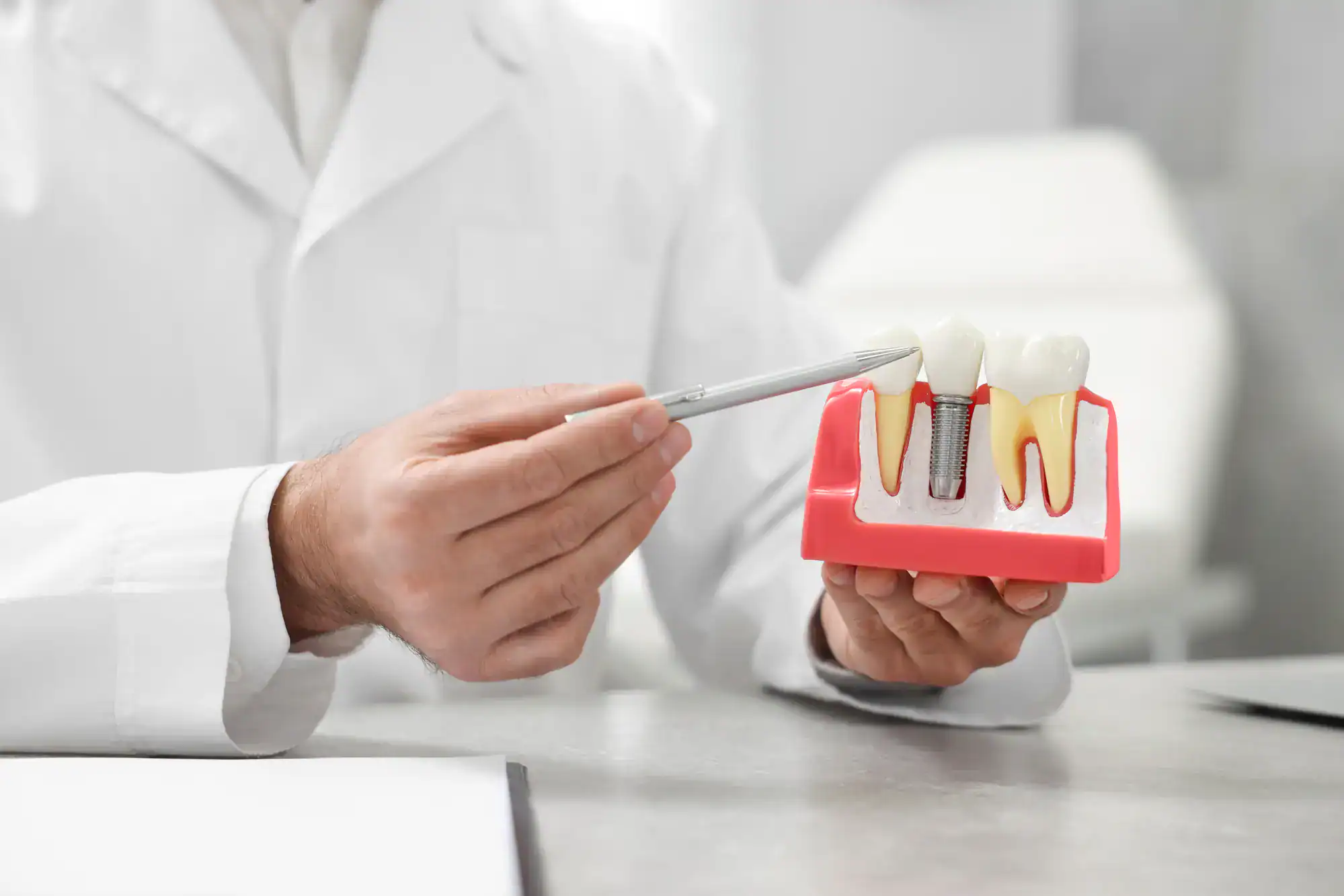
A dental implant leaves your healthy teeth completely untouched. It replaces the root, not just the crown, which is why it’s the only option that preserves jawbone density over time. For someone in their mid-40s living in Clinton with decades of chewing, speaking, and living ahead that structural difference is significant. The upfront cost of an implant is higher. The long-term math is not even close.
For patients missing multiple teeth or dealing with full-arch tooth loss, we offer options like implant-supported dentures and All-on-4 restorations. These aren’t one-size-fits-all decisions, and we don’t treat them that way. The right solution depends on your bone volume, your health history, and what you’re actually trying to accomplish and that’s exactly the kind of conversation the consultation is designed to have.
Most adults who are missing one or more teeth are candidates for dental implants but the honest answer is that it depends on your bone density, gum health, and overall medical history. The most common reason someone isn’t an immediate candidate is insufficient bone volume at the implant site, which often results from waiting too long after a tooth was lost. In those cases, a bone graft can rebuild the foundation before placement, which adds time to the process but doesn’t eliminate the option.
Conditions like diabetes, certain medications, and a history of smoking can affect healing and integration, but they don’t automatically disqualify you. We’ve worked with patients across a wide range of health profiles over 35 years of practice in the Clinton area. The consultation is where that evaluation happens and it’s a clinical conversation, not a pressure situation. If you’re in Clinton or Kirkland and you’ve been wondering whether your situation is too complicated, the most useful thing you can do is come in and find out.
The core difference is what’s happening below the gumline. A bridge and a denture both replace the visible tooth but neither one replaces the root. That matters because the jawbone needs stimulation from a tooth root to maintain its density. Without it, bone loss continues. Over years, that bone loss changes the shape of your jaw and, eventually, your face.
A dental implant is a titanium post that goes into the jawbone and functions as a replacement root. The bone actually fuses to it through a process called osseointegration, which is why implants have long-term success rates that consistently exceed 90%. A bridge, by comparison, typically lasts five to ten years before it needs to be replaced and it requires permanently altering the two healthy teeth on either side to anchor it. For someone in Clinton making a permanent teeth replacement decision, the structural and long-term difference between these options is significant and worth understanding before committing to either one.
The short answer is: less than most people expect. The implant placement procedure is done under local anesthesia, so you don’t feel the surgery itself. Afterward, there’s typically some soreness and swelling for a few days comparable to what you’d feel after a tooth extraction. Most patients manage it with over-the-counter pain relief and are back to normal activity within a day or two.
For patients who have significant dental anxiety which is common and nothing to be embarrassed about sedation options are available. This is especially relevant for people in the Clinton area who may have been avoiding dental care for years and find the idea of any oral surgery genuinely distressing. Sedation allows you to be relaxed and comfortable throughout the procedure without the anxiety that’s been keeping you from moving forward. If fear has been the reason you’ve put this off, it’s worth knowing that the experience itself is typically far more manageable than the anticipation of it.
The timeline varies depending on your starting point, but for a straightforward single tooth implant, you’re generally looking at three to six months from placement to final crown. The longest part of the process is the healing phase after the titanium post is placed the bone needs time to fuse with the implant before the crown can be attached. That integration period typically runs two to four months.
If you need preparatory work a bone graft, a tooth extraction, or treatment for gum disease before placement the timeline extends accordingly. Some patients coming in from the Clinton and Kirkland area have deferred dental care for several years, which can mean a bit more groundwork before the implant itself is placed. That’s not unusual, and it doesn’t make the outcome any less successful. The consultation will give you a realistic timeline based on your specific situation, so you’re not guessing or working from a generic estimate.
Bone loss begins almost immediately after a tooth is lost. The jawbone exists, in large part, to support tooth roots and when a root is gone, the bone in that area starts to resorb. The most significant loss happens in the first 18 months, but it doesn’t stop there. Over years, the bone volume at the extraction site continues to decrease, neighboring teeth begin to drift toward the gap, and bite problems can develop that affect teeth far from the original missing one.
For residents of Clinton who are in their 40s or 50s which describes a significant portion of the village’s population given its median age of 45.6 this is a long-term quality-of-life issue, not just a cosmetic one. The longer the gap stays unfilled, the more bone is lost, and the more involved the implant process becomes when you eventually decide to act. Patients who come in within a year or two of losing a tooth typically have the simplest, most straightforward path to a successful implant. Waiting doesn’t make the decision easier it makes the treatment more complex.
A single dental implant in New York typically ranges from $3,000 to $5,000, which covers the implant post, the abutment, and the final crown. If preparatory work like bone grafting is needed, that adds to the total. Full-arch solutions like All-on-4 are a larger investment, generally starting around $20,000 per arch, though that replaces an entire set of teeth with a fixed, permanent result.
Dental insurance coverage for implants in New York varies widely by plan. Some plans cover a portion of the crown or the restoration component but not the surgical placement. Others exclude implants entirely. It’s worth calling your insurance provider directly to ask what your specific plan covers before your consultation and worth knowing that financing options like CareCredit are available if the upfront cost is a barrier. For most Clinton residents who are homeowners making long-term investment decisions, the more useful comparison isn’t implant cost versus nothing it’s implant cost versus the ongoing expense of bridges that fail, dentures that need adjustment, and the cumulative cost of not addressing bone loss until it becomes a more serious structural problem.
Other Services we provide in Clinton