


Hear from Our Customers
Most people who come in for a dental implant consultation in Arlington aren’t just bothered by the way their smile looks. They’re dealing with something more practical a tooth that’s been missing long enough that the surrounding teeth have started to shift, or a bite that feels slightly off every time they eat. That’s not in your head. It’s what happens when a tooth root disappears and nothing replaces it.
The jawbone underneath a missing tooth starts to shrink within the first 18 months of tooth loss and it doesn’t stop. That bone loss changes the shape of your face over time, shifts neighboring teeth out of alignment, and makes any future implant procedure more complicated and expensive. Waiting isn’t a neutral decision. It’s a decision that costs you bone, structure, and options.
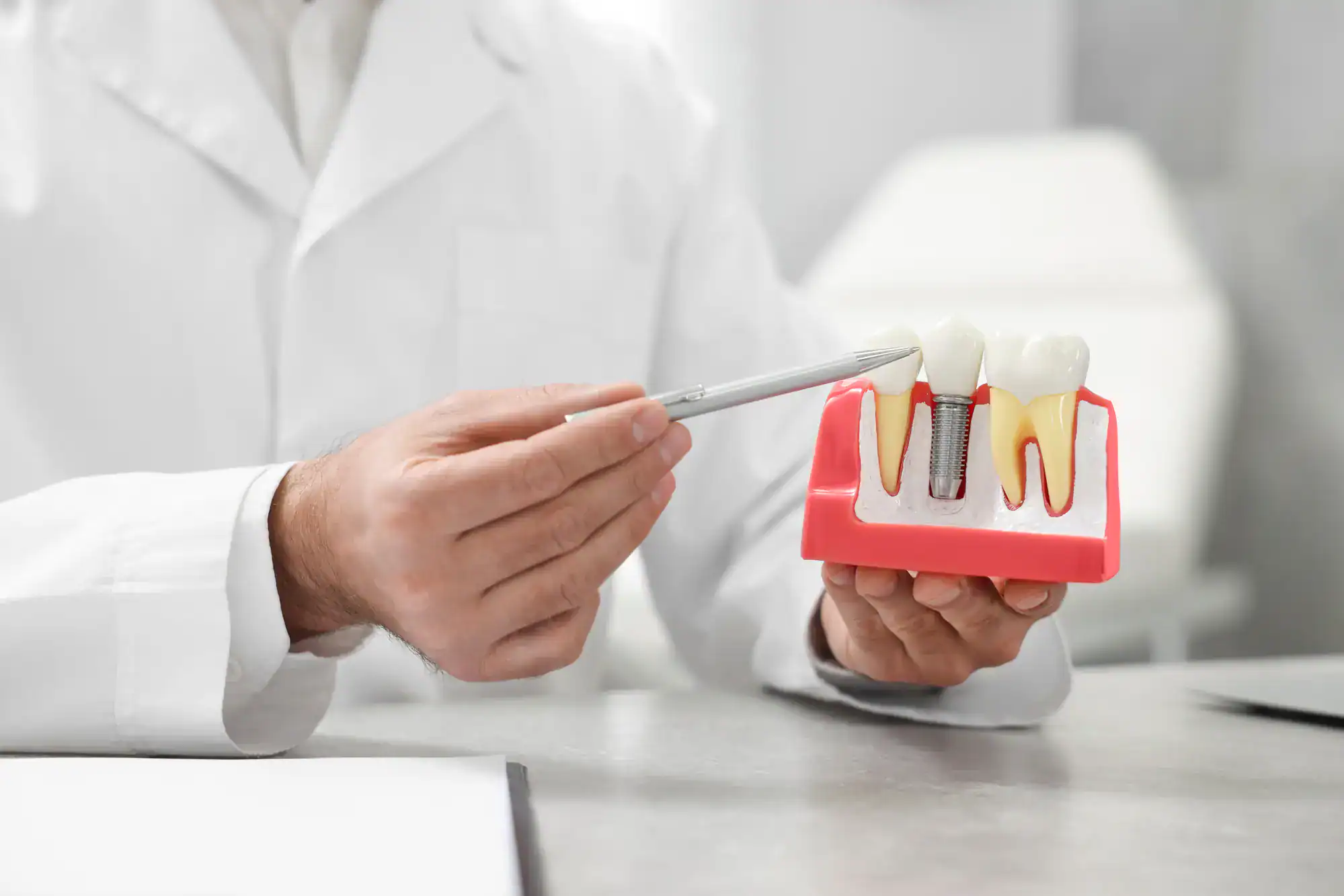
For Arlington residents who’ve spent years with a gap they’ve been meaning to fix, the good news is that a dental implant replaces the root, not just the tooth. That titanium post actually stimulates the jawbone the same way a natural root does stopping the bone loss, stabilizing the surrounding teeth, and giving you a crown that looks and functions like the real thing. One appointment at a time, with the same doctor every visit.
Dr. Scott Kupetz has been practicing dentistry in the Hudson Valley since 1988 longer than most of his current patients have lived in Dutchess County. He graduated from Fairleigh Dickinson College of Dental Medicine and has been placing implants, handling complications, and building real relationships with patients in this region ever since. That’s not a marketing number. That’s a track record.
We’re a single-doctor practice. The person you meet at your consultation is the same person who places your implant and fits your final crown. For anyone who’s been shuffled between associates at a larger dental group, that continuity matters clinically and personally.
We’re located at 260 New Hackensack Road in Wappinger Falls, about 10 to 12 minutes south of the Arlington business district on Route 9. No highway required. For busy professionals working near the Dutchess Turnpike corridor or at the IBM campus, that’s a drive that fits into a lunch break not an all-day commitment.

The process starts with a consultation where Dr. Kupetz evaluates your bone density, gum health, and overall oral condition. This is where candidacy gets determined not by a generic online quiz, but by an actual clinical exam. If there’s bone loss present (which is common, especially if the tooth has been missing for a while), bone grafting may be recommended before placement. That’s a conversation Dr. Kupetz will have with you directly, with a clear explanation of what it means for your timeline and cost.
Once you’re cleared for placement, the titanium post is surgically inserted into the jawbone. For patients with dental anxiety and there are plenty in the Arlington area who’ve been avoiding this step for years we offer sedation dentistry. You don’t have to be brave. You just have to make the call. The post then integrates with the bone over a healing period of several months, which is what gives the implant its long-term stability.
After osseointegration is complete, an abutment is placed to connect the post to your final dental implant crown. That crown is custom-matched to your surrounding teeth. When it’s done, it looks like a tooth, functions like a tooth, and unlike a bridge doesn’t require grinding down the healthy teeth on either side of the gap to hold it in place. The whole process takes time, but the result is designed to last the rest of your life.
Ready to get started?
Whether you’re missing one molar or dealing with multiple missing teeth, our approach at Scott Kupetz, DMD is built around what your specific situation actually needs not a one-size-fits-all package. A single tooth implant in Arlington, NY replaces one missing tooth without touching the healthy teeth around it. That’s the key difference from a traditional bridge, which requires permanently altering two perfectly healthy teeth just to anchor the replacement. Once those teeth are ground down, there’s no undoing it.
For patients missing several teeth or dealing with significant bone loss from years of denture use, we offer implant-supported options that can replace multiple teeth on fewer posts reducing surgical complexity while still delivering a permanent, stable result. If you’ve been told in the past that you’re not a candidate because of bone loss, it’s worth having that conversation again. Bone grafting techniques have advanced significantly, and patients who were turned away years ago often qualify today.
Arlington’s population skews toward established professionals in their 40s, 50s, and 60s many of whom have employer-sponsored dental insurance through IBM, Vassar, Marist, or one of the local healthcare systems. While implants themselves are often only partially covered, many insurance plans do cover portions of related procedures like extractions, bone grafts, and crowns. Our office can help you understand what your plan covers before you commit to anything. We also offer financing options for the portion that isn’t covered, so cost doesn’t have to be the reason you keep waiting.
A single dental implant in Arlington, NY typically runs between $3,000 and $5,000, depending on whether you need additional procedures like bone grafting or a tooth extraction beforehand. That number can feel significant upfront, but it’s worth putting it in context. A traditional bridge which is often perceived as the cheaper option generally needs to be replaced every 5 to 10 years, and each replacement involves re-treating the anchor teeth on either side. Over a 20-year period, the total cost of a bridge often exceeds the cost of a single implant that was placed correctly the first time.
Many Arlington residents have dental insurance through employers like IBM, Vassar College, Marist University, or one of the area’s healthcare systems. While most plans don’t cover the implant post itself, they frequently cover related procedures extractions, bone grafts, and the final crown which can meaningfully reduce your out-of-pocket cost. We also offer financing through CareCredit for patients who want to spread the remaining balance over time. The best way to get an accurate number for your specific situation is to come in for a consultation, where we can review your bone structure, your insurance benefits, and your options without any pressure to commit on the spot.
For most patients, yes and the reason comes down to what a bridge actually requires. To place a traditional fixed bridge, the two healthy teeth on either side of the gap have to be permanently ground down to serve as anchors. Those teeth will never be the same. They’re now more vulnerable to decay, fracture, and nerve damage and if the bridge fails in 10 years, you’re dealing with that problem on top of the original one.
A molar implant in Arlington, NY replaces the missing tooth without touching the neighboring teeth at all. The titanium post goes directly into the jawbone, the crown sits on top, and the surrounding teeth stay exactly as they are. The implant also stimulates the jawbone beneath it, which a bridge does not meaning bone loss continues under a bridge even after the visible gap is filled. For a back molar that takes the brunt of chewing force, an implant’s stability and root-level support is a meaningful clinical advantage. If cost is the main reason you’re considering a bridge instead, it’s worth having the full long-term cost conversation before you decide.
Bone loss is one of the most common reasons patients assume they’re not candidates for implants and it’s one of the most frequently outdated assumptions we see. If you were told years ago that your bone density wasn’t sufficient, that conversation is worth revisiting. Bone grafting techniques have improved considerably, and patients who were turned away at other practices have gone on to successfully receive implants after a grafting procedure.
The key is getting a current evaluation, not relying on what someone told you five years ago. Bone loss from a missing tooth is progressive the longer the tooth has been gone, the more resorption has occurred. But that doesn’t automatically disqualify you. Dr. Kupetz will assess your current bone volume, discuss whether grafting makes sense for your situation, and give you a realistic picture of your timeline and options. For Arlington-area patients who’ve been living with bone loss from a long-missing tooth, the most important step is simply coming in and finding out where things actually stand today.
Dental anxiety is genuinely common, and it’s one of the main reasons people in the Arlington area put off implant consultations for months or years. The idea of oral surgery even when described accurately can be enough to make someone close the browser tab and move on. That’s understandable. It’s also why we offer sedation dentistry for patients who need it.
Sedation options allow you to go through the implant placement procedure in a relaxed, comfortable state most patients describe remembering very little of the procedure itself. You’re not unconscious, but you’re not gripping the armrests either. The procedure itself is typically done under local anesthesia regardless, so physical discomfort is well-managed. What sedation addresses is the mental and emotional barrier the anticipatory anxiety that keeps people from ever making the appointment in the first place. If that’s been your reason for waiting, it doesn’t have to be anymore. The first step is just a consultation, and there’s no commitment required to come in and talk through your options.
A well-placed dental implant, properly cared for, can last 20 to 30 years and in many cases, a lifetime. That’s not a guarantee, but it reflects what the clinical data consistently shows. The titanium post fuses with the jawbone through a process called osseointegration, which creates a stable, bone-level foundation that dentures and bridges simply can’t replicate.
Dentures, by comparison, typically need to be relined or replaced every 5 to 7 years as the jawbone continues to shrink beneath them. That ongoing bone loss also changes the fit over time, leading to the slipping and discomfort that many denture wearers deal with daily. Bridges last longer than dentures usually 10 to 15 years but they don’t address the bone loss underneath, and replacement means re-treating the anchor teeth. For Arlington residents in their 40s or 50s who are looking at 30 or more years of use ahead of them, the math on a permanent teeth replacement tends to favor the implant significantly. The upfront investment is higher. The long-term cost, in most cases, is not.
Yes and the commute is easier than most Arlington residents expect. We’re located at 260 New Hackensack Road in Wappinger Falls, which is approximately 10 to 12 minutes south of the Arlington business district on Route 9. That’s the same Route 9 corridor that connects the Town of Poughkeepsie to Wappingers Falls no highway, no complicated navigation, just a straight shot south.
We regularly see patients from across the Town of Poughkeepsie, including Arlington and the surrounding neighborhoods that fall within the Arlington Central School District. Many of our patients are professionals who work along the Dutchess Turnpike corridor or at nearby institutions like Vassar College or Marist University, and the Route 9 drive fits easily into a workday schedule. We’ve been serving the Hudson Valley since 1988, and a significant portion of our patient base lives and works in the Poughkeepsie area. If you’ve been putting off a consultation because you weren’t sure where to go, the answer is closer than you think.
Other Services we provide in Arlington