


Hear from Our Customers

Most people who lose a tooth don’t ignore it because they don’t care. They ignore it because life gets busy, the local dental office has limited hours, and the whole thing feels overwhelming. But while you’re waiting, your jaw isn’t. The bone underneath a missing tooth starts shrinking within the first few months, and the most significant loss happens in that first year and a half. By the time you finally decide to act, you may be looking at a more involved process than you would have needed earlier not because you did anything wrong, but because nobody told you the clock was running.
For Stone Ridge residents, that delay is especially common. With the hamlet’s only dental practice operating just two days a week, getting consistent care has genuinely been harder here than in most places. That’s not a criticism it’s just the reality of living in a rural community where healthcare access has always required a little more planning. The good news is that dental implants in Stone Ridge, NY are well within reach, and even patients who have been living with a gap for years are often still strong candidates.
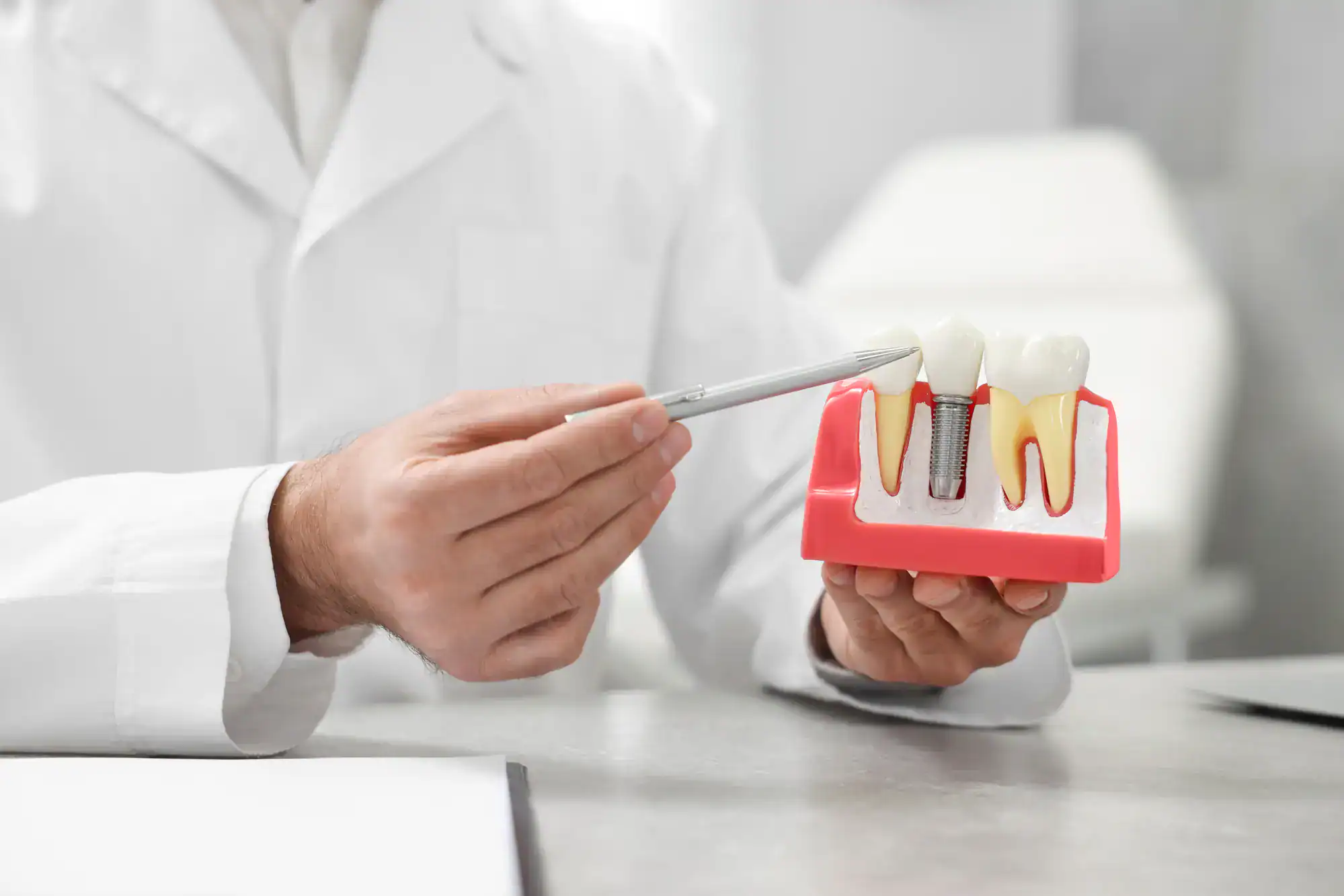
A titanium post tooth replacement doesn’t just fill the space it actually stimulates the jawbone the way a natural tooth root does, which stops the bone loss and keeps your facial structure intact. Unlike a bridge, which requires permanently grinding down the two healthy teeth on either side, an implant stands completely on its own. Your surrounding teeth stay untouched. And unlike a denture, it doesn’t move, doesn’t need adhesive, and doesn’t change what you can eat. For someone in their 50s or 60s which describes a large portion of Stone Ridge’s resident base that distinction matters more with every passing year.
Dr. Scott Kupetz graduated from Fairleigh Dickinson College of Dental Medicine in 1988 and has been practicing in the Hudson Valley ever since. That’s not a marketing line it’s just the truth. He has spent his entire career serving patients across Ulster and Dutchess County, including Stone Ridge and the communities along US Route 209 that residents here know well: Accord, Kerhonkson, Kingston, and beyond.
What makes our practice different isn’t a list of equipment. It’s the fact that you see the same doctor for your consultation, your implant placement, and every follow-up after. No rotating associates, no getting handed off, no starting over with someone new. Dr. Kupetz handles the full process from start to finish including sedation for patients who haven’t been to a dentist in years and need to know the experience won’t be what they’re afraid of.
Stone Ridge has a median age of 54.6 and a homeownership rate above 85%. The people here are established, they’ve seen a lot, and they don’t respond well to being sold to. Dr. Kupetz doesn’t sell. He explains, he listens, and he lets the work speak for itself the same way he has for over three decades.

The first step is a straightforward consultation. Dr. Kupetz will look at what’s going on, take any necessary imaging, and give you an honest read on where things stand including whether bone loss is a factor and what that means for your options. If you’ve been told in the past that you’re not a candidate, it’s worth having that conversation again. Bone grafting and modern implant techniques have expanded what’s possible, and a lot has changed in even the last five to ten years.
If implants are the right fit, the process moves to placement. A small titanium post is placed into the jawbone where the missing tooth root used to be. That post then fuses with the bone over the following weeks a process called osseointegration which is what gives the implant its stability and permanence. For patients in Stone Ridge who have been living with a gap for a while, this healing phase is also when the jawbone begins to stabilize again after years of gradual loss.
Once the post has fully integrated, the final dental implant crown is placed on top. That’s the visible part the tooth you’ll actually see and use. The whole process typically spans several months, but most of that time is just healing. The actual chair time is far less than most people expect, especially with sedation available for patients who want it. From the first call to the final crown, everything happens at one location with one doctor. No referrals, no specialist shuffle, no losing months between providers.
Ready to get started?
Whether you’re missing one molar or dealing with a full arch that’s been failing for years, we offer a full range of missing teeth replacement options. A single tooth implant versus bridge conversation is often where it starts and for most patients in Stone Ridge who are otherwise healthy, the implant is the stronger long-term choice. It preserves adjacent teeth, maintains bone density, and doesn’t carry the 5-to-10-year replacement cycle that bridges typically do.
For patients who are beyond single-tooth replacement those dealing with multiple missing teeth or dentures that no longer fit well we also provide implant-supported restorations and All-on-4 procedures. All-on-4 uses four strategically placed implants to anchor a full arch of permanent teeth, which is a significant upgrade from traditional dentures in terms of stability, comfort, and confidence. For Stone Ridge residents who grew up watching a parent or grandparent struggle with loose dentures, this option tends to land differently once they understand what it actually involves.
Sedation is available for any of these procedures. This is not a footnote for a meaningful portion of patients in rural communities like Stone Ridge, where dental avoidance has been common and the local access gap has been real, sedation is the reason they finally make the call. Our practice is also equipped to handle cases involving prior bone loss, which is one of the most common reasons patients assume they’ve disqualified themselves. If you’ve been putting this off because you think it’s too late, the first conversation might surprise you.
This is one of the most common concerns, and the honest answer is: probably not. Bone loss does happen after tooth extraction that part is true but the degree of loss varies significantly from person to person, and modern techniques including bone grafting have made implants accessible to a much wider range of patients than they were even a decade ago. The only way to know for certain is to have a proper evaluation with imaging.
Many Stone Ridge patients who come in assuming they’ve waited too long are surprised to find out they’re still viable candidates. The conversation is worth having before you write yourself off. Dr. Kupetz has been navigating these cases for over 35 years, and he’ll give you a straight answer about what’s realistic not a sales pitch about what’s possible in a best-case scenario.
A bridge fills the gap, but it does it by using the two teeth on either side as anchors which means those teeth have to be permanently ground down to support the appliance. Even if those teeth are completely healthy, they get reshaped and capped. That’s a trade-off a lot of patients don’t fully understand until after the fact. A dental implant, by contrast, stands on its own. Nothing adjacent gets touched.
Beyond that, a bridge sits on top of the gumline and doesn’t interact with the jawbone at all, which means bone loss continues underneath it. An implant actually integrates with the bone, stimulates it the way a natural root would, and stops that loss from progressing. For Stone Ridge residents in their 50s and 60s who are at the stage of life where preserving every healthy tooth structure counts that difference has real long-term consequences. Bridges also typically need to be replaced within 5 to 10 years. A properly placed implant can last decades.
A single dental implant in New York typically runs between $3,000 and $5,000 depending on the complexity of the case, whether bone grafting is needed, and the type of restoration used. That number can feel significant, but it’s worth framing it against the alternative: a bridge that needs replacing every several years, with the ongoing risk of decay under the caps and further bone loss underneath.
Most standard dental insurance plans in New York cover little to none of the implant itself, though some plans will contribute toward the crown portion. We offer financing options to help spread the cost over time, which makes the investment more manageable for most patients. If your case requires bone grafting which is more common among patients who have been living with a gap for a while, as many Stone Ridge residents have that adds to the overall cost, but it’s also what makes the implant viable long-term. The consultation is the right place to get a clear picture of what your specific situation involves.
Most people focus on the gap in their smile, but the more significant issue is what’s happening underneath the gumline. When a tooth root is no longer present, the jawbone in that area no longer receives the stimulation it needs to maintain its density. It starts to resorb essentially shrink and that process continues for the rest of your life if nothing is done. Over time, the bone loss affects adjacent teeth, which can begin to shift or loosen, and it changes the shape of the jaw itself.
That structural change eventually shows up on your face. The area around the missing tooth can appear sunken or collapsed, which accelerates the aged appearance of the lower face in a way that’s difficult to address through any other means. For Stone Ridge residents who are already in their 50s or 60s, this isn’t a distant concern it’s a process that may already be underway. A titanium post tooth replacement stops that progression by restoring the root-level stimulation the bone needs. The sooner it’s addressed, the less bone needs to be rebuilt before placement can happen.
Yes and this is actually one of the most important questions to ask before you decide whether to move forward. Dental anxiety is extremely common, and it’s especially prevalent among patients who have been avoiding care for a long time. In a community like Stone Ridge, where the local dental office has historically operated on a very limited schedule, a lot of residents have simply fallen out of the habit of regular dental visits. By the time they’re considering something like an implant, the anxiety can feel compounding.
We offer sedation dentistry for implant procedures and other complex work. Most patients who use sedation report that the experience was far less difficult than they anticipated many describe remembering very little of the procedure at all. If fear has been the reason you’ve put this off, it doesn’t have to be anymore. The first step is just a conversation, and there’s no judgment about how long it’s been or what condition things are in. Dr. Kupetz has been working with anxious patients for over 35 years. That’s not a small thing.
The honest answer is that it depends on your specific case, but most single-tooth implant treatments span somewhere between three and six months from the initial placement to the final crown. The majority of that time is the healing phase the period during which the titanium post fuses with the jawbone. That process, called osseointegration, can’t be rushed, and it’s what gives the implant its long-term stability. Actual time in the chair is a relatively small portion of the overall timeline.
If your case involves bone grafting which is needed when significant bone loss has already occurred you may be looking at additional healing time before the implant post can even be placed. For Stone Ridge patients who have been living with a missing tooth for a year or more, this is worth understanding upfront so there are no surprises. Cases involving multiple missing teeth or full-arch restorations like All-on-4 have their own timelines that Dr. Kupetz will walk through with you during the consultation. The goal is always to give you a realistic picture of the full process before anything starts, not after.
Other Services we provide in Stone Ridge